
Husqvarna Viking 5220
Understated power
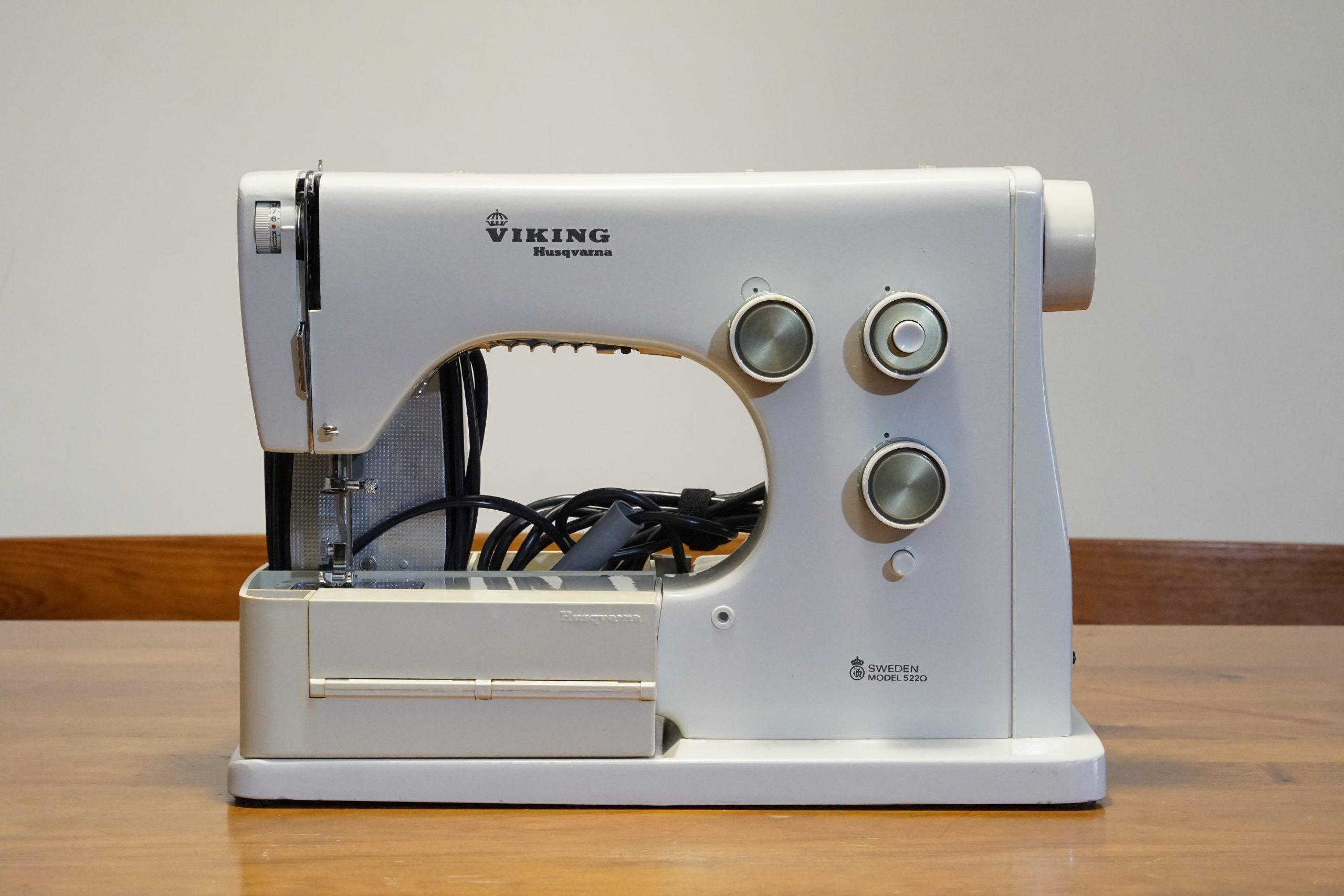
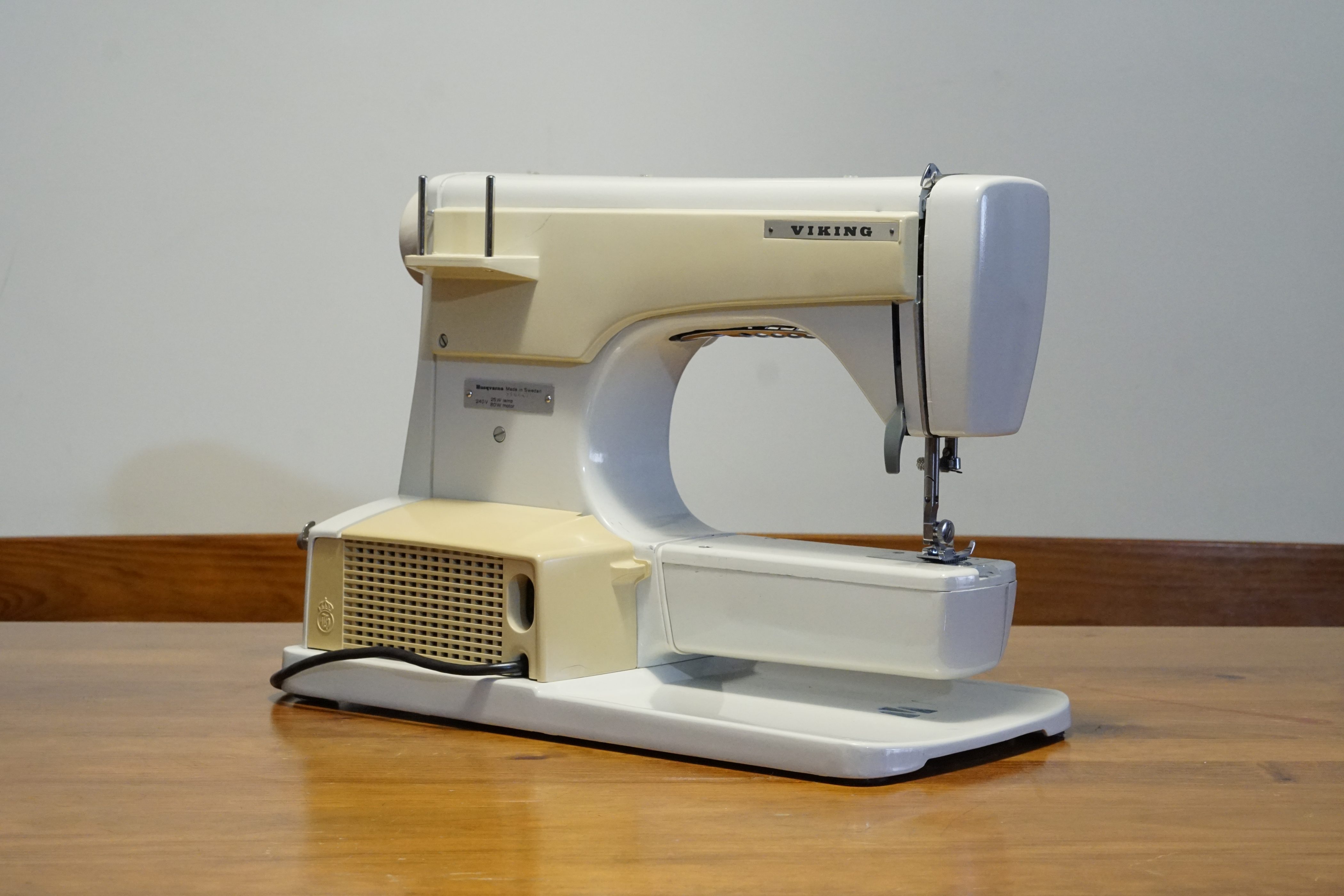
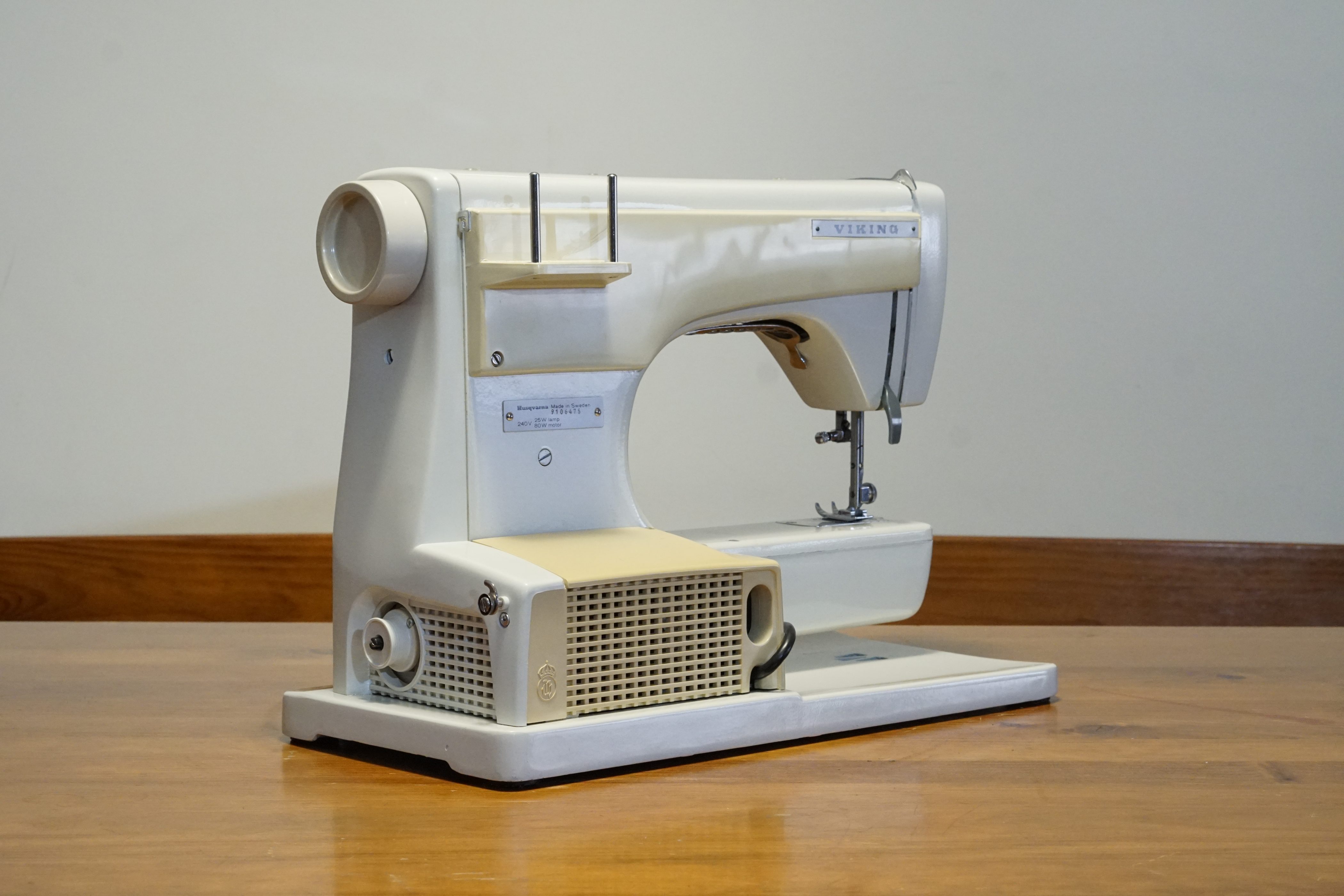
Husqvarna’s move from rifles to sewing machines happened in 1872, and by the time the 5220 rolled off the line a century later, the company had traded muskets for a full catalogue of household machines sold under the Viking name. The 5220 sits inside that catalogue as one of many portable free arm machines Husqvarna built through the 1970s, part of a family running from the 1020 up through the 6460, sharing engineering across price points the way a car maker shares a chassis across trim levels.
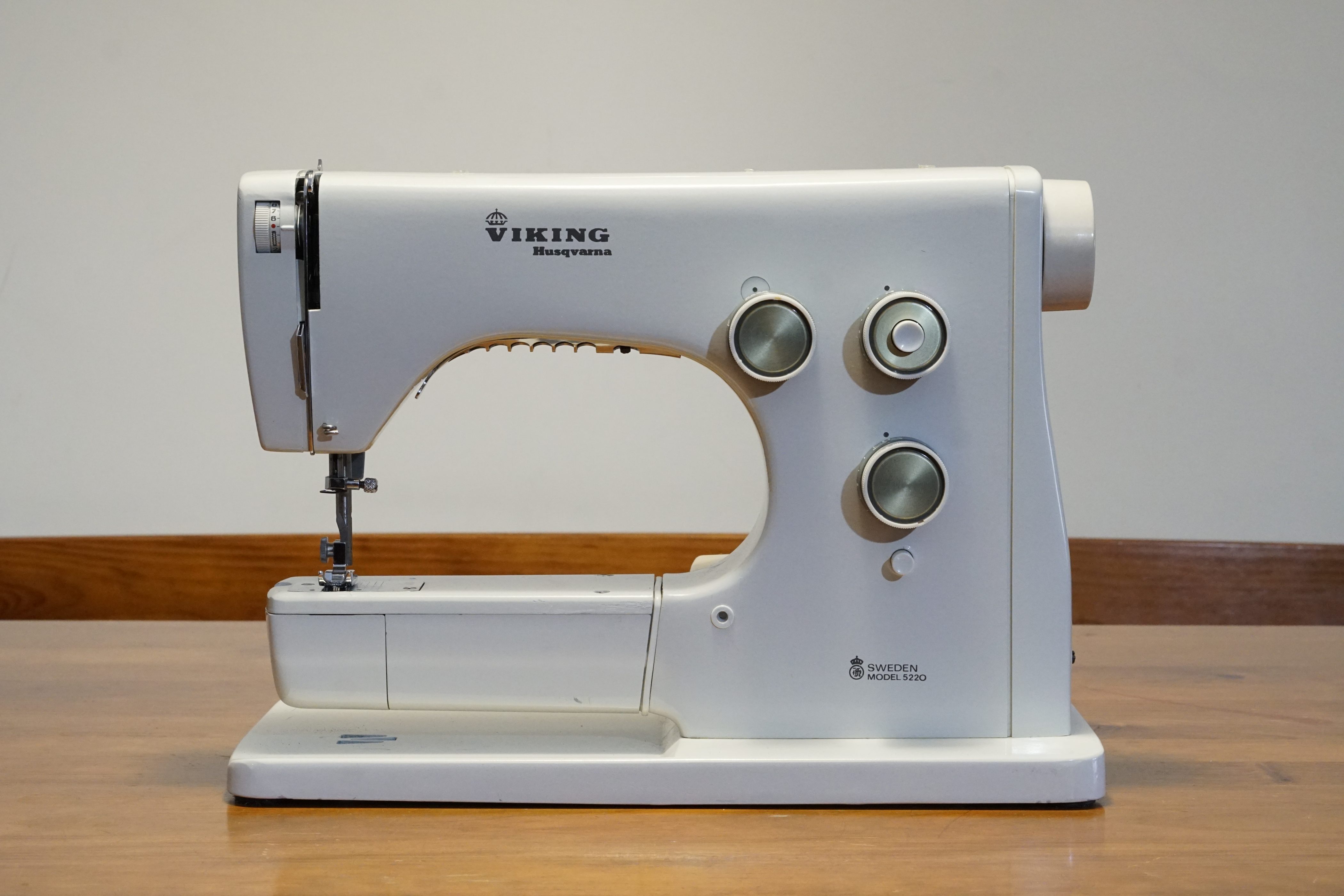
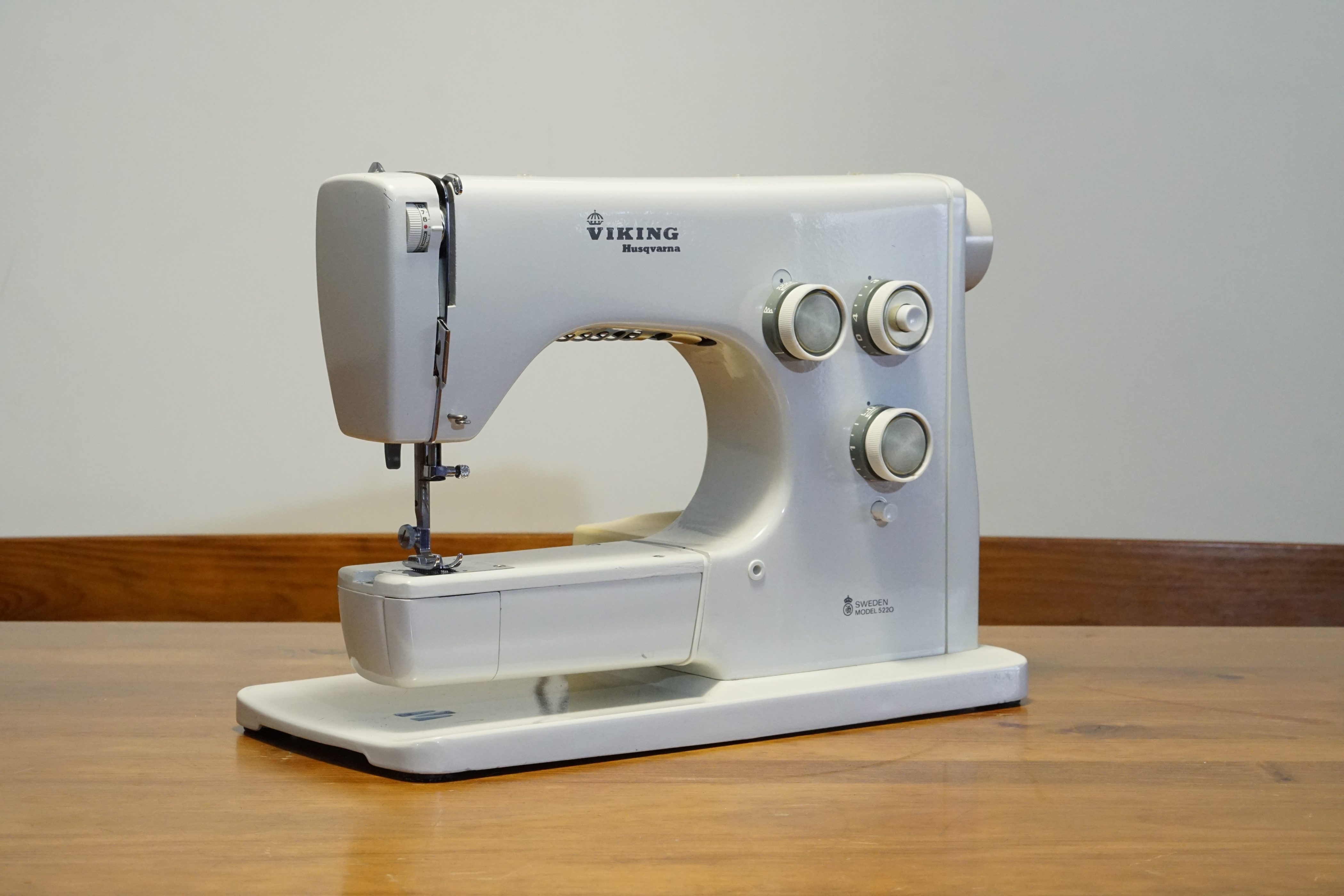
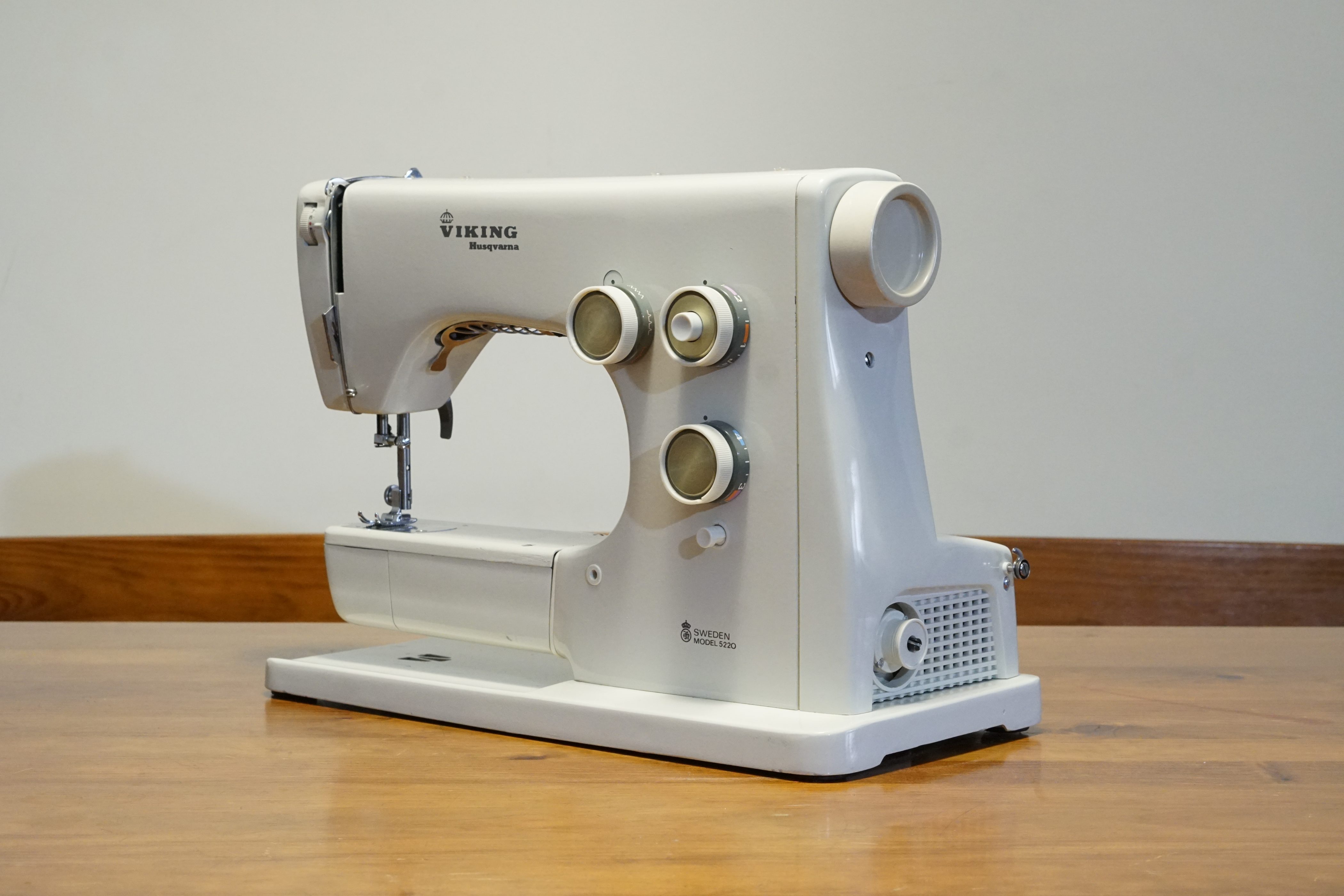
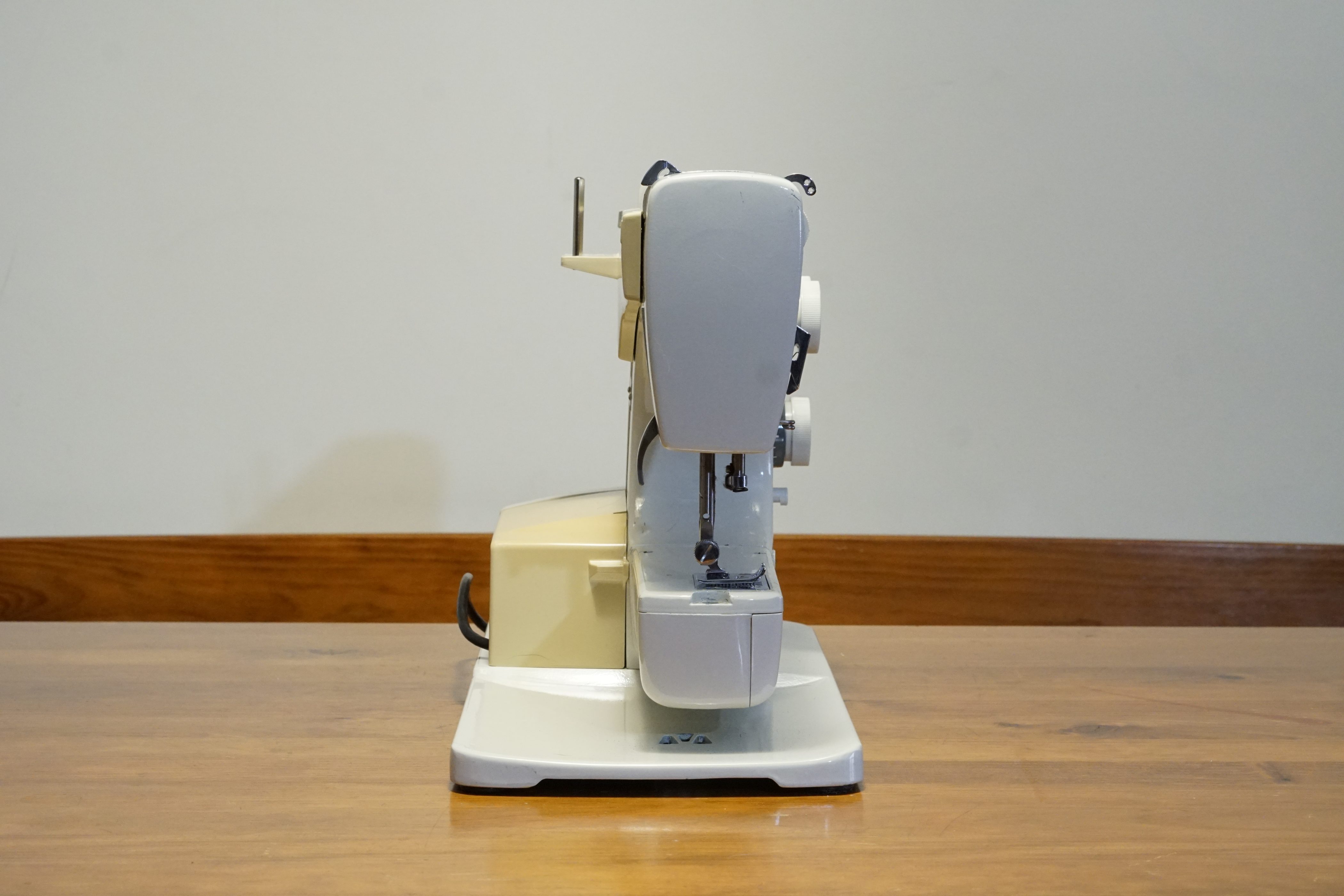
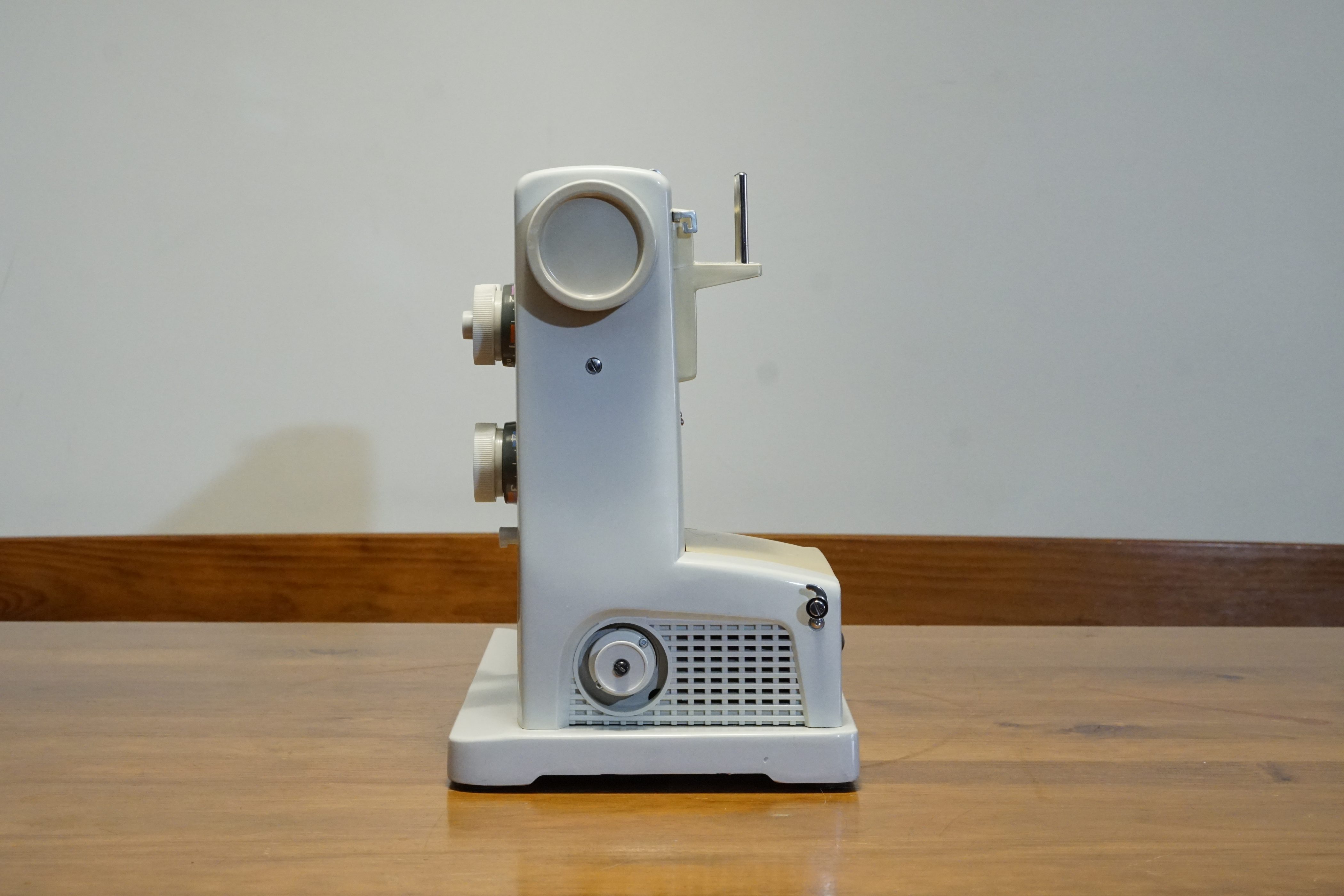
The free arm itself traces back to 1947, when Husqvarna introduced its first free arm machine and opened up sleeves and trouser legs to easier stitching. By the 5220’s era the body had shifted from the cast metal of the earlier Class 20 generation to a shell of grey and cream plastic wrapped around a metal chassis, lighter to produce and cheaper to ship, if a little less indestructible looking on a shelf. Stitch selection runs through a dial system that traces back to the 1960 model 2000, which introduced color coded settings for its patterns, and the 5220 carries that dial based approach forward with a stitch length dial marked zero to four and a second dial switching between straight and zigzag work.
Sandra inherits the classic Type 19’s party trick of having a reversing button with two operation modes: it provides temporary backstitching when pressed, and stays pressed if nudged upwards. Try it if you haven’t already, and you might be surprised. Another “secret” function lies in the stitch length dial, which acts as a sequential automatic buttonhole “program” when pulled outward. Push it back in to return to normal operation. Oh and there’s also a drop-feed function, because of course there is.
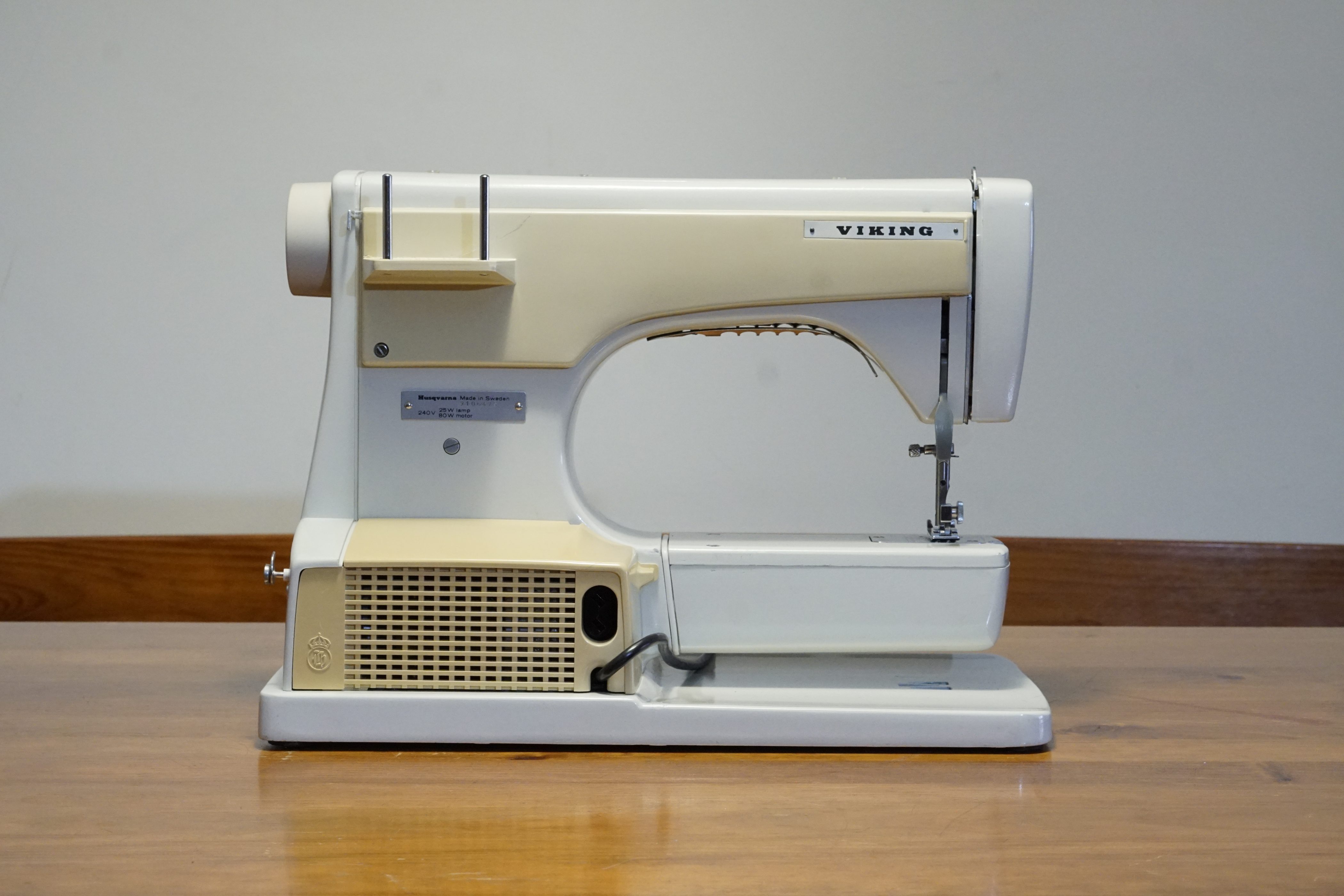
That apparent plainness is part of the machine’s story. Rather than chasing the electronic displays that would arrive on later Husqvarna models, the 5220 kept its cam driven mechanism, meaning nothing inside depends on a circuit board that can quietly die decades later. Collectors and repair minded owners tend to like that arrangement for the obvious reason that a gear and a cam rarely go obsolete, and parts shared across the wider 5000 and 6000 lineup are easier to track down than parts for a one off design.
The case followed the shift in the machine itself. Where the older Class 20 and 71 Rotary machines traveled in varnished wood boxes, the 5220 shipped in a molded plastic case matching its own cream and grey coloring, built for the same reasons the machine was: speed of production over ceremony.
Opinions on the 5220 tend to land in familiar territory. Compared with contemporary Singer zigzag machines of the same decade, it earns points for a smoother, gear driven stitch and a hook that asks little of its owner, while compared with Husqvarna’s own later electronic models it can look modest, limited to the stitches its cam stack was built for and nothing more. Quilters and vintage collectors chasing the older all metal Husqvarna rotaries tend to rank the 5220 below them in charm, but plenty of home sewers still reach for it as an uncomplicated machine that starts, stitches straight, and asks for very little in return.
Sources and reviews:
https://ismacs.net/husqvarna-viking/brief-husqvarna-viking-history.html
https://www.manualslib.com/products/Husqvarna-5220-8886587.html
ID
| Maker | |
| Brand | |
| Model | |
| Year | |
| Serial number | |
| Origin | |
| Manufacture | |
| Provenance | |
| Status |
SPECS
| Voltage | AC 220 V |
| Bed type | |
| Bed extension | |
| Feet/shank type | |
| Foot pressure adjustment | |
| Bobbin type | |
| Hook/race position | |
| Hook movement | |
| Bobbin winder | |
| Spool pins | |
| Bulb type | |
| Original foot control | |
| Current foot control | |
| Dimensions | |
| Weight |
FEATURES
| Zigzag | |
| Reverse type | |
| Needle position control | |
| Stitch length limiter | |
| Stitch width limiter | |
| Utility stitches | |
| Decorative stitches | |
| Stretch stitches | |
| Auto-reverse stitches | |
| Double needle provisions | |
| Drop feed |
ACCESSORIES
| Presser feet | |
| Straight stitch needle plate | |
| Feed dogs cover plate |
DOCUMENTS
| User manual | Download PDF: |
| Service manual | Download PDF: |