
Singer 221k “Featherweight”
James Cagney would be proud
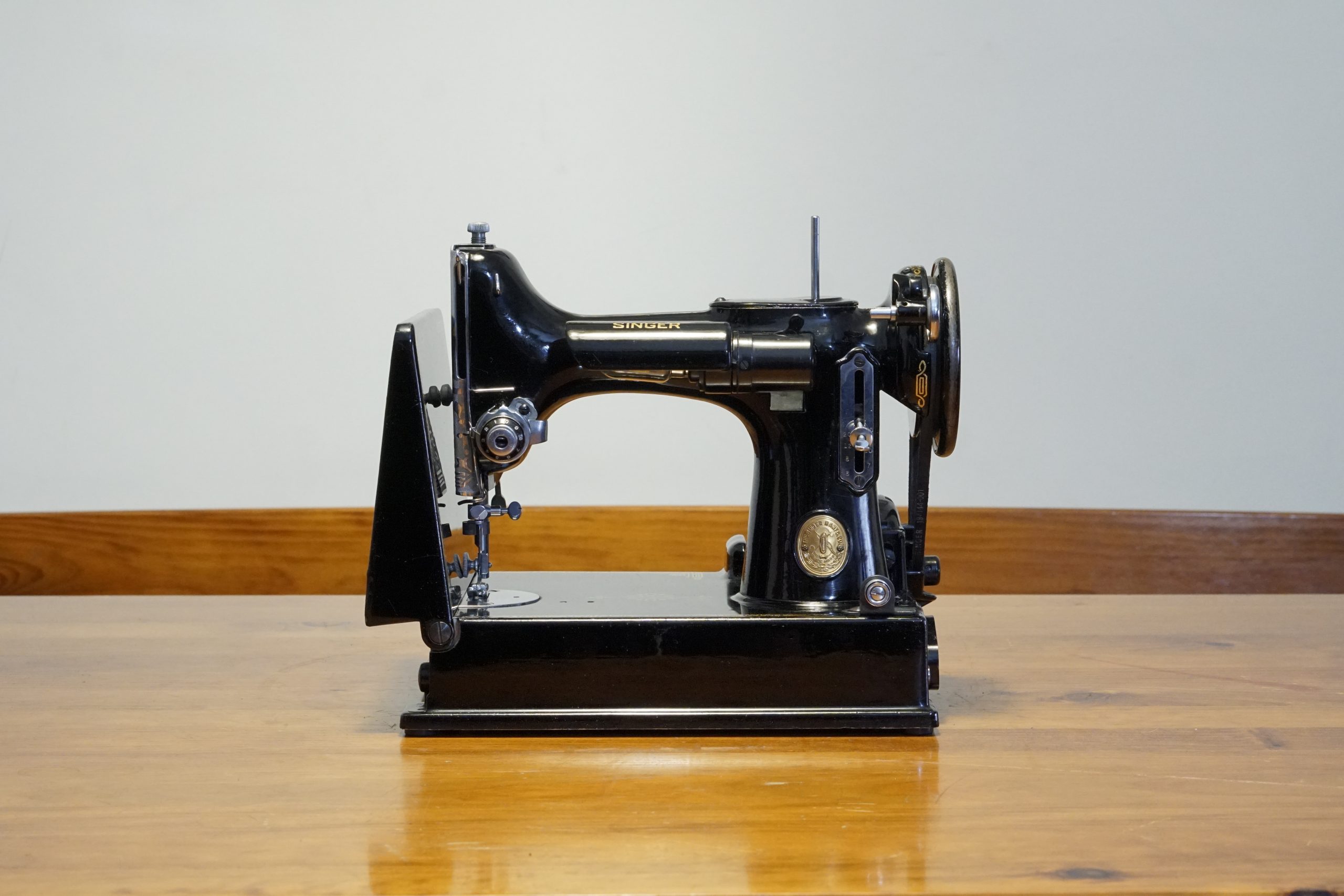
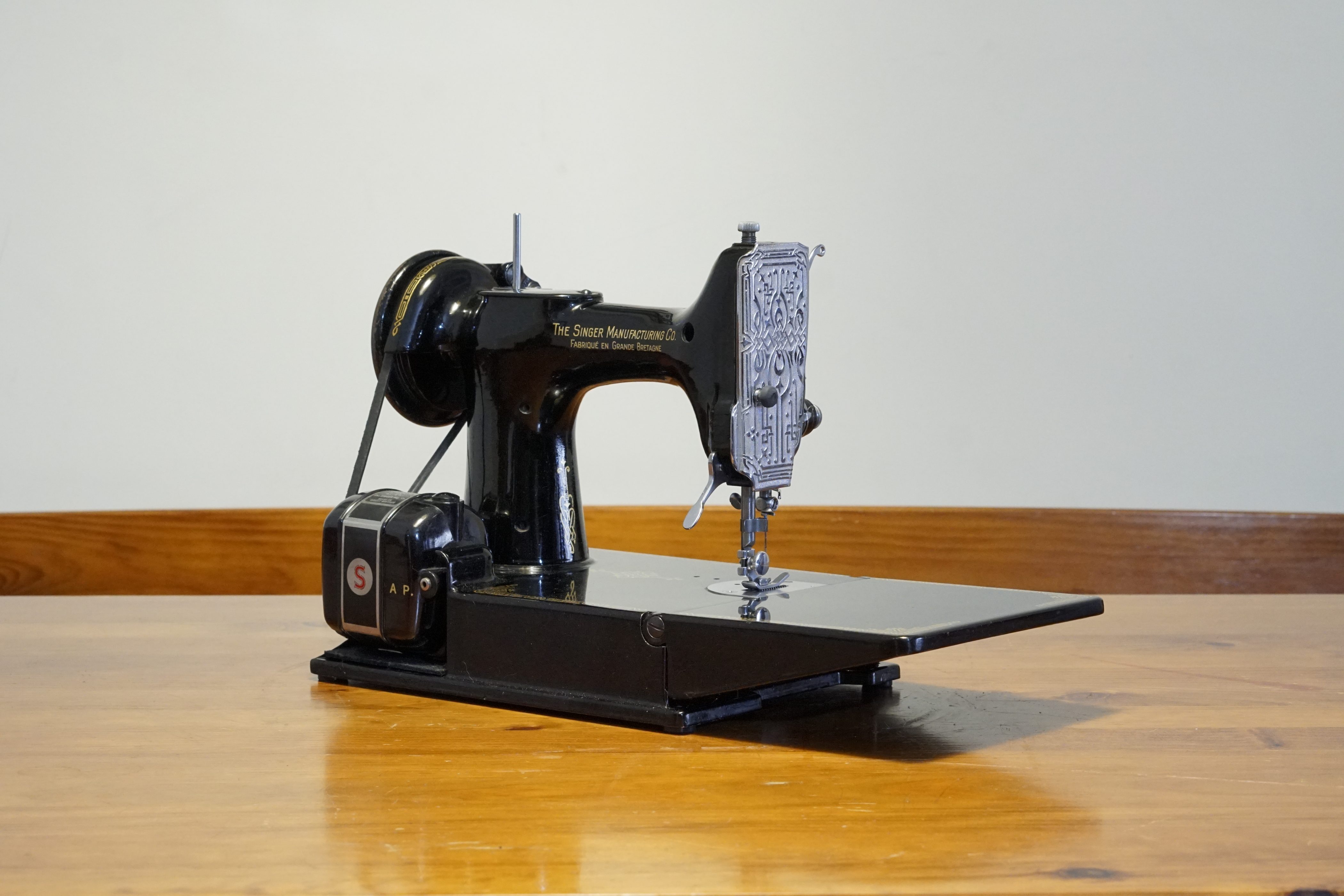
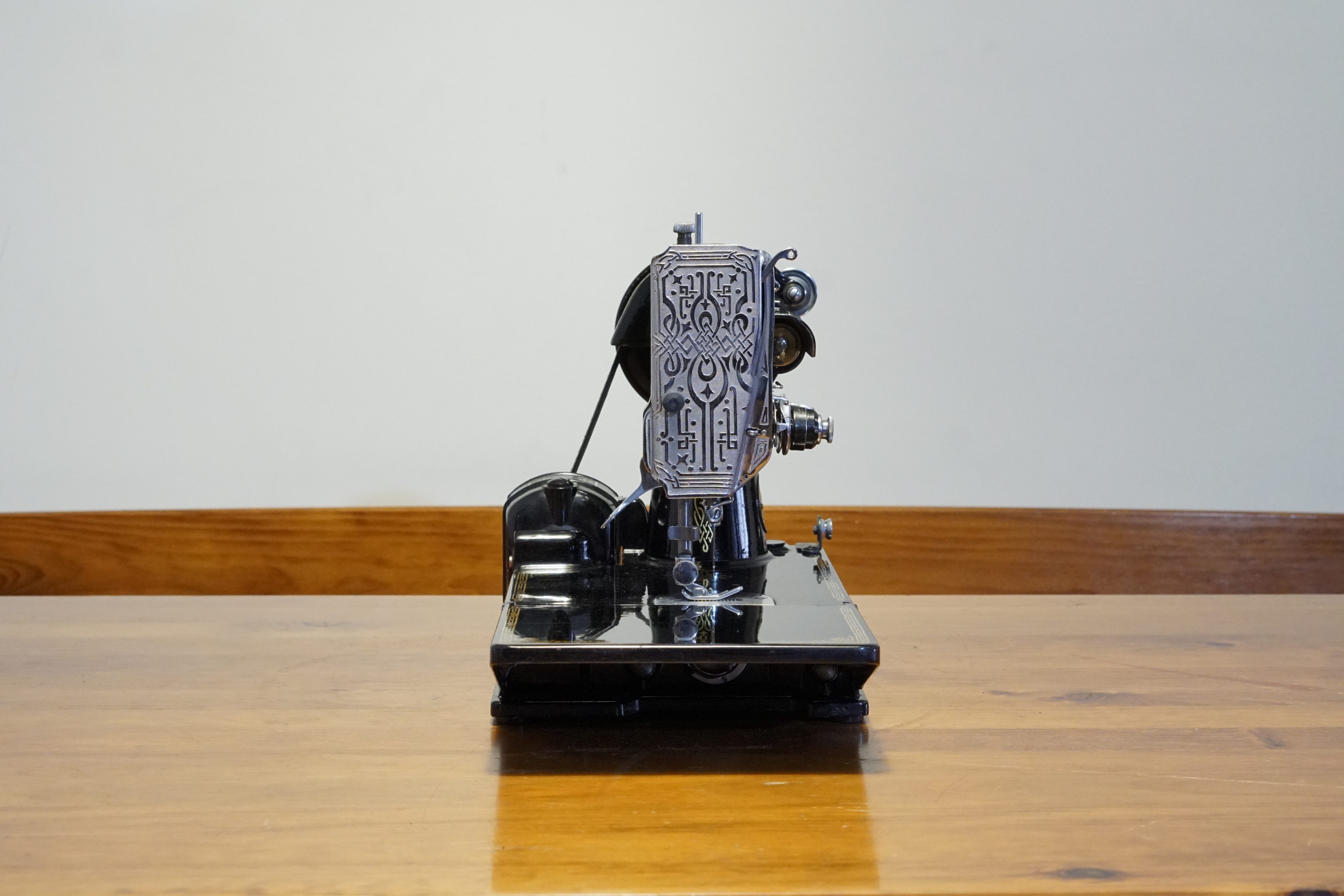
The Singer 221 Featherweight appeared at the 1933 Chicago World’s Fair looking like a scale model of a proper sewing machine, which is roughly what most visitors assumed it was. Singer commissioned the first batch of ten thousand units on October 3 of that year at the Elizabethport plant in New Jersey, built largely from cast aluminum rather than the iron used in every serious Singer before it. The result weighed about eleven pounds, which explains the name, and could be lifted with one hand by anyone tired of hauling a cabinet machine across a room.
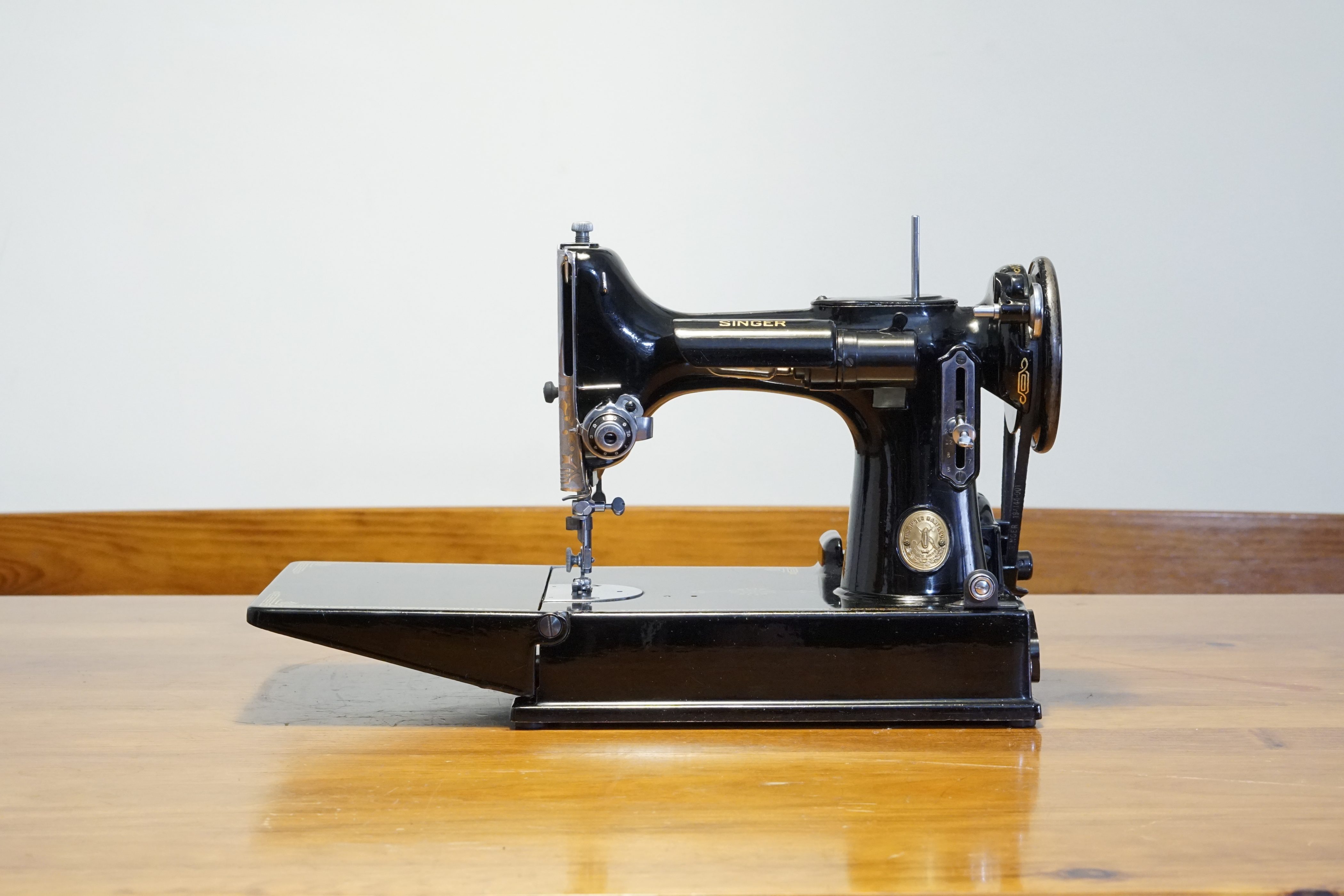
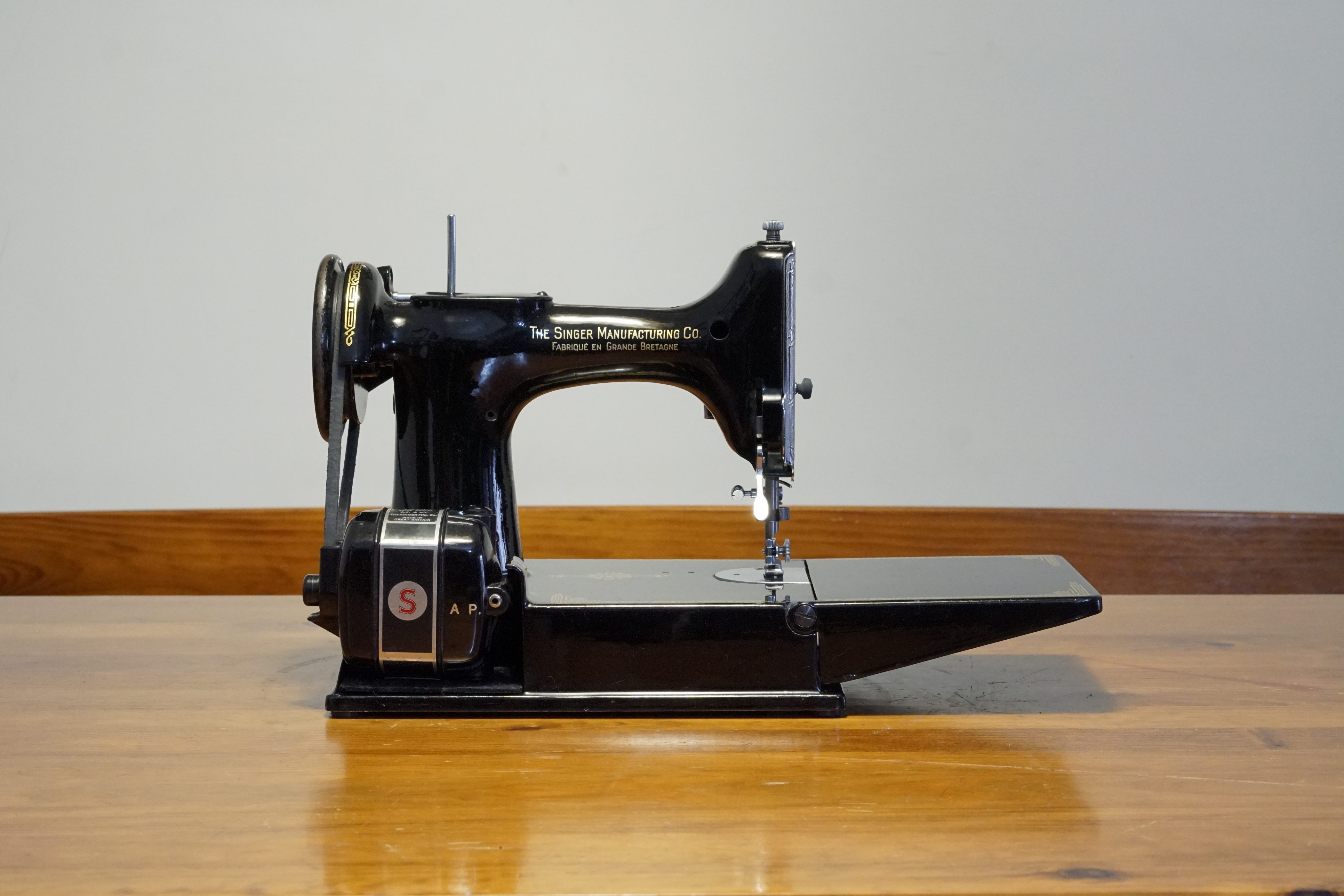
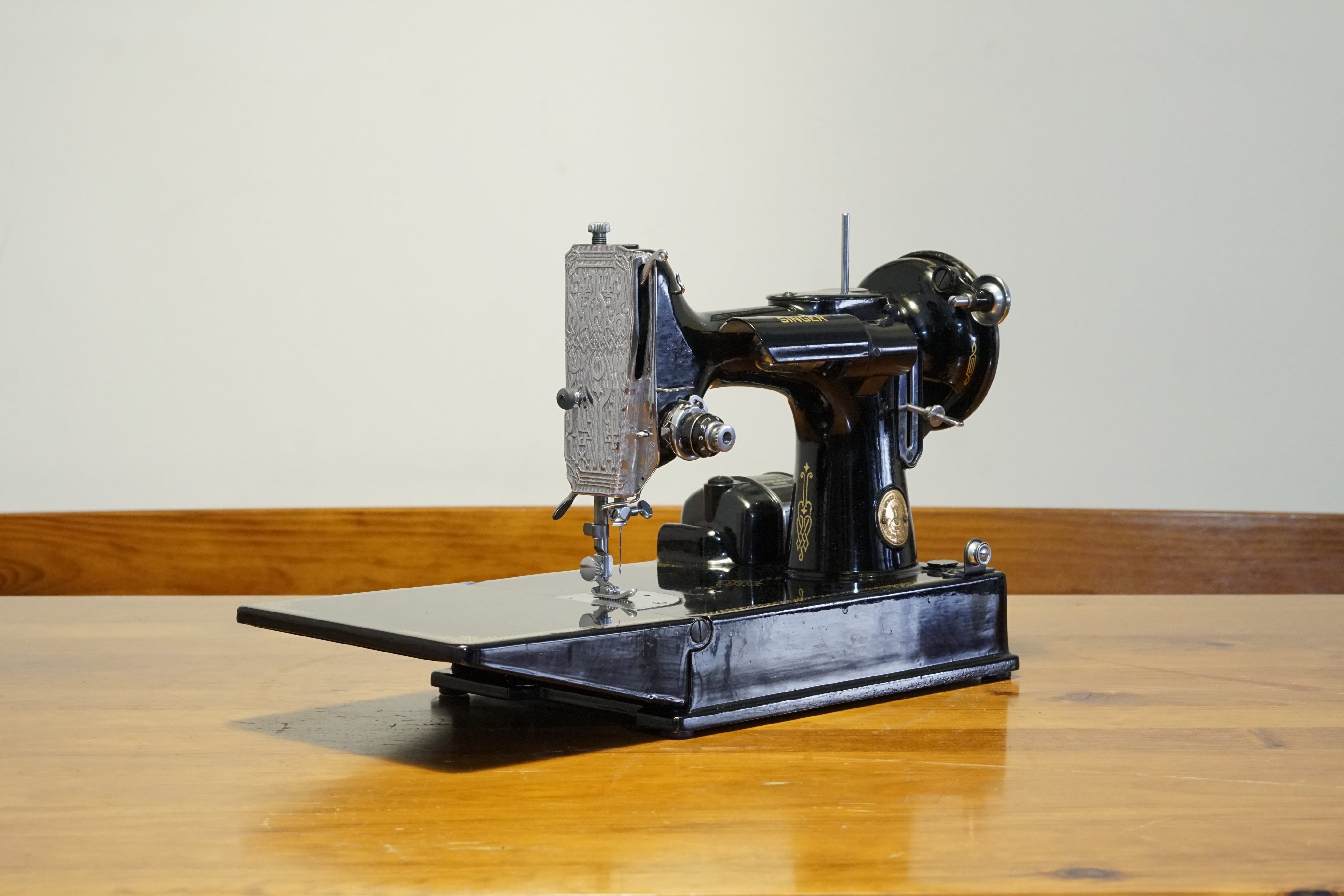
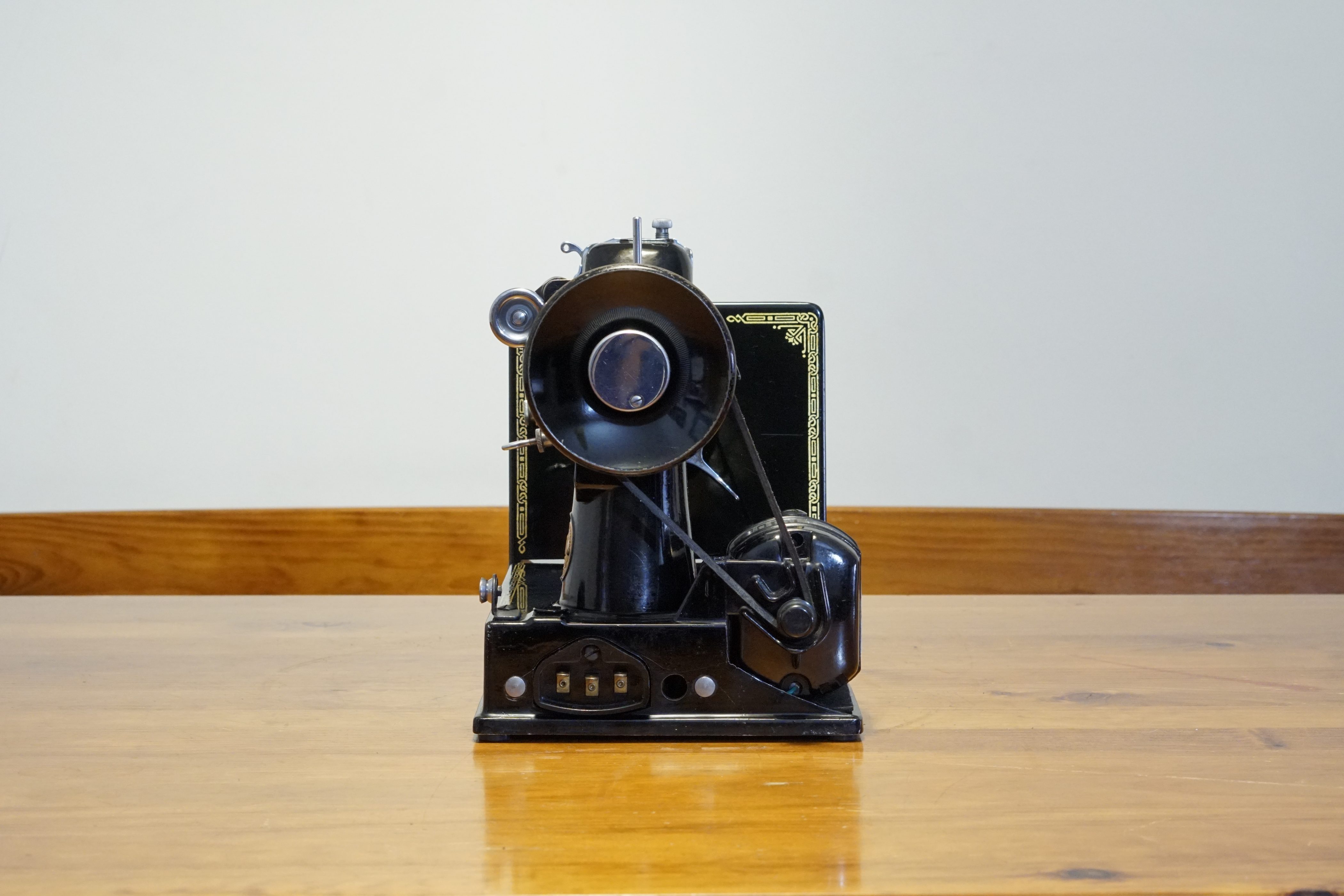
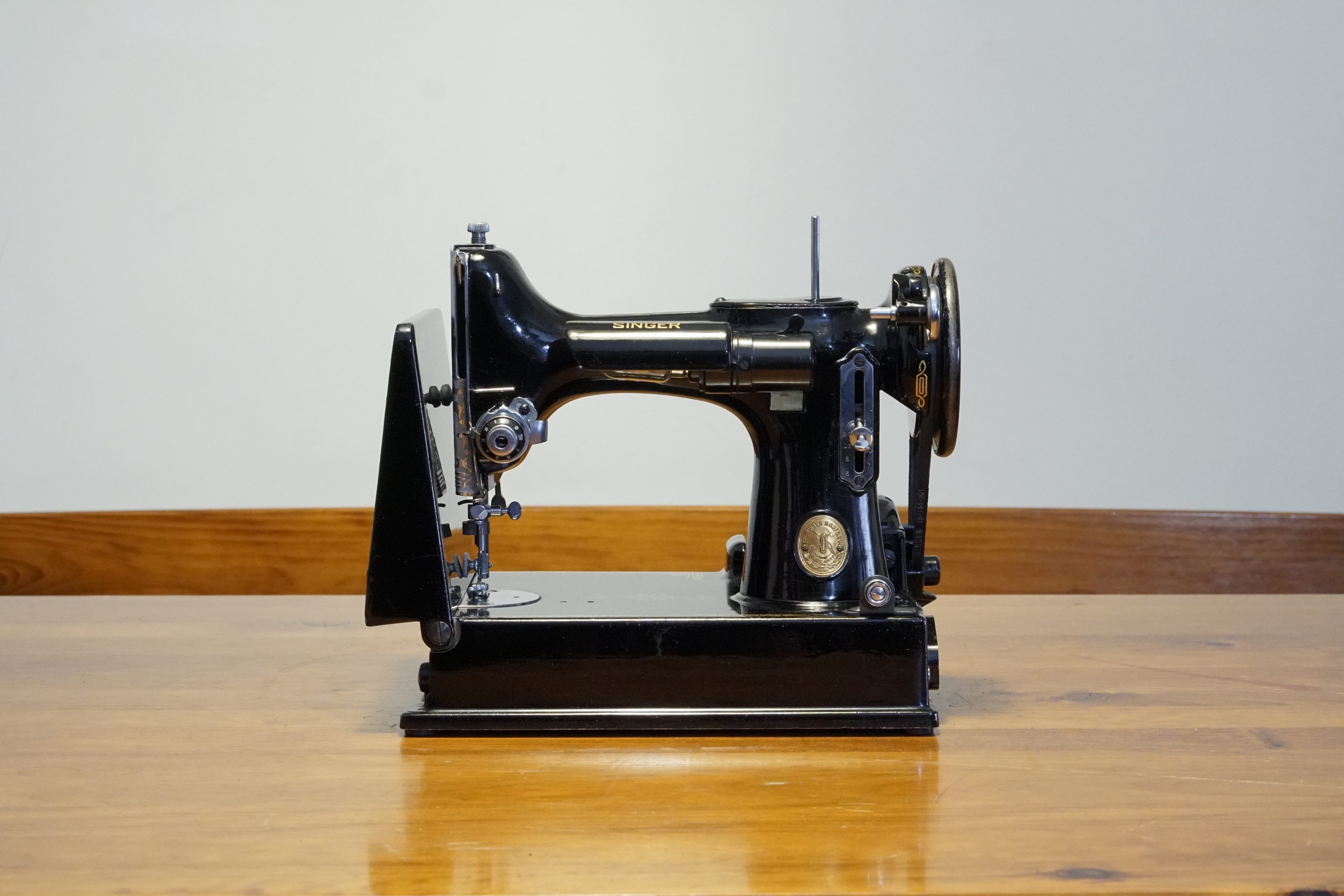
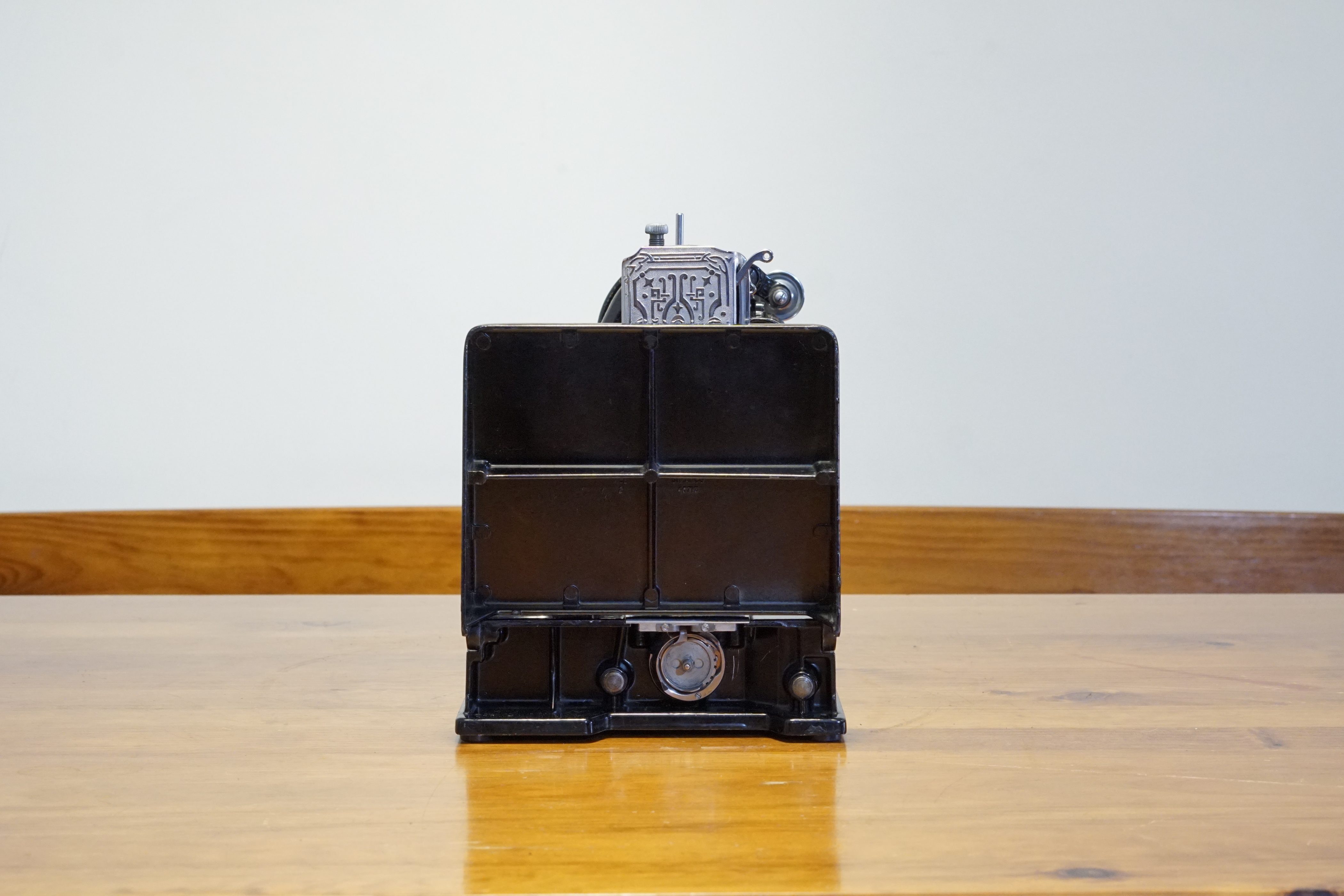
Underneath the compact shell sits the same vertical rotary hook mechanism found in Singer’s larger 201, which is why a machine built for a suitcase still produces a lockstitch many quilters rate above what comes out of far newer machines: straight, without the faint zigzag most modern feed systems introduce. It sews nothing but a straight stitch, forward or in reverse depending on how far the stitch length lever gets raised, a solution simpler in practice than it sounds on paper. A hinged bed extension folds up on the left side, exposing the bobbin for changes and shrinking the machine enough to fit its case, one piece of engineering quietly doing two jobs. Power comes from a belt driven motor mounted behind the arm, modest by later standards but rarely blamed for failure; when a Featherweight refuses to behave, the timing is the usual suspect, and resetting it is famously within reach of an owner with a screwdriver and some patience.
Production stopped between 1942 and 1945, when the War Production Board’s Limitation Order L98 redirected Singer’s factories toward the war effort, and a few machines from that window turn up with black oxide parts standing in for chrome, since chromium had joined the list of things a country at war preferred not to spend on sewing machines. Serial number prefixes tell you roughly where and when a given machine left the factory floor, with the letter A marking New Jersey and E marking Kilbowie in Scotland, where Singer began building Featherweights of its own in 1947 and stamped them 221K. Machines exported to French speaking markets carry the words Fabriqué en Grande Bretagne on the bed casting. Kilbowie also produced a white version with a shorter bed toward the end of the run, along with the rare and highly valuable free arm variant 222K, useful for sleeves and trouser legs and correspondingly harder to find outside Britain.
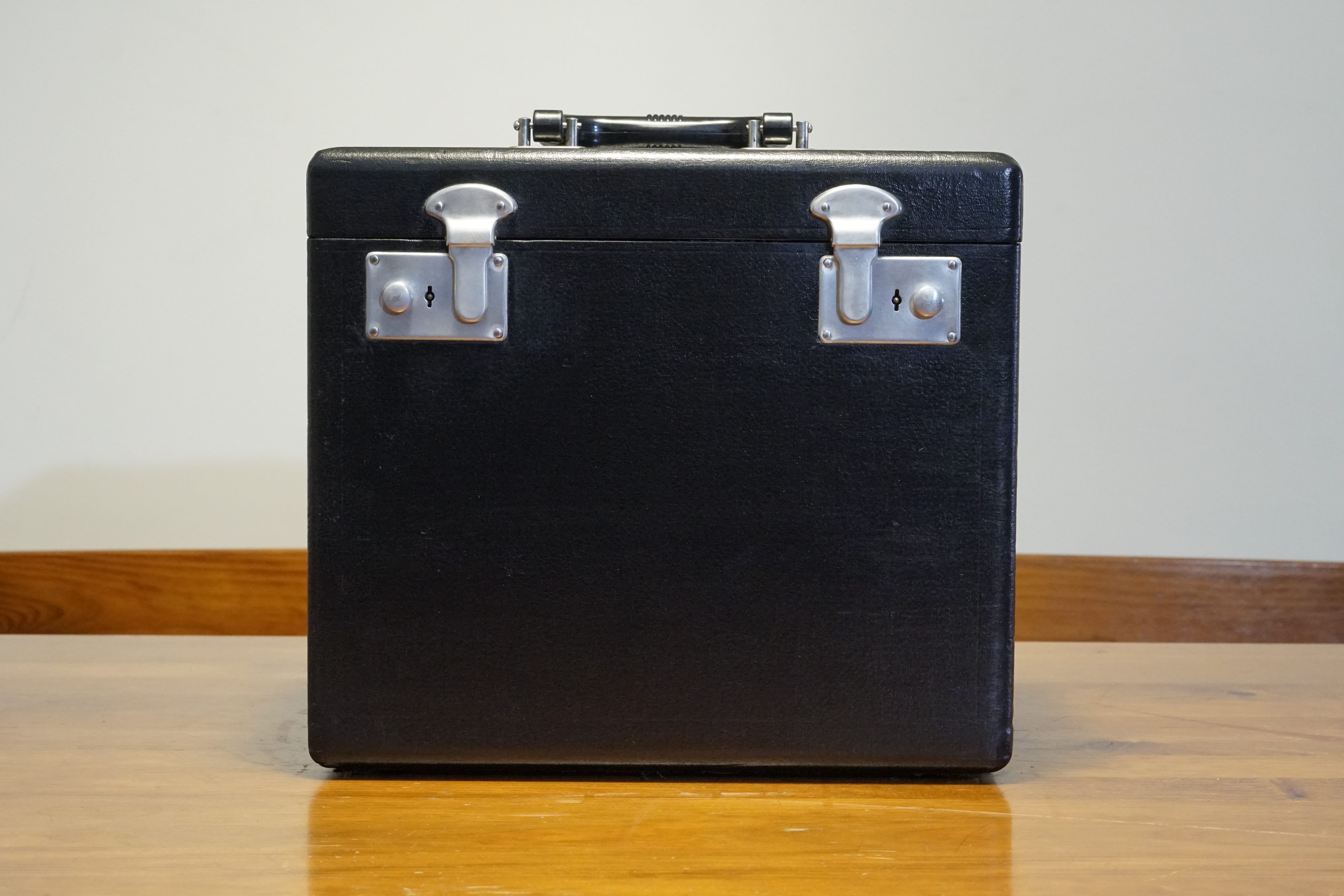
The case is part of the appeal rather than an afterthought. Early versions came with leather handles prone to cracking with age and an accessory tray that stacks above the machine, while later cases added a side shelf for bobbins and a spot inside the lid for the foot pedal, all wrapped in the same dark material that gives the whole package the look of an oversized cosmetics case.
Quilters and collectors return to a short list of reasons whenever the Featherweight comes up: the seam runs true, the machine travels well to classes and retreats, and most problems yield to a screwdriver and a drop of oil rather than a service ticket. Comparisons with its larger sibling, the 301, surface constantly. The 301 runs on gears rather than a belt, drops its feed dogs, and uses a slant shank that opens up the view around the needle, all of which suit heavier work, though it gives up the Featherweight’s portability and, depending on who answers, some of its charm. That argument never quite resolves itself, which may be the clearest sign of a good reputation a sewing machine can carry after nearly a century out of the factory.
Sources and reviews:
https://ismacs.net/singer_sewing_machine_company/singer_featherweight_portables_quilters_treasure.html
https://ismacs.net/singer_sewing_machine_company/singer_featherweight_sewing_machine.html
https://singer-featherweight.com/blogs/schoolhouse/timeline-history-of-the-singer-featherweight
https://singer-featherweight.com/blogs/schoolhouse/dating-your-featherweight-machine
https://singer-featherweight.com/blogs/schoolhouse/blackside-finish
https://www.manualslib.com/manual/364481/Singer-221-Featherweight.html
https://sewing.patternreview.com/SewingDiscussions/topic/30603
https://www.quiltingboard.com/main-f1/singer-301-a-t243661.html
ID
| Maker | |
| Brand | |
| Model | |
| Year | |
| Serial number | |
| Origin | |
| Manufacture | |
| Provenance | |
| Status |
SPECS
| Voltage | AC 220 V |
| Bed type | |
| Bed extension | |
| Feet/shank type | |
| Foot pressure adjustment | |
| Bobbin type | |
| Hook/race position | |
| Hook movement | |
| Bobbin winder | |
| Spool pins | |
| Bulb type | |
| Original foot control | |
| Current foot control | |
| Dimensions | |
| Weight |
FEATURES
| Zigzag | |
| Reverse type | |
| Needle position control | |
| Stitch length limiter | |
| Stitch width limiter | |
| Utility stitches | |
| Decorative stitches | |
| Stretch stitches | |
| Auto-reverse stitches | |
| Double needle provisions | |
| Drop feed |
ACCESSORIES
| Presser feet | |
| Straight stitch needle plate | |
| Feed dogs cover plate |
DOCUMENTS
| User manual | Download PDF: |
| Service manual | Download PDF: |