
Elna SP 31 C
The Special
Elna originated from designs by Dr. Ramon Casas, a Spanish Civil War refugee, presented to Swiss precision-mechanism maker Tavaro S.A. in Geneva. Tavaro’s Elna 1 (1940) introduced the free-arm sewing machine, combining a built-in motor and light within a carrying case that doubled as a sewing table. The 1952 Supermatic added interchangeable Elna-discs, a cam-based system producing zigzag and decorative stitches, plus true forward-and-reverse stretch stitching, a feature rival brands did not match at the time. The Star Series (1964) brought electronic foot control to a domestic machine in 1968.
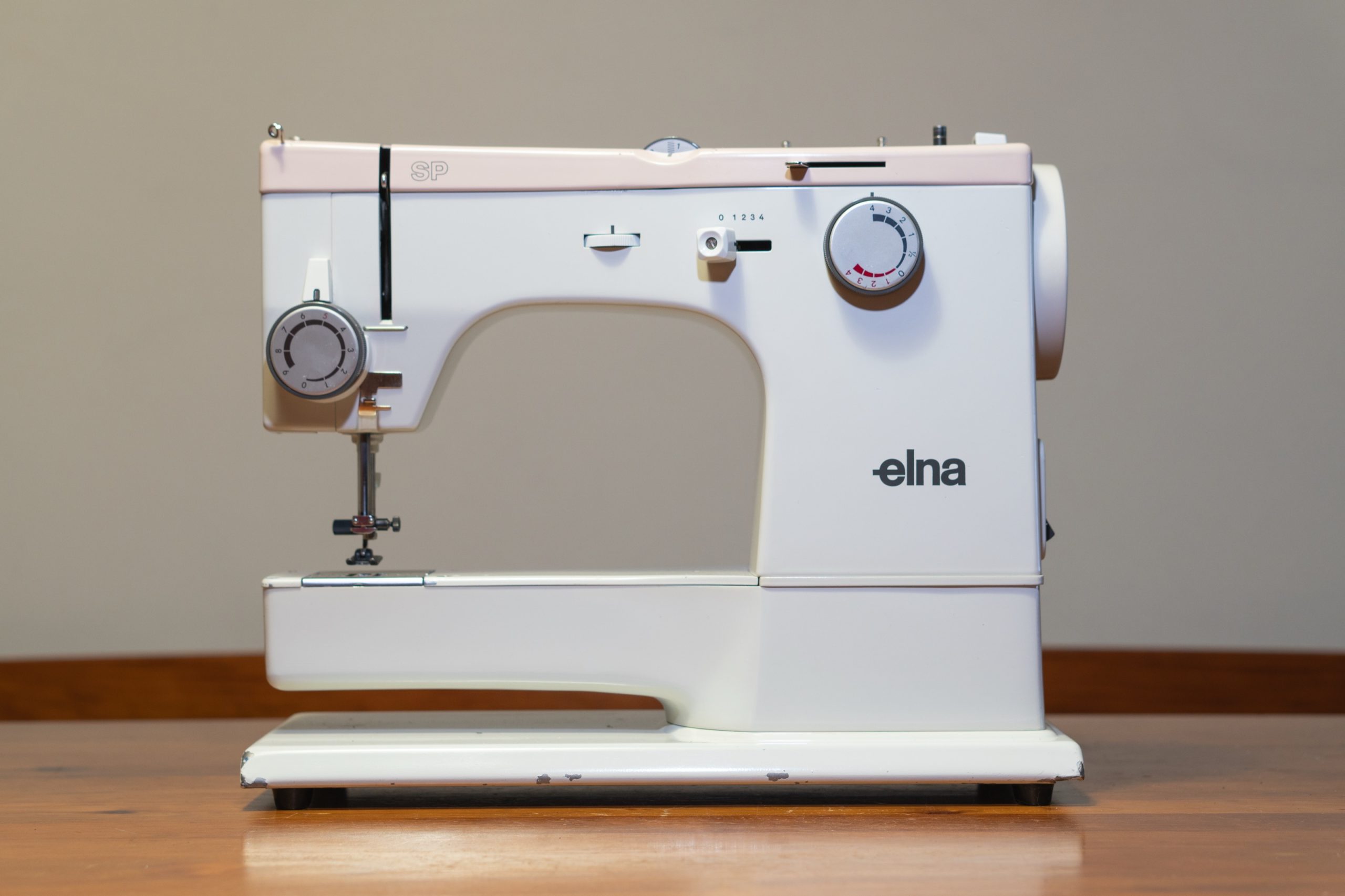
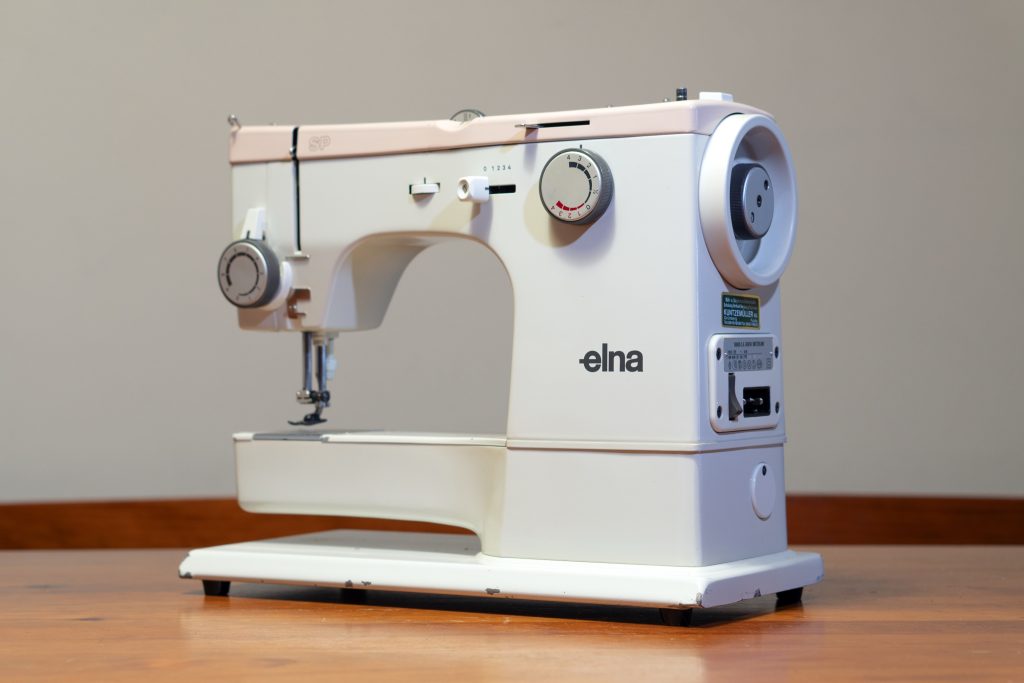
The 31 C variant deletes the ability to use stitch cams, omitting the top cover that gave access to the cam stack. Instead, you are limited to the included stitches, selectable via top rotating dial. While reducing the number of stitches available, this makes the machine self-contained (no important parts to lose) and avoids the dreaded self-destruct mode when using auto-reverse cams, making the machine safer and more fool-proof.
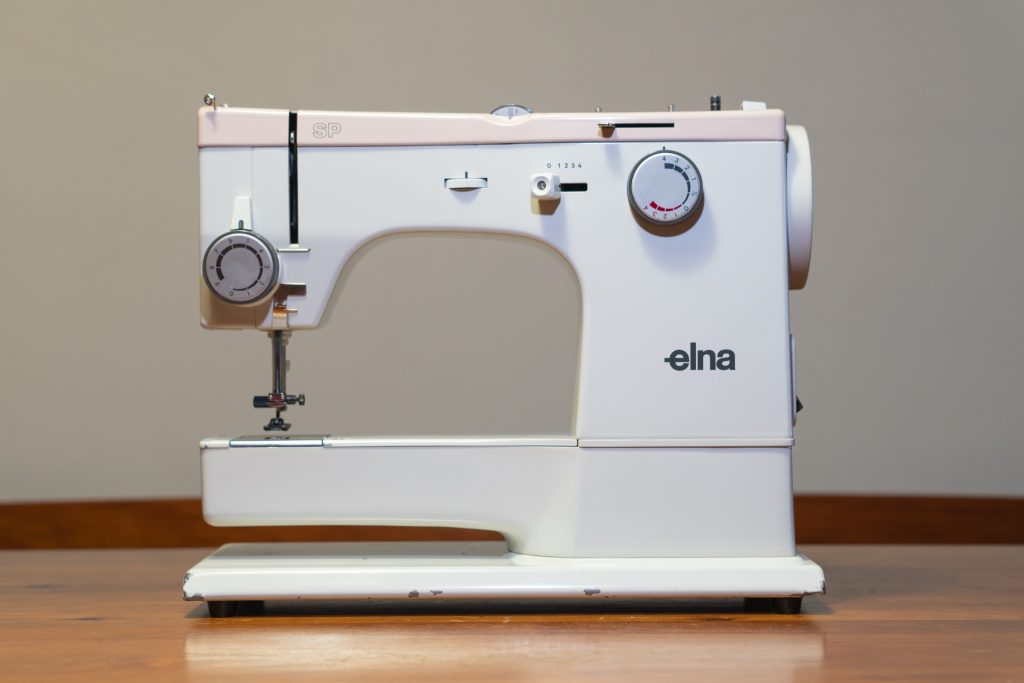
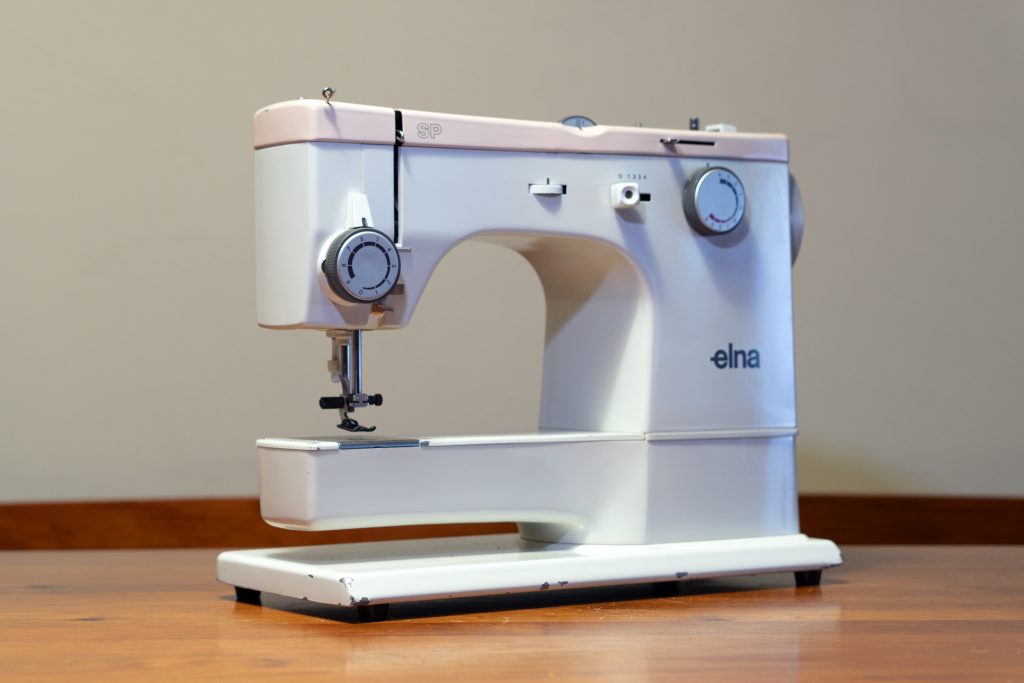
This model still shares what is probably the least ergonomic reverse control in the industry, bar none: a horizontal swinging flat metal slab that digs into your finger as you swipe it right to reverse. You can find it peeking just above the stitch length control dial.
This dial, on the other hand, is interesting in that it adds the ability to sew in reverse without having to actuate said reversing lever. This makes it comfortable to sew backwards when needed and adds greater control over a constant-length reverse stitch.
The stitch width, on the other hand, is controlled by a curious little square knob that provides very little travel, making it harder to fine-tune this parameter. In typical Elna fashion, this is countered by added functionality in the knob, which rotates to change its function: it can swing freely, or in 5 fixed steps (0 to 4), or as a sequential control for the most complicated automatic buttonhole mechanism in history.
User friendliness was definitely in anyone’s mind when engineering this machine, as the automatic buttonhole requires studying the manual to even know of its existence, and is processed in a sequence of steps that cannot be reversed or interrupted: once started, the process must be carried out to the end, to start again or exit the buttonhole mode.
The people at Elna were probably having fun coming up with creative solutions to problems that they should have avoided in the first place. Maybe they enjoyed a challenge. For example, they could have included a small indent in the hook race/bobbin case (as Singer had done for decades prior), to allow the operator to easily remove the bobbing. But no, that was too straightforward. Instead, bobbins drop into a well and must be extracted with a comically-shaped spring-loaded attachment that you pull down from near the very hot light bulb. This attachment acts as a small finger that pokes the bobbin’s center channel and then pulls it up with the help of that spring. You then pluck the bobbin from the springy plastic finger thing.
I still think they could have added more steps to the process.
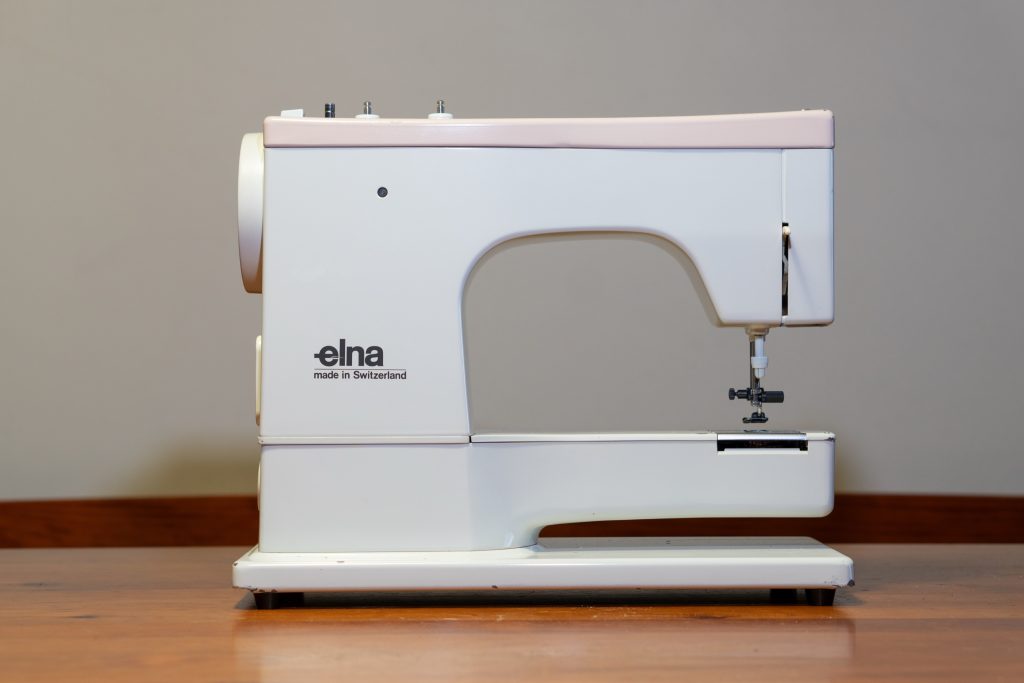
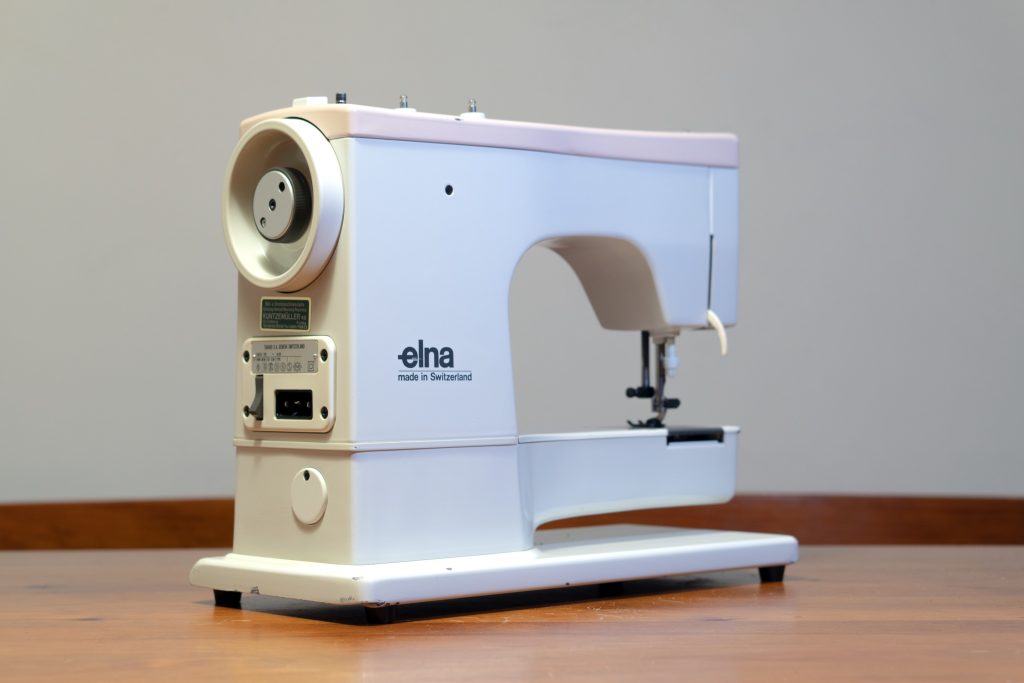
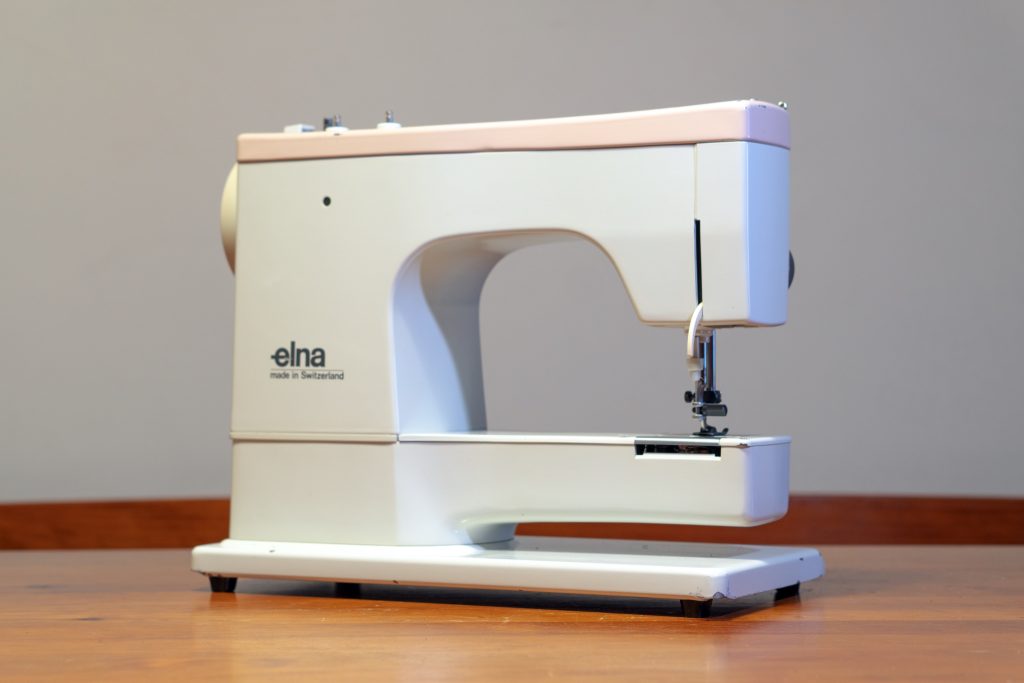
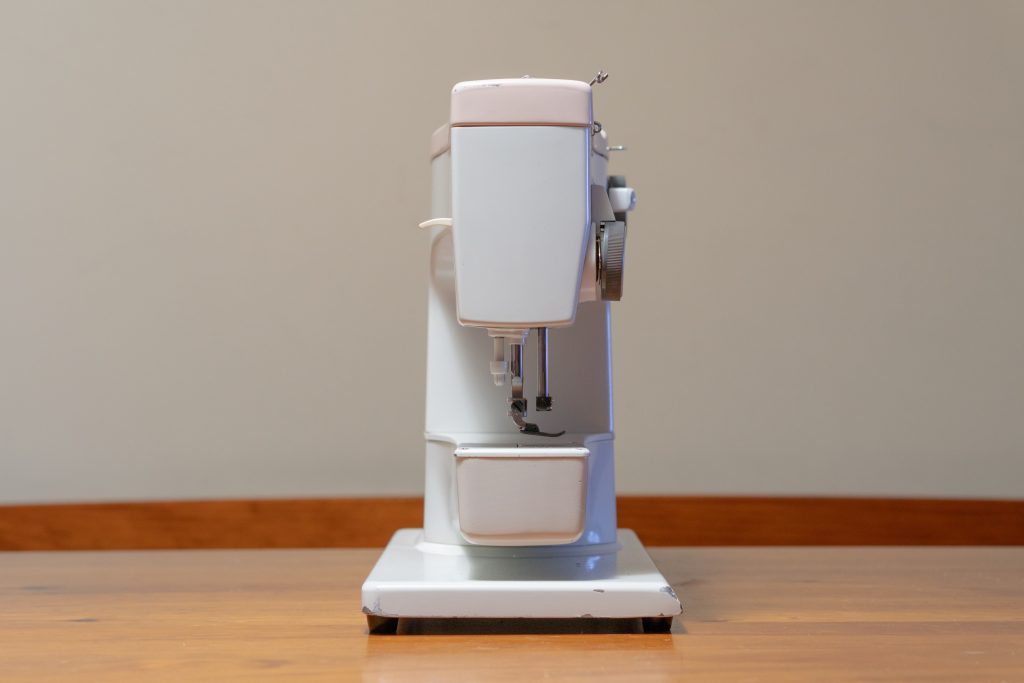
Other idiosyncratic features include a rotating bobbin case that sits behind the needle (most machines place the bobbin front of the needle), a slider to pull down the light bulb assembly for replacements (did they expect that to be needed so often?), a gigantic needle thread tension assembly that sits to the left of the take-up lever and greatly obstructs view of the work, and a switch with two speeds (when included, courtesy of newfangled electronic control) which, once again, is placed on the foot control instead of the machine body, for added inconvenience.
Redeeming qualities are the included utility stitches, the mentioned permanent reverse control, and of course the extremely smooth sewing experience provided by the mechanism’s stability and the horizontal rotating hook that prevents the machine from bouncing up and down at speed. And it’s really that good and making a smooth and steady stitch, to the point of making you forgive and almost forget all of its shortcomings and ergonomic offenses.
Oh, and there’s also of course the iconic metal “ammunition box” transformer case, that turns into an extended sewing bed to envelop the free arm. Very practical, but no sure if I’d want to do clean work over the surface that’s been gathering dust and protecting the machine from the elements. I’m sure it’s OK if you’re sewing camouflage tarps in the battlefield, as it seems that’s very much the main intended use case for this machine.
Sources:
https://ismacs.net/elna/brief_history_and_stitches_created_by_elna.html
https://ismacs.net/elna/supermatic.html
Accessories include:
• Carrying case
• Accessory tray
• Decorative stitch cams
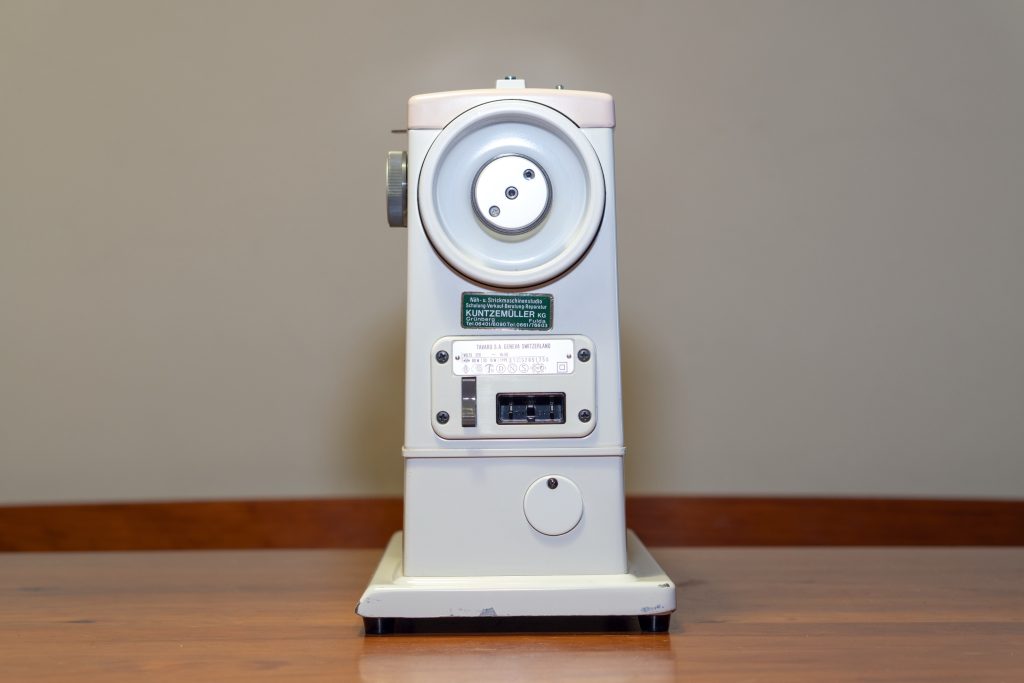
ID
| Maker | Tavaro S.A. |
| Brand | Elna |
| Model | SP 31 C |
| Year | |
| Serial number | |
| Origin | Switzerland |
| Manufacture | Switzerland |
| Provenance | Germany |
| Status | Private collection |
SPECS
| Voltage | AC 220 V |
| Bed type | |
| Bed extension | |
| Feet/shank type | |
| Foot pressure adjustment | |
| Bobbin type | |
| Hook/race position | |
| Hook movement | |
| Bobbin winder | |
| Spool pins | |
| Bulb type | |
| Original foot control | |
| Current foot control | |
| Dimensions | |
| Weight |
FEATURES
| Zigzag | |
| Reverse type | |
| Needle position control | |
| Stitch length limiter | |
| Stitch width limiter | |
| Utility stitches | |
| Decorative stitches | |
| Stretch stitches | |
| Auto-reverse stitches | |
| Double needle provisions | |
| Drop feed |
ACCESSORIES
| Presser feet | |
| Straight stitch needle plate | |
| Feed dogs cover plate |
DOCUMENTS
| User manual | Download PDF: |
| Service manual | Download PDF: |