
Singer 99k
Little treasures
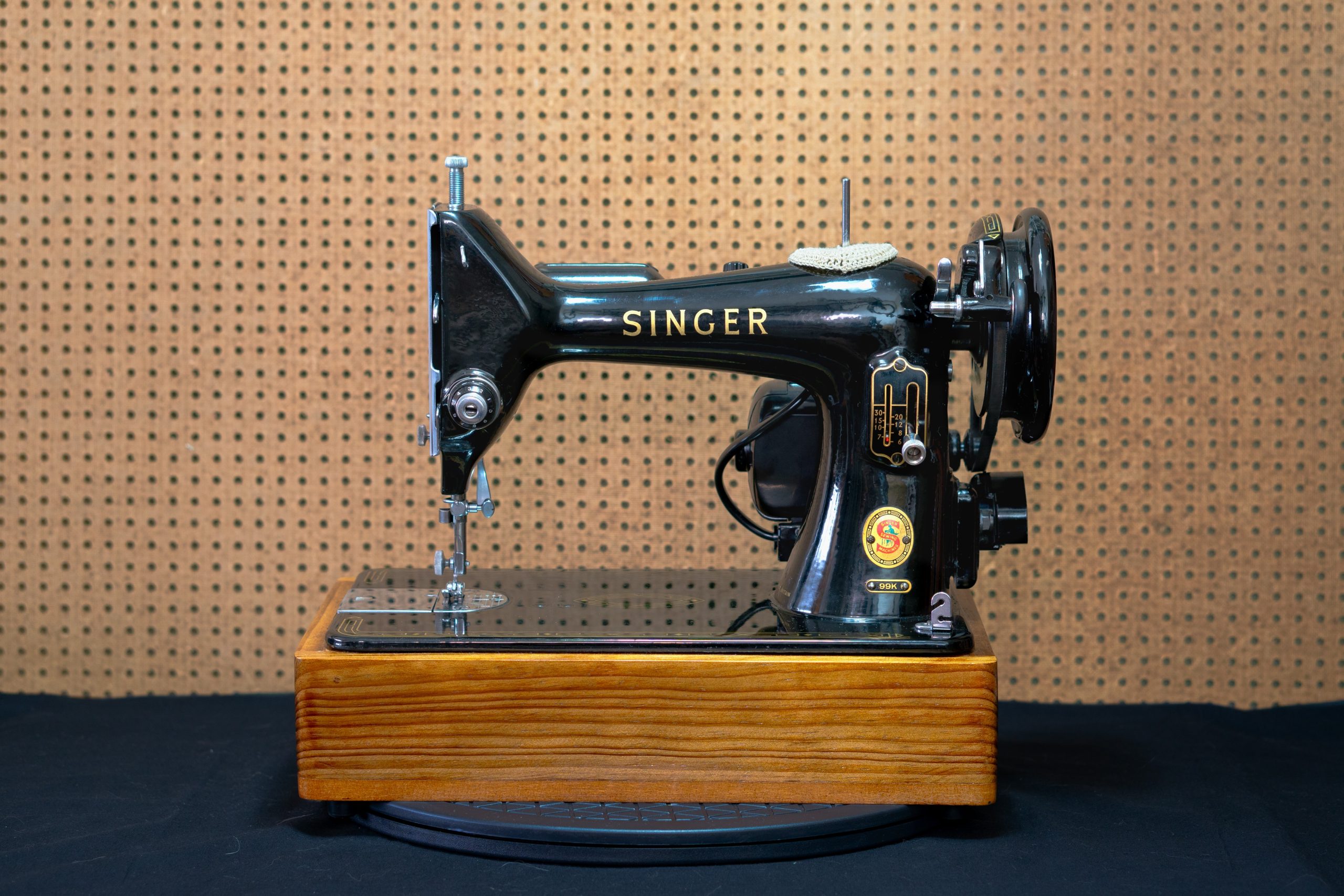
In 1921, Singer added an electric motor option to the 99, creating the 99K, the company’s first portable electric machine. The 99 itself launched in 1911 as a 3/4-size version of the Singer 66, targeting demand for a machine usable without a dedicated table. Production continued until 1958, when the mechanically identical 185K took over, a span exceeding 47 years and millions of units, trailing only the Singer 15 in total sales volume.
The 99K weighed about 10 kg, used a knee-lever or foot pedal for electric operation, and included adjustable tension. A vertical lever was introduced to adjust stitch length, adding the ability to reverse feed direction. Previous versions lacked reverse stitch. Feed dogs did not drop, requiring a cover plate for buttonholer or zigzag attachments. Construction was cast iron with japanned black enamel and gold decals, later variants shifting to plastic bases and beige colorways under the 185K name. Standard low-shank feet and needle sizes 130H/705H or 15×1 applied across the range.
The 99K’s significance lies in bringing electric-powered sewing into portable, home-use form factors, extending Singer’s earlier hand-crank and treadle models into the domestic electrification era of the early 20th century.
Accessories include:
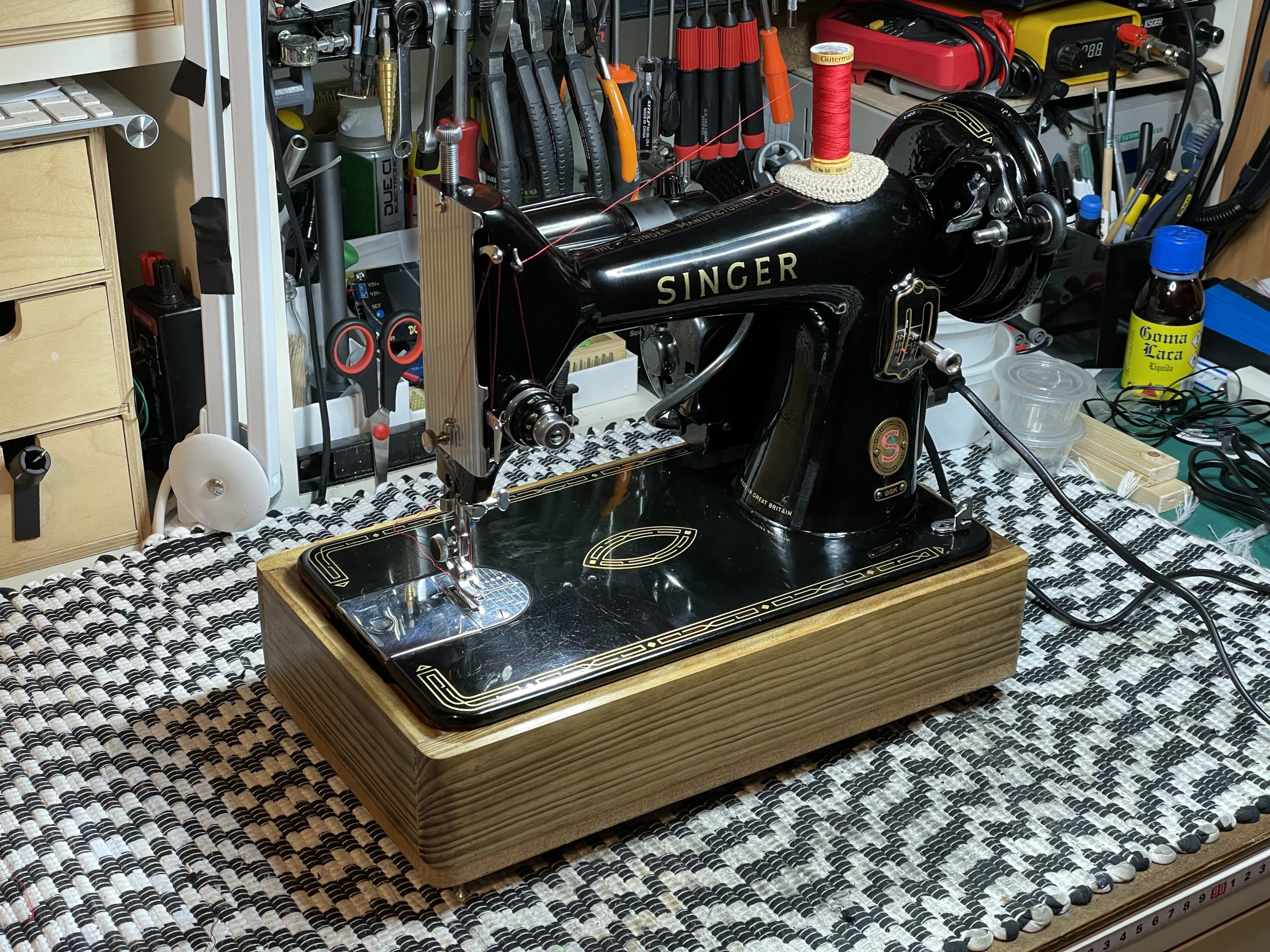
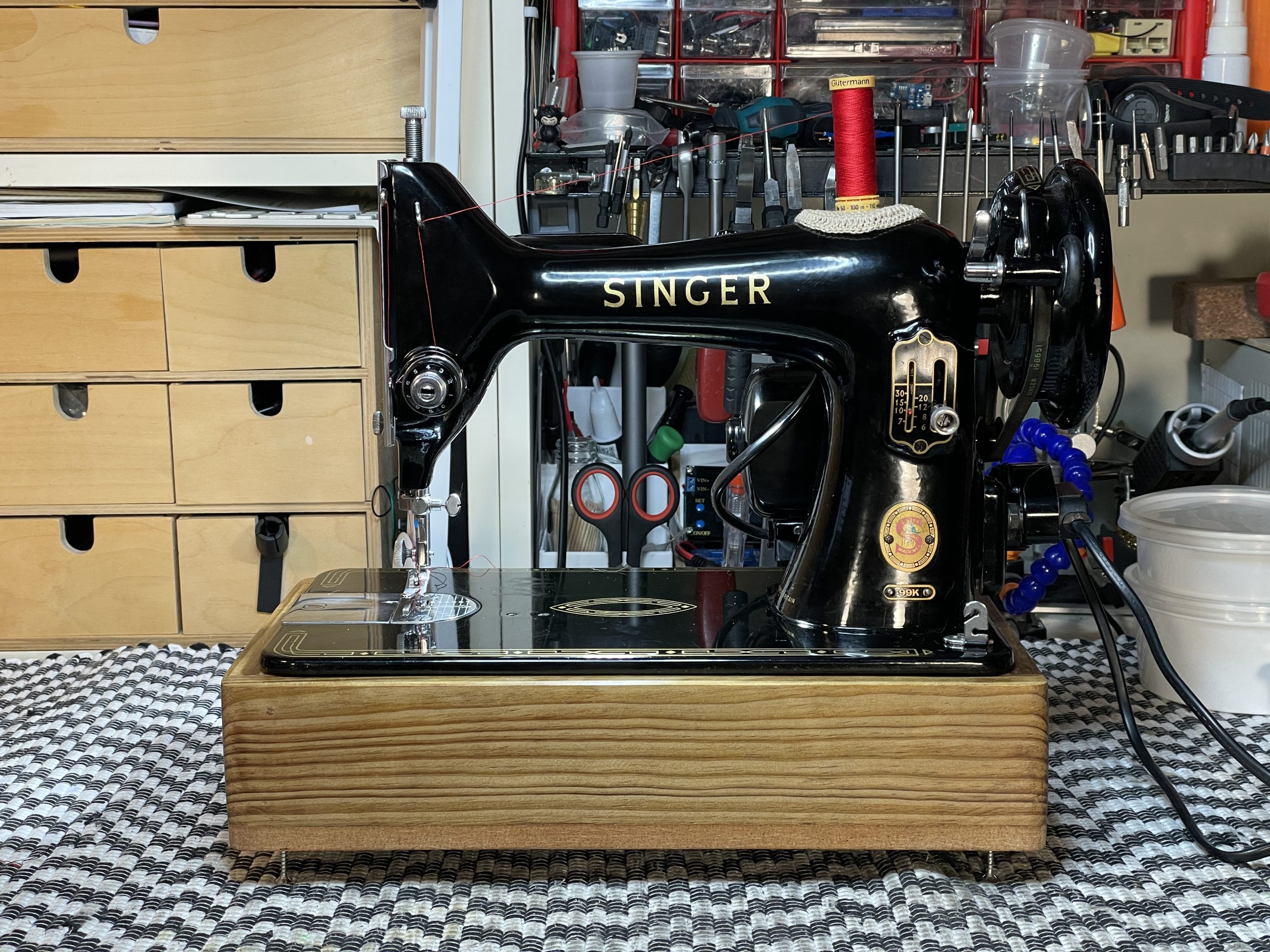
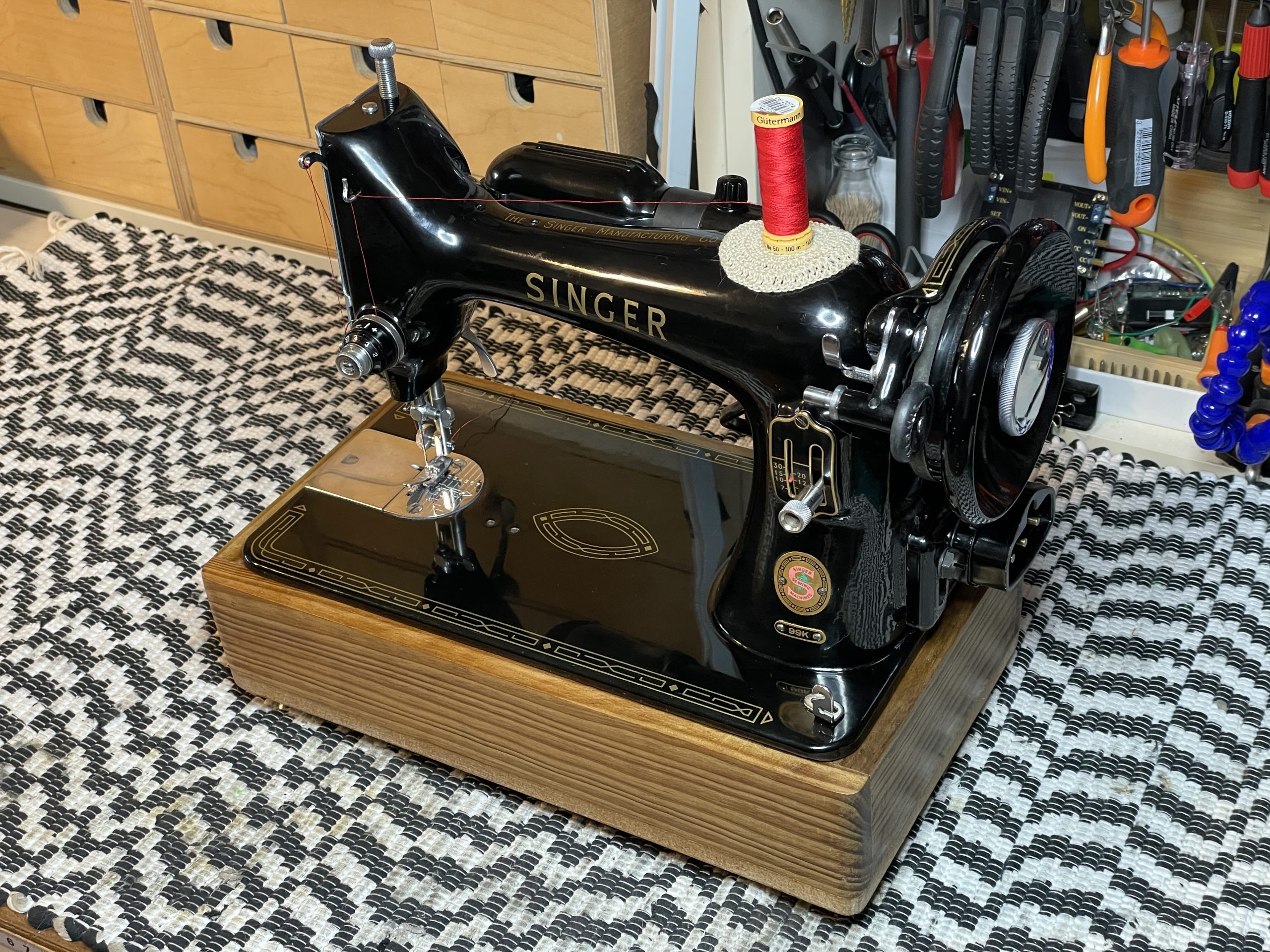
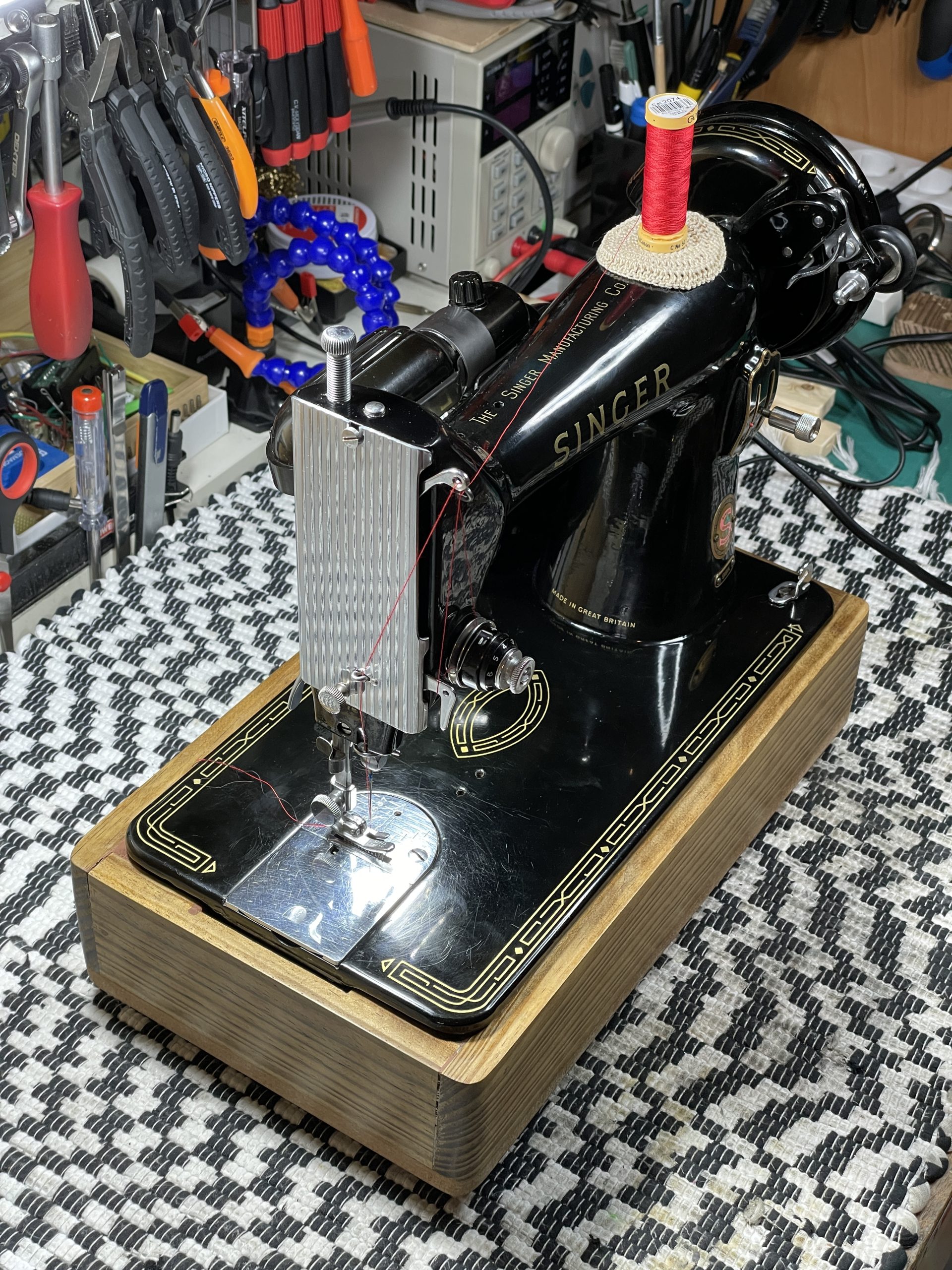
• Custom made wood base
• Buttonhole attachment


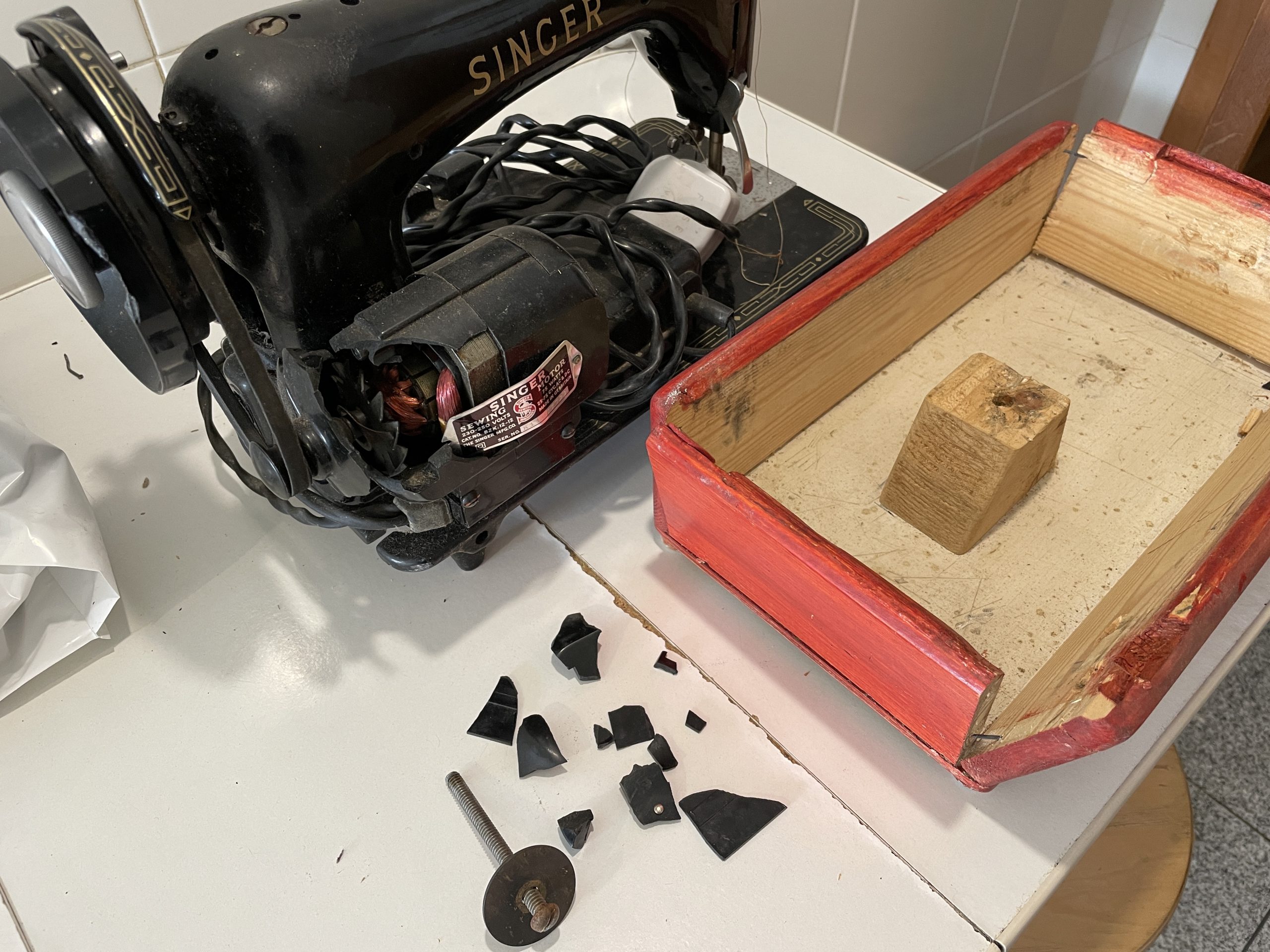
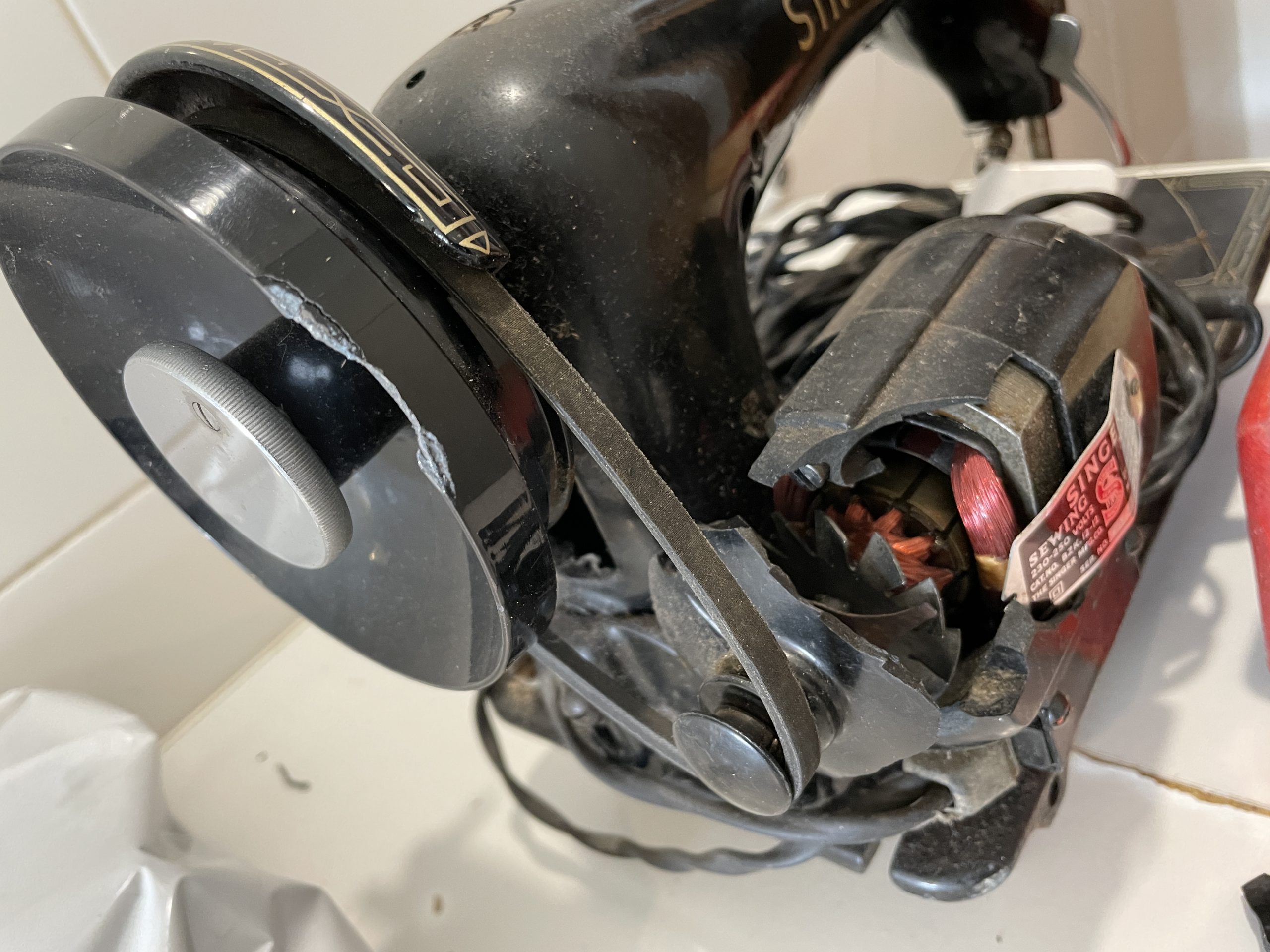
How she arrived: busted base, broken motor. It’s hard to transport fragile old bakelite pieces, especially when mixed up with heavy cast iron machines.
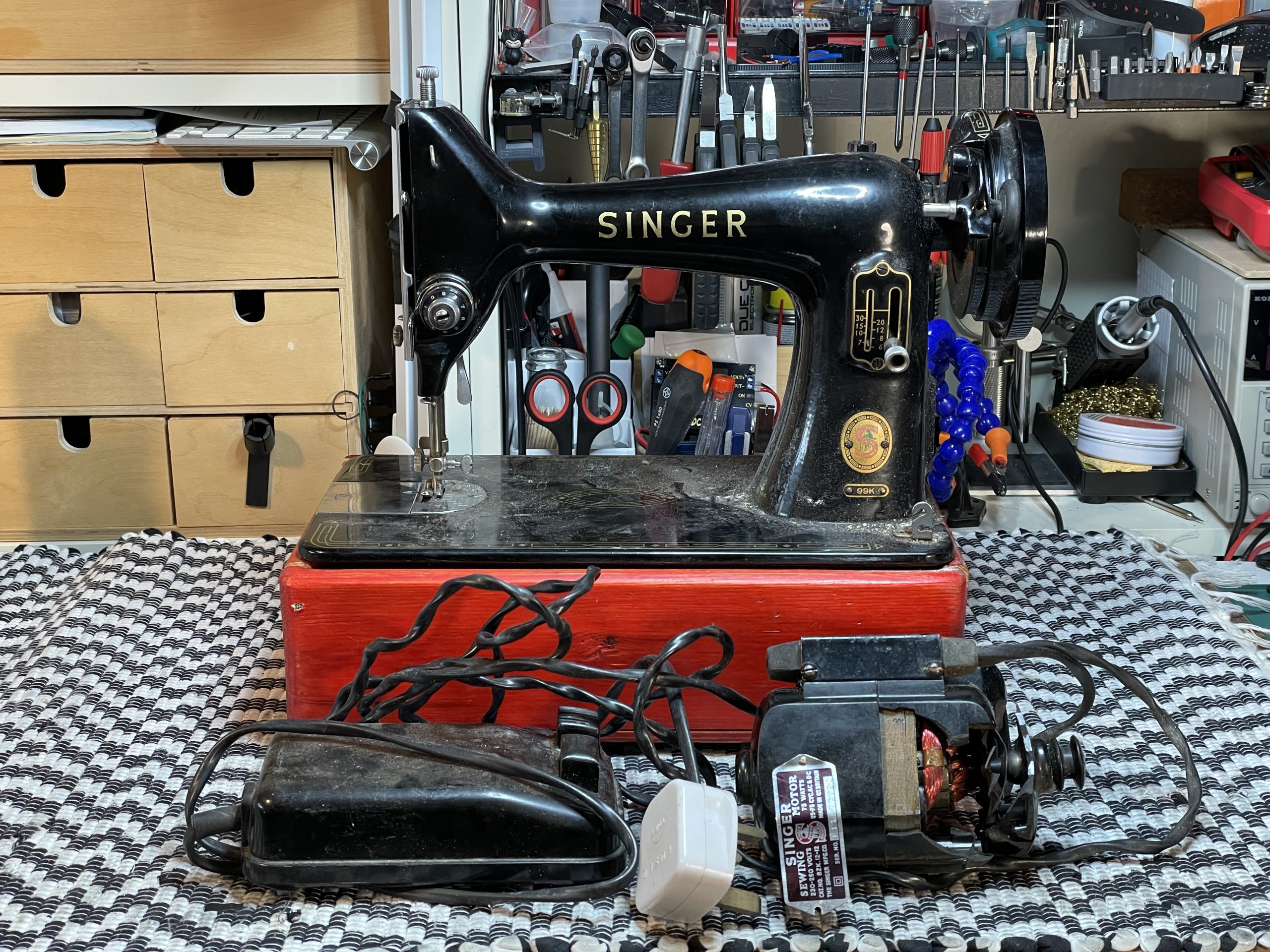
Shiny and proud after a good deep cleaning, tuning up, and new shoes:
ID
| Maker | Simanco |
| Brand | Singer |
| Model | 99K |
| Year | |
| Serial number | |
| Origin | |
| Manufacture | Scotland |
| Provenance | England |
| Status | Private collection |
SPECS
| Voltage | AC 220 V |
| Bed type | Flatbed |
| Bed extension | No |
| Feet/shank type | Low shank |
| Foot pressure adjustment | Yes, variable |
| Bobbin type | Class 66 |
| Hook/race position | Horizontal |
| Hook movement | Oscillating |
| Bobbin winder | Yes, automatic |
| Spool pins | 1 |
| Bulb type | BA15 |
| Original foot control | No |
| Current foot control | Singer black button foot control |
| Dimensions | |
| Weight |
FEATURES
| Zigzag | No |
| Reverse type | Momentary/permanent |
| Needle position control | No |
| Stitch length limiter | Yes |
| Stitch width limiter | No |
| Utility stitches | No |
| Decorative stitches | No |
| Stretch stitches | No |
| Auto-reverse stitches | No |
| Double needle provisions | No |
| Drop feed | No |
ACCESSORIES
| Presser feet | Straight stitching |
| Straight stitch needle plate | Yes, default |
| Feed dogs cover plate | Yes |
DOCUMENTS
| User manual | Download PDF: |
| Service manual | Download PDF: |