
Husqvarna CL 71
She’s not messing around
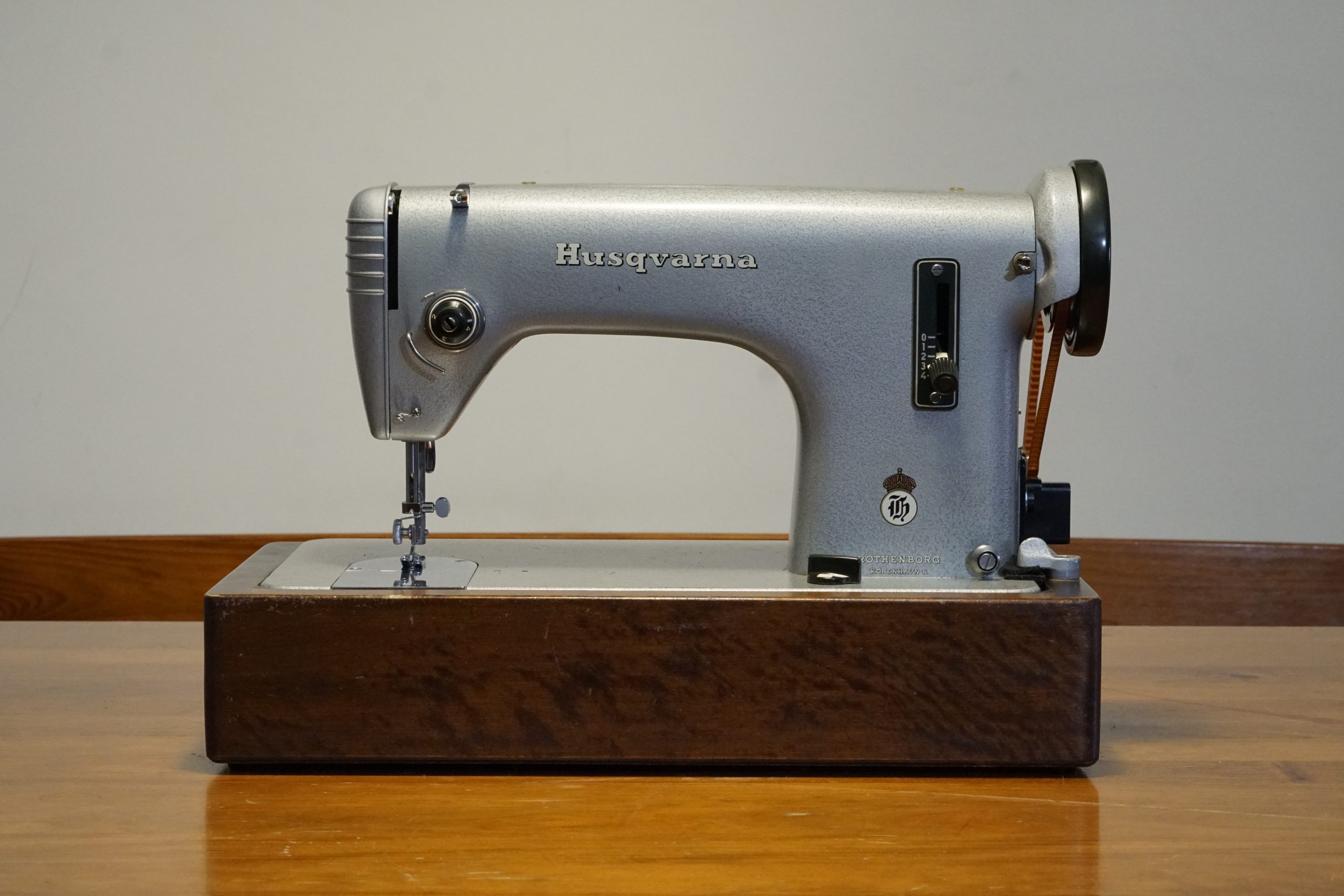
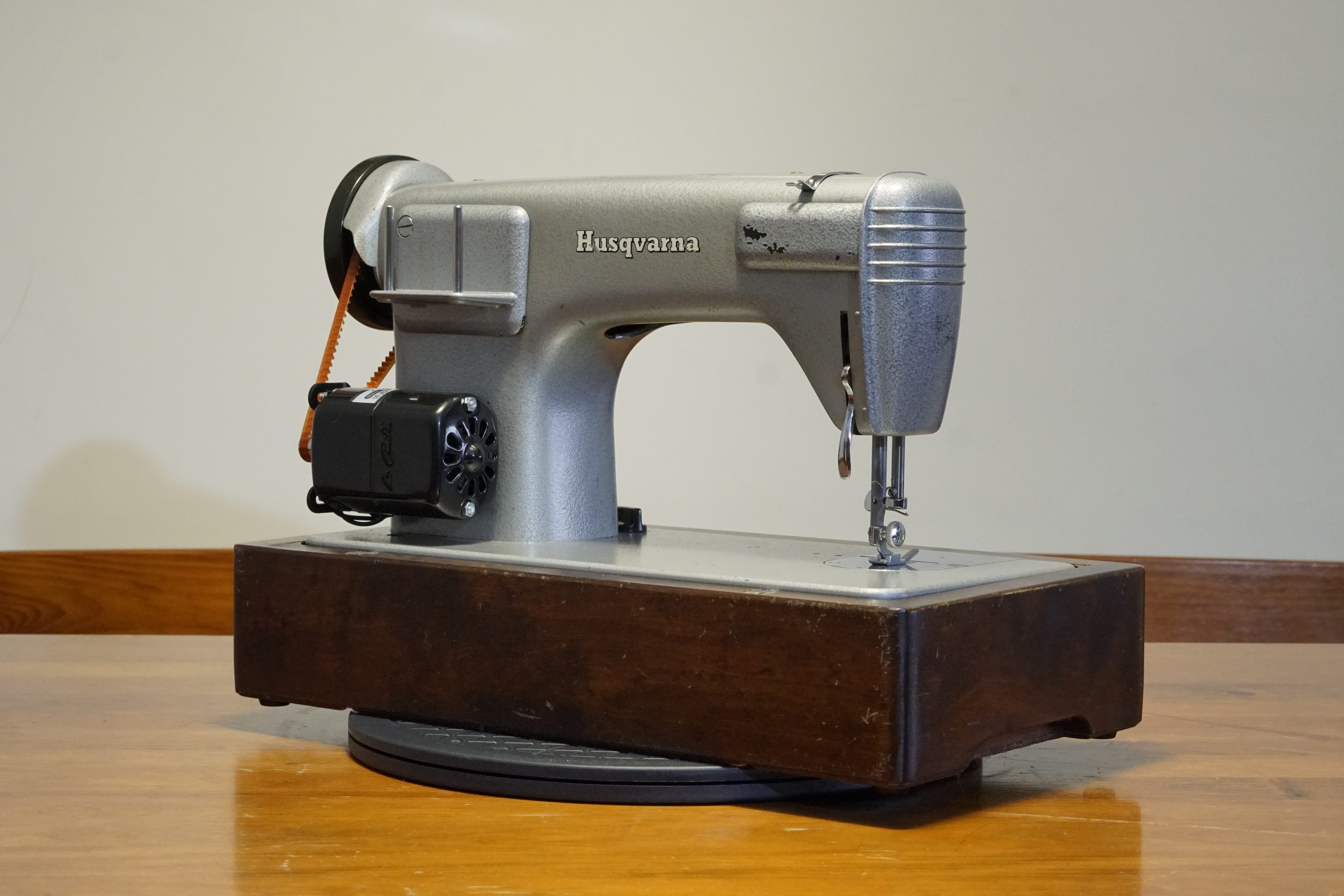
Husqvarna began in 1689 as a royal Swedish arms factory, which explains why its early sewing machines look built to survive a musket volley. By 1872 the company had swapped rifles for needles, and by the late 1950s that industrial pedigree had produced the CL 71, sold simply as the Husqvarna 71 Rotary, a machine built for people who wanted a straight stitch and nothing to argue about.
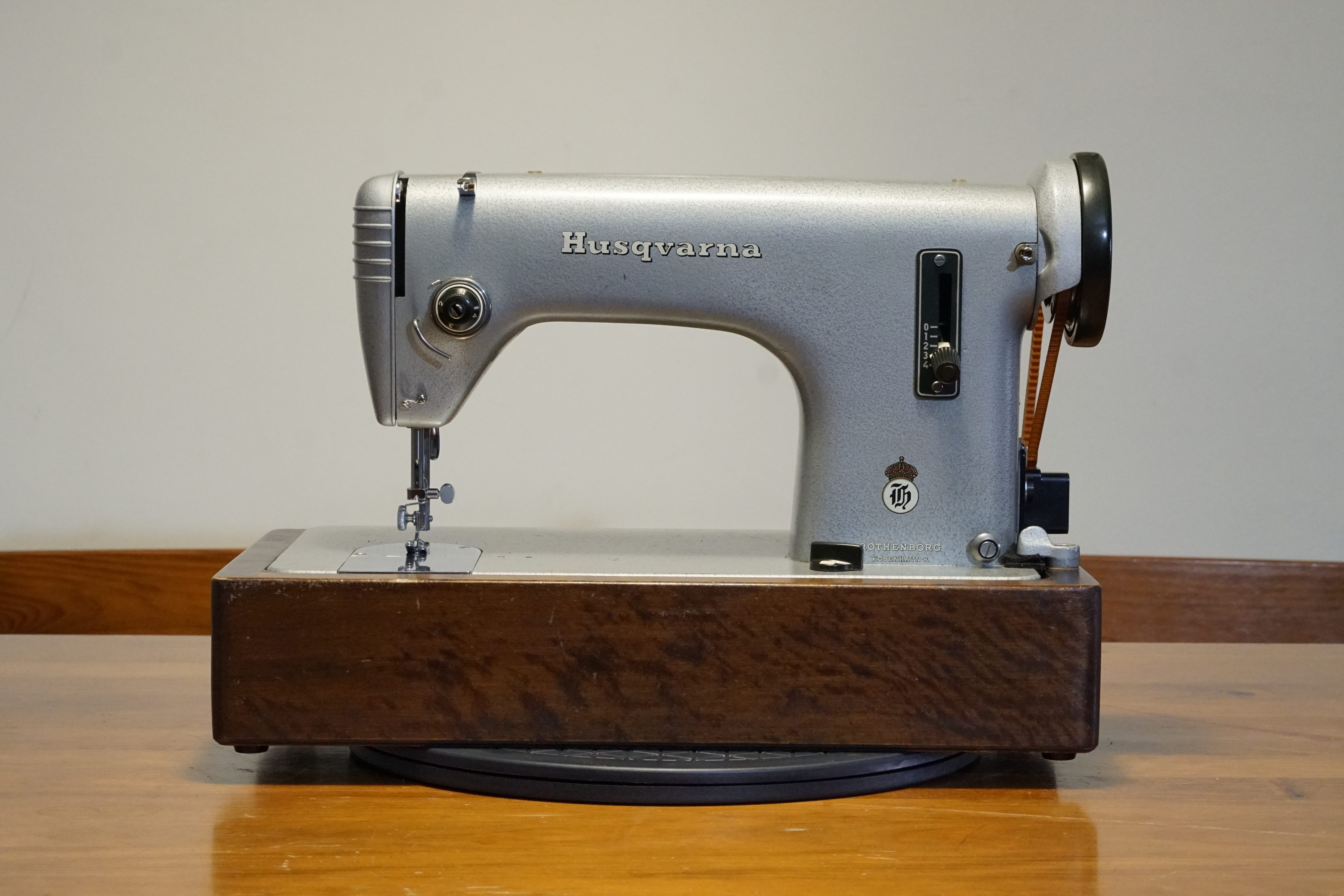
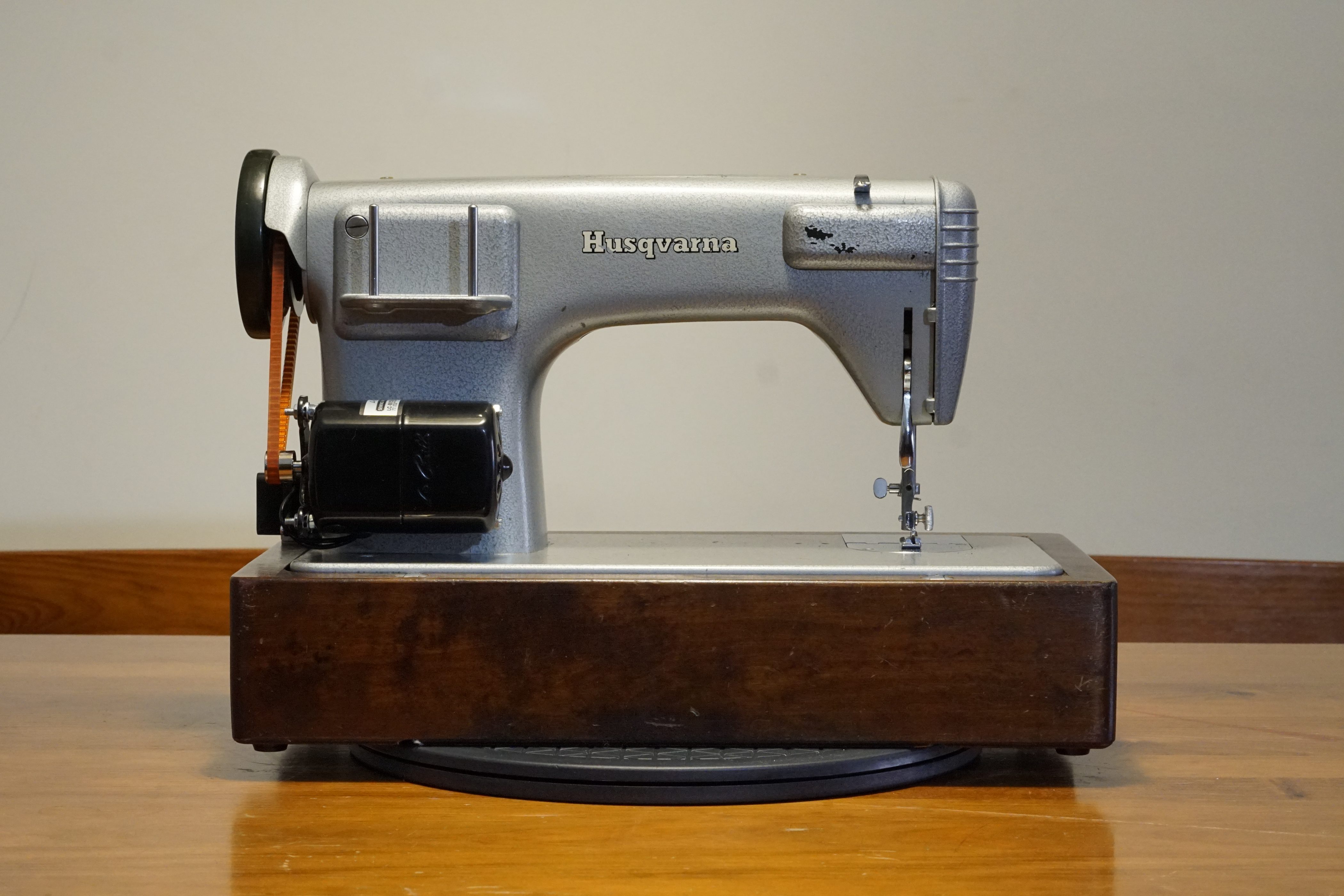
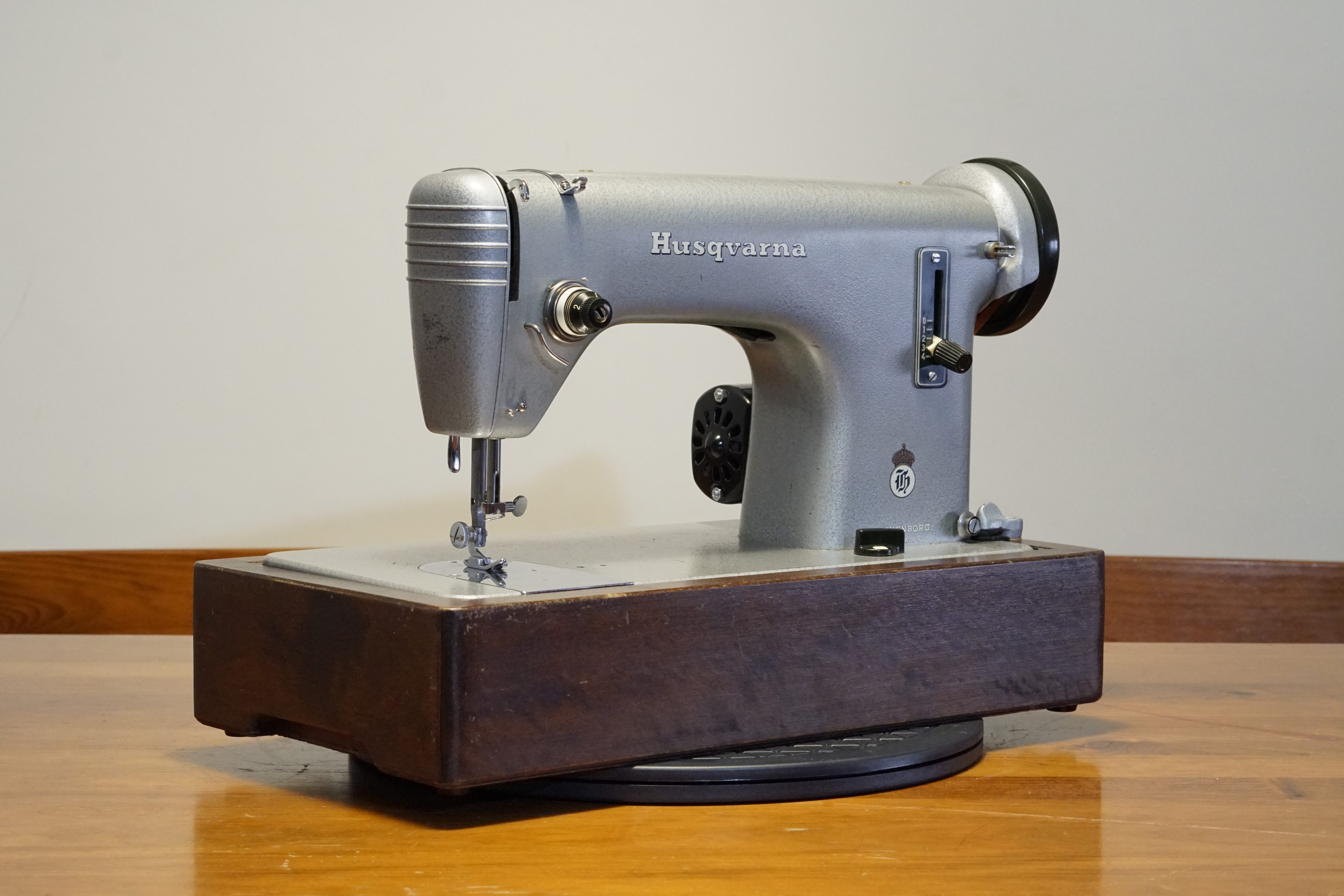
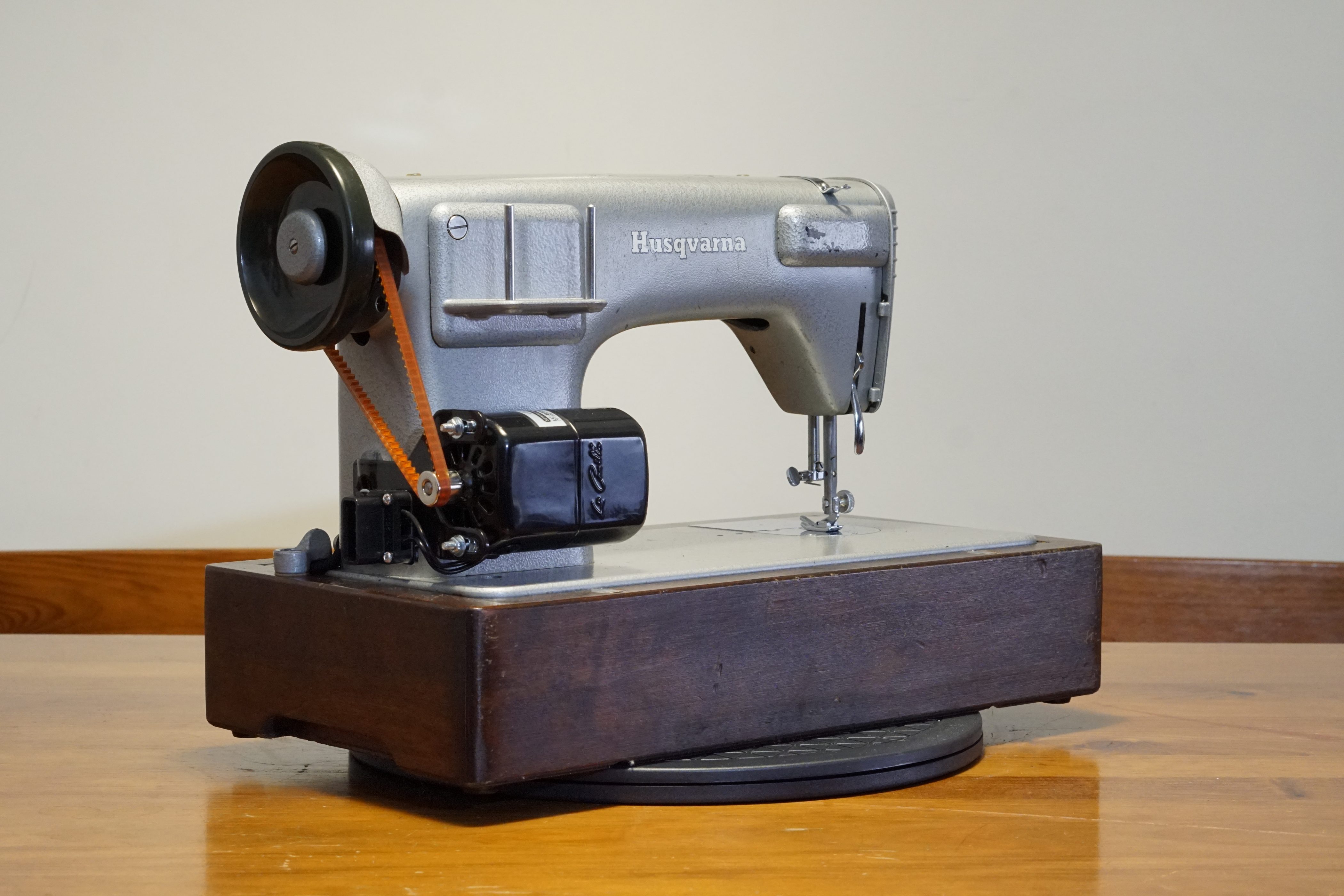
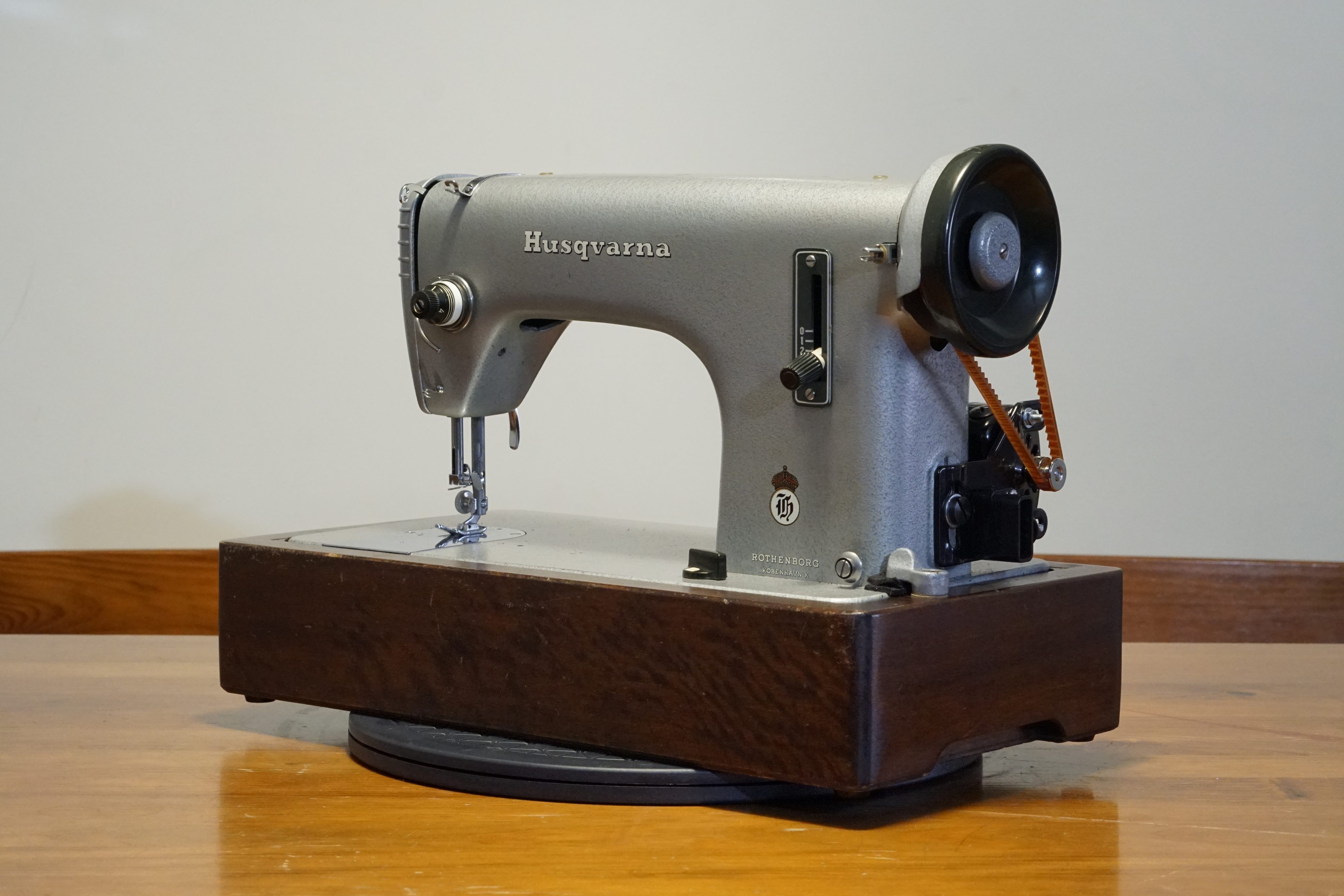
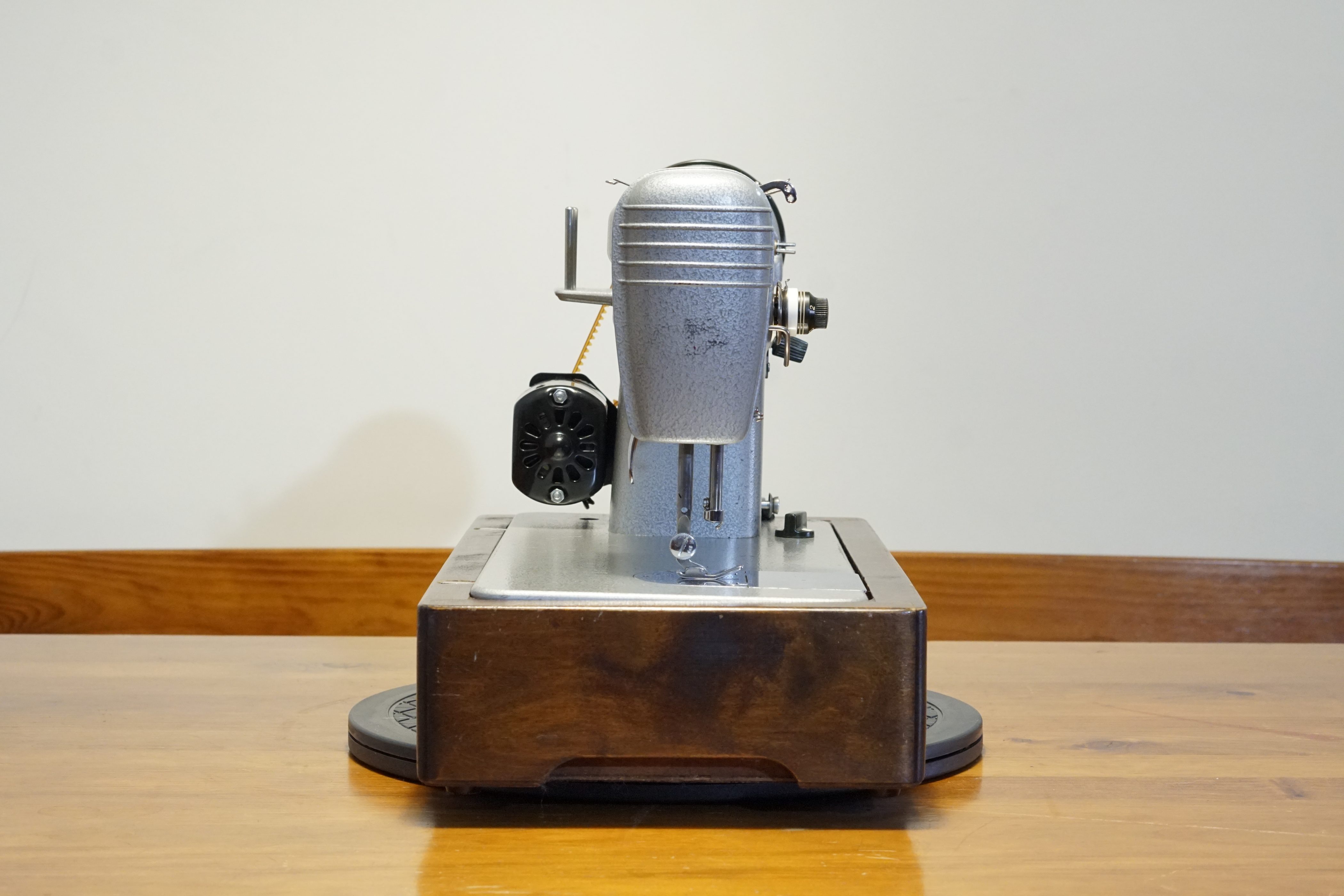
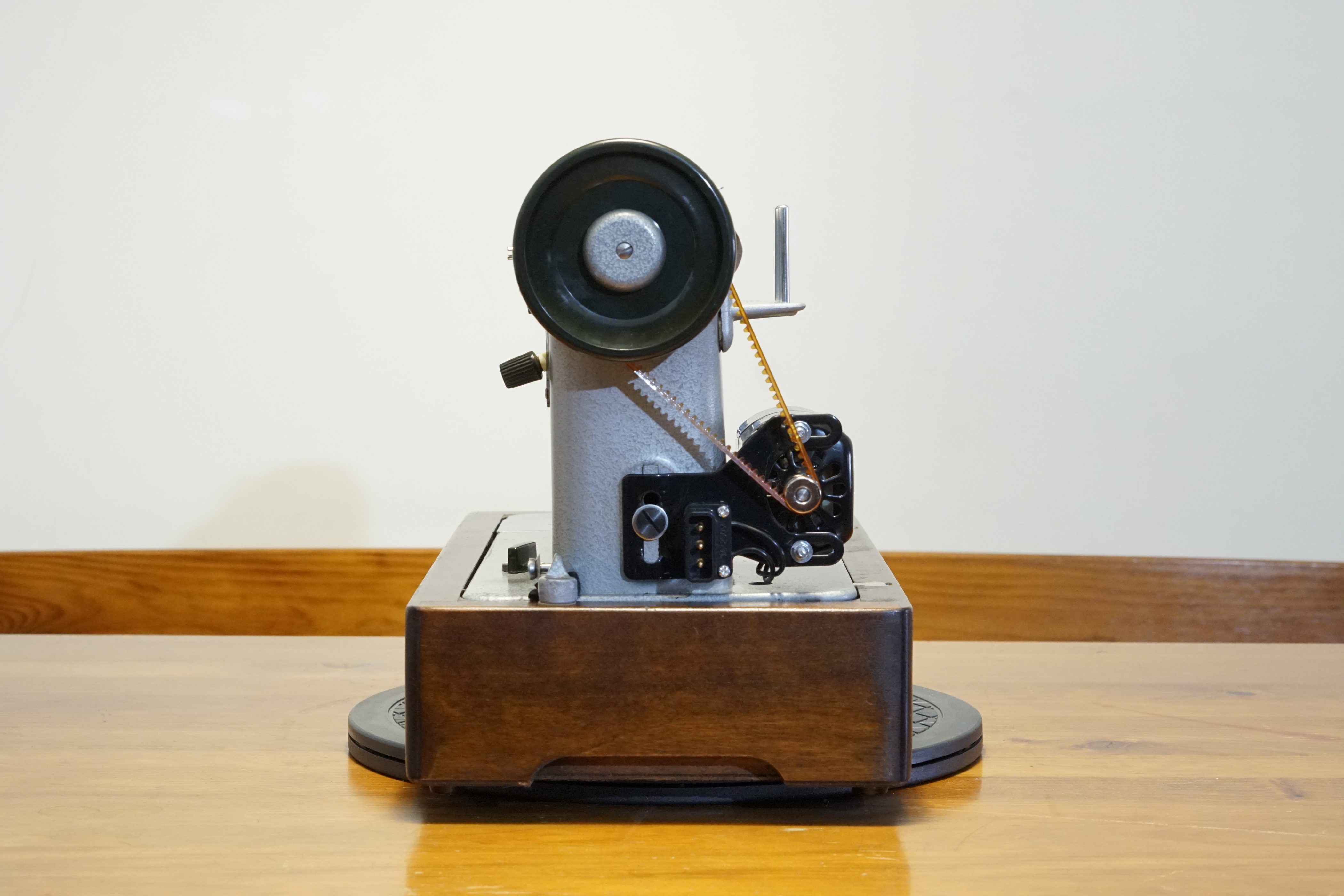
The 71 belongs to the generation that followed the Class 20 of 1953, a model Husqvarna promoted for its gearshift transmission and a rotary hook that needed no oil, a bold claim in an era when most machines demanded regular feeding. Later listings and service catalogues group the 71 Rotary alongside siblings such as the zigzag 19 and the automatic 51, all sharing that same cast body and mechanical approach. The body is light alloy finished in a grey hammertone that has aged into something closer to armor plating than home appliance. Power comes from an external motor clipped to the casting and linked by belt rather than buried inside the arm the way Singer preferred. Since the 71 sews only a straight stitch, its single dial handles stitch length and direction, numbered zero to four, with none of the width controls its later zigzag cousins needed. Annoyingly, Sondra also uses proprietary Husqvarna bobbins, which are slimmer than the ubiquitous Singer Class 15 that became the industry standard across many brands. But then again, her delivery affords her a few quirks.
That restraint carries some historical weight. Sweden’s factories ran through the war years without the disruption competitors faced elsewhere in Europe, leaving Husqvarna free to spend the late 1940s and early 1950s refining machines instead of rebuilding plants. The result reached households across Scandinavia through local retailers, among them the Copenhagen firm Rothenborg, whose badge often rides on the arm beside the Husqvarna crown.
The original case shows the Scandinavian instinct plainly. Rather than the vinyl covered cardboard common elsewhere, Husqvarna fitted the 71 into a varnished wood box with metal catches, a small piece of furniture in its own right and one that has outlasted plenty of machines it was meant to protect. This unit, however, was found inside a common cardboard carrying case, a usual sight in later models that cut corners for a lower cost.
Collectors return to the 71 for reasons that sound almost defiant given how basic it is. The gear train shrugs off decades of storage, the hook rarely gives trouble, and the whole machine carries the reassuring heft of something designed before anyone worried about shipping weight. Set against contemporaries like the Singer 15 or 201, both leaning on shuttle systems that wanted frequent oiling, the 71 needed less fuss to keep stitching cleanly. Compared with its own descendants, the automatic 21 and the later 2000 series with their cams and zigzag settings, the 71 looks almost stubborn in its simplicity, and owners tend to treat that stubbornness as the whole appeal. Ask around vintage sewing circles and the opinion holds steady across the board: unglamorous, rarely broken, and usually the machine people reach for when something actually needs sewing rather than admiring.
Sources and reviews:
https://www.singer.com/pages/husqvarna-viking-our-history
https://ismacs.net/husqvarna-viking/brief-husqvarna-viking-history.html
https://ismacs.net/husqvarna-viking/index.html
https://www.worthpoint.com/worthopedia/vintage-cl-71-husqvarna-viking-rotary-253029477
https://www.masinskikutak.com/2017/04/husqvarna-automatic-21.html
ID
| Maker | |
| Brand | |
| Model | |
| Year | |
| Serial number | |
| Origin | |
| Manufacture | |
| Provenance | |
| Status |
SPECS
| Voltage | AC 220 V |
| Bed type | |
| Bed extension | |
| Feet/shank type | |
| Foot pressure adjustment | |
| Bobbin type | |
| Hook/race position | |
| Hook movement | |
| Bobbin winder | |
| Spool pins | |
| Bulb type | |
| Original foot control | |
| Current foot control | |
| Dimensions | |
| Weight |
FEATURES
| Zigzag | |
| Reverse type | |
| Needle position control | |
| Stitch length limiter | |
| Stitch width limiter | |
| Utility stitches | |
| Decorative stitches | |
| Stretch stitches | |
| Auto-reverse stitches | |
| Double needle provisions | |
| Drop feed |
ACCESSORIES
| Presser feet | |
| Straight stitch needle plate | |
| Feed dogs cover plate |
DOCUMENTS
| User manual | Download PDF: |
| Service manual | Download PDF: |