
Singer 20-10
The stout sister
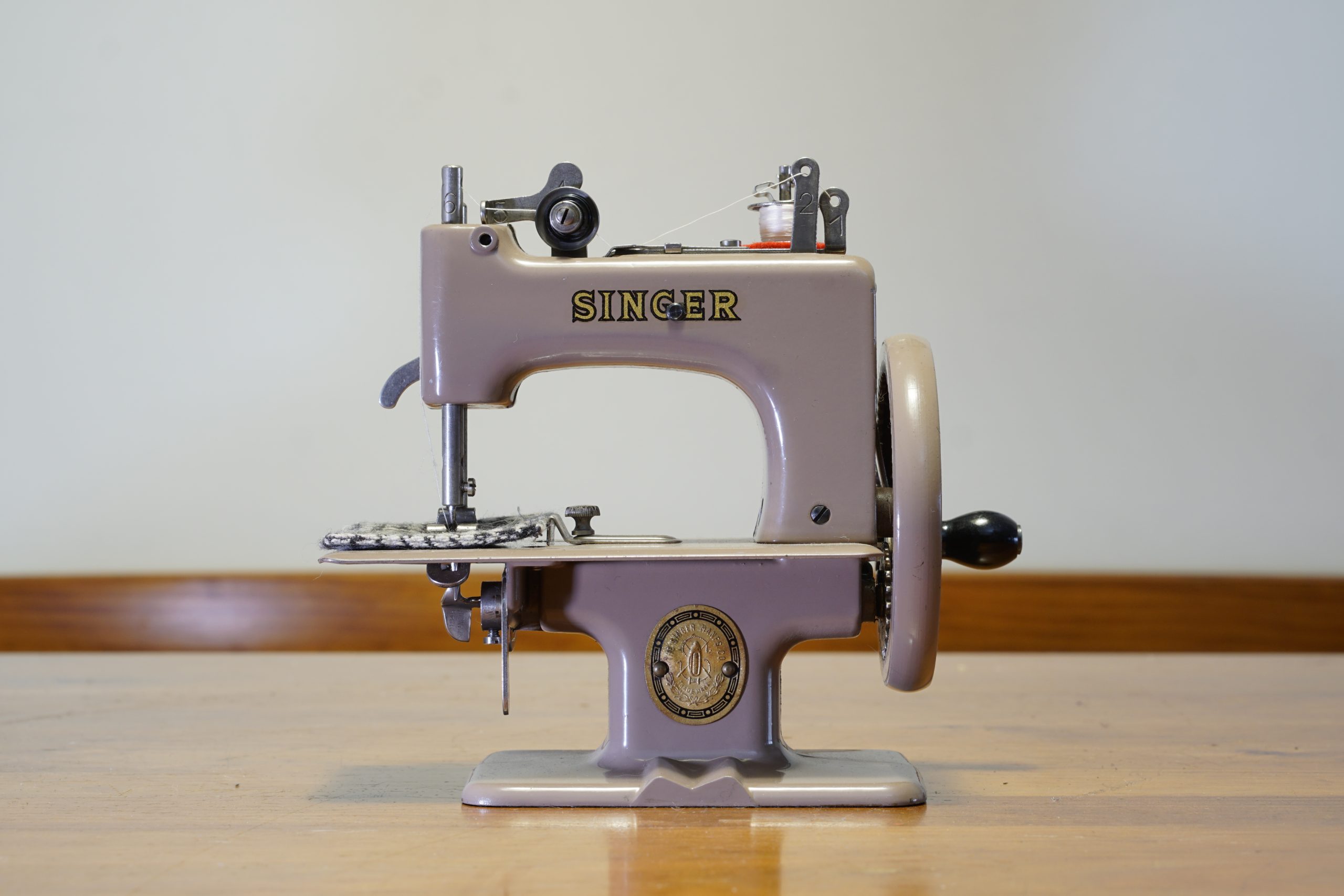
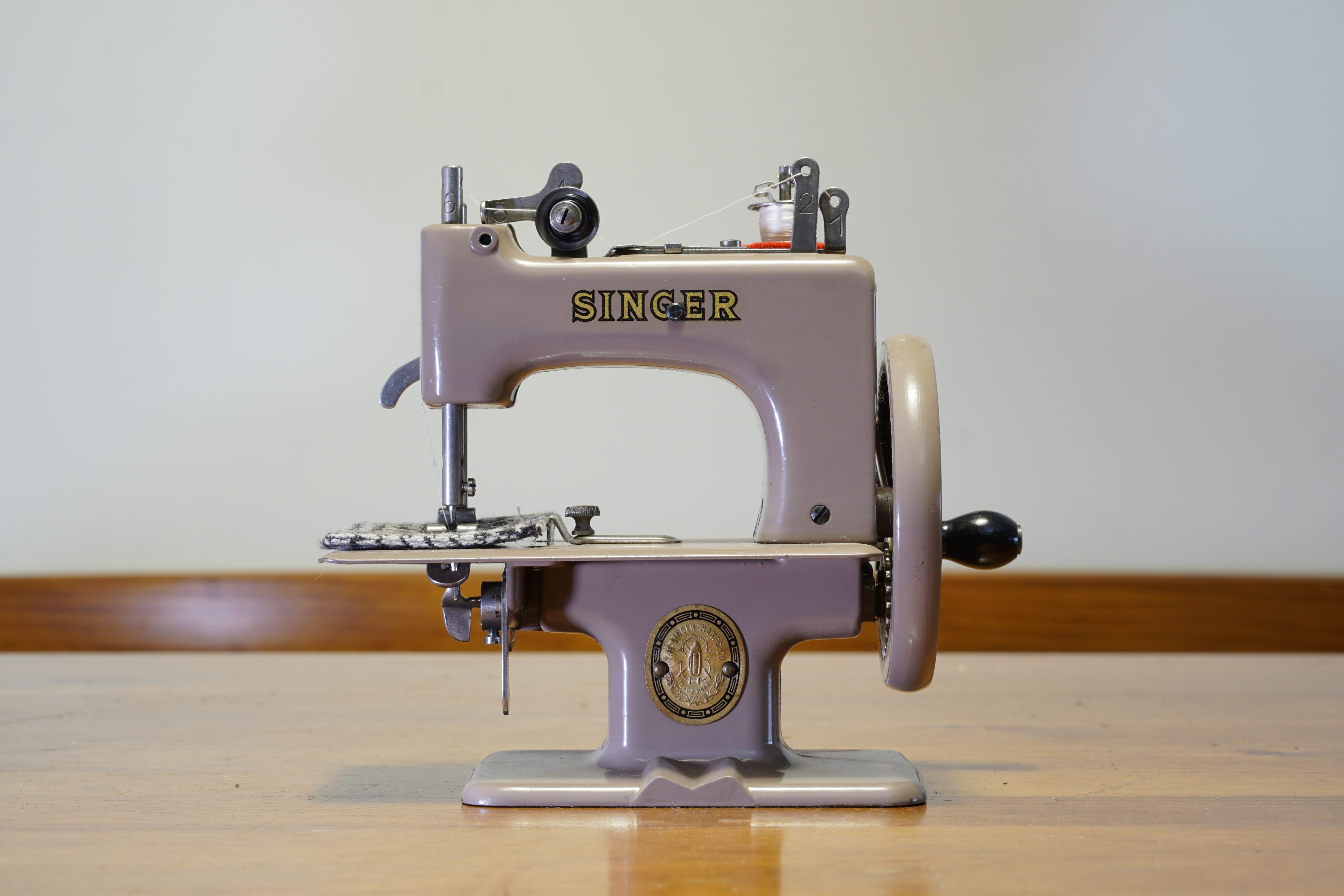
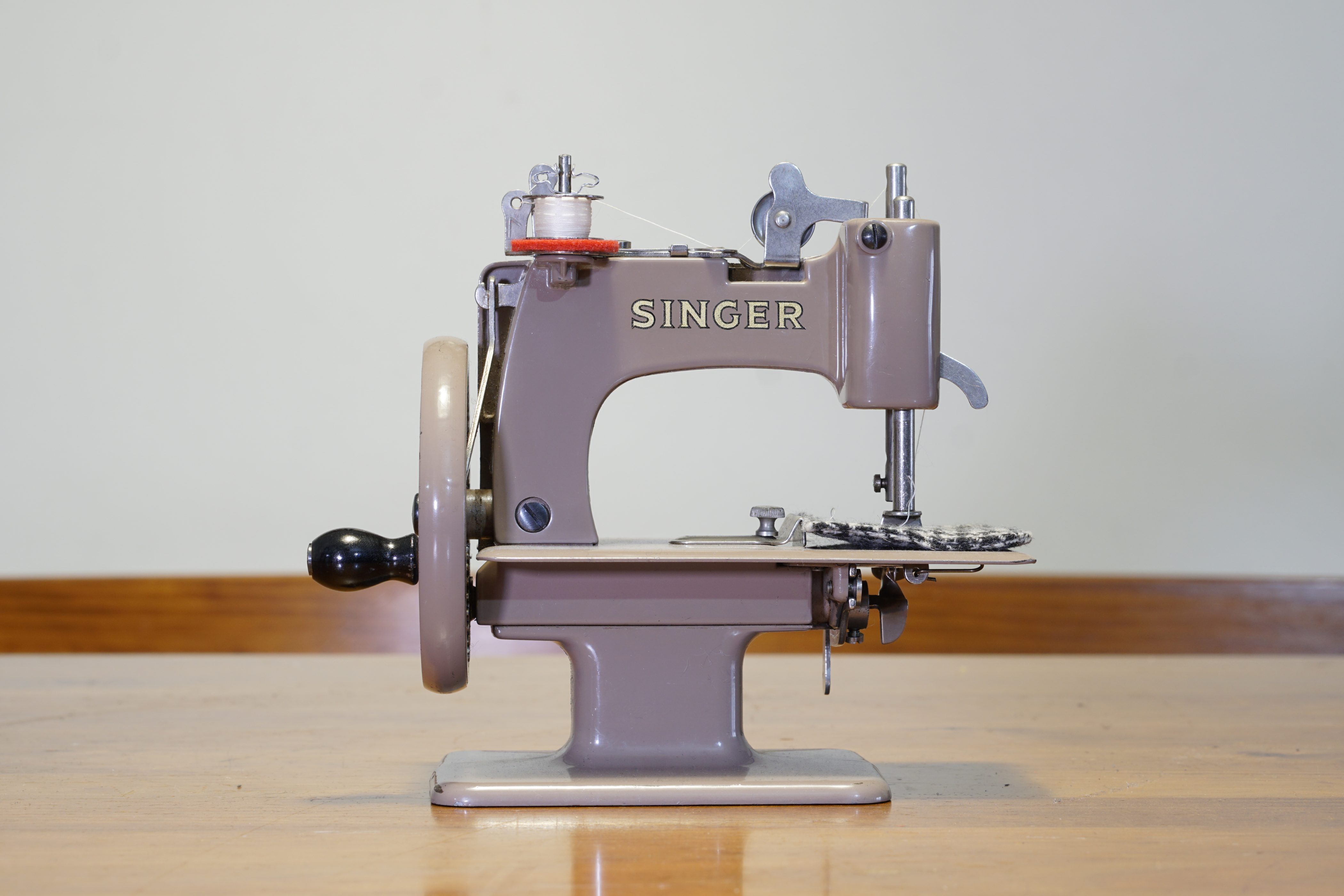
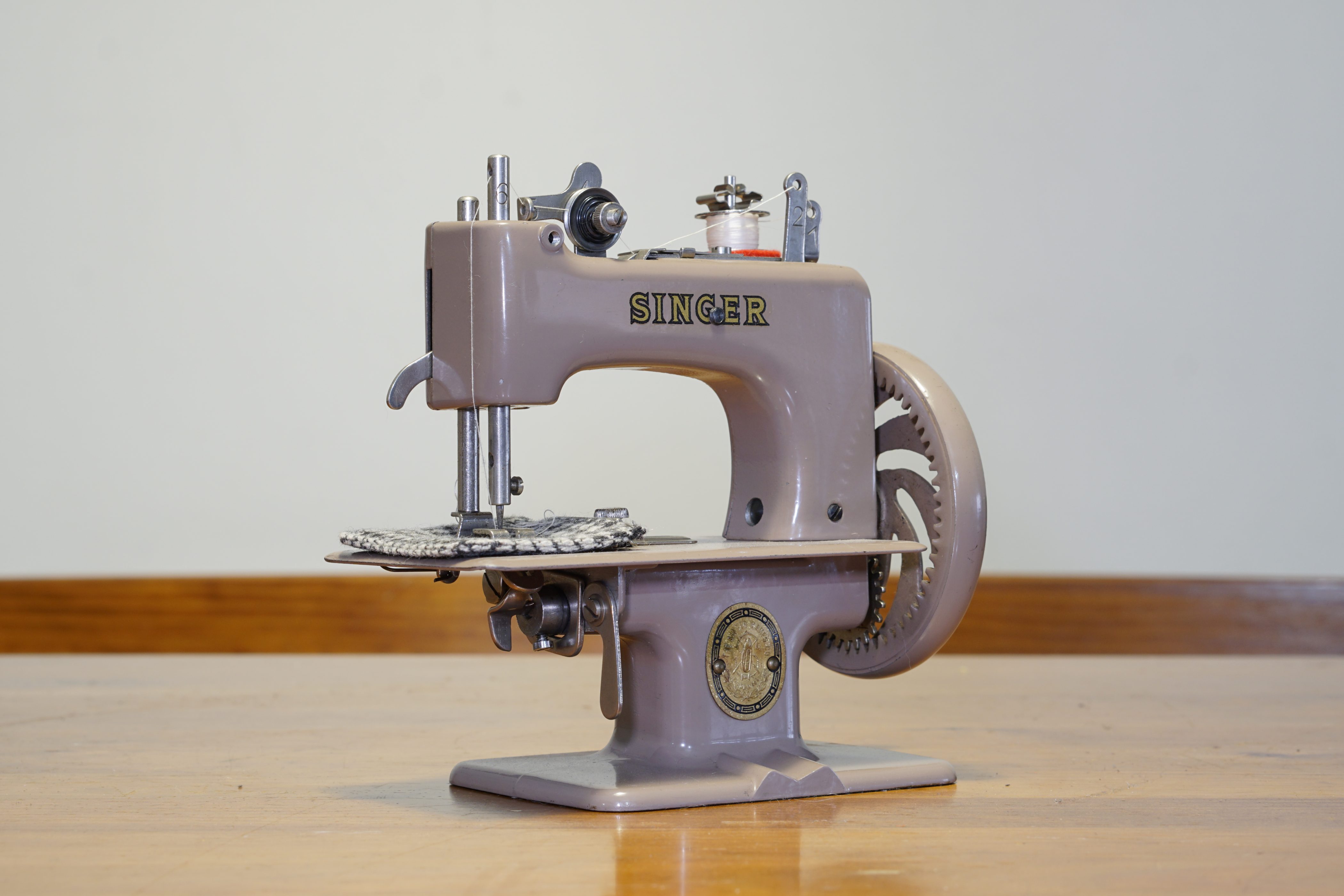
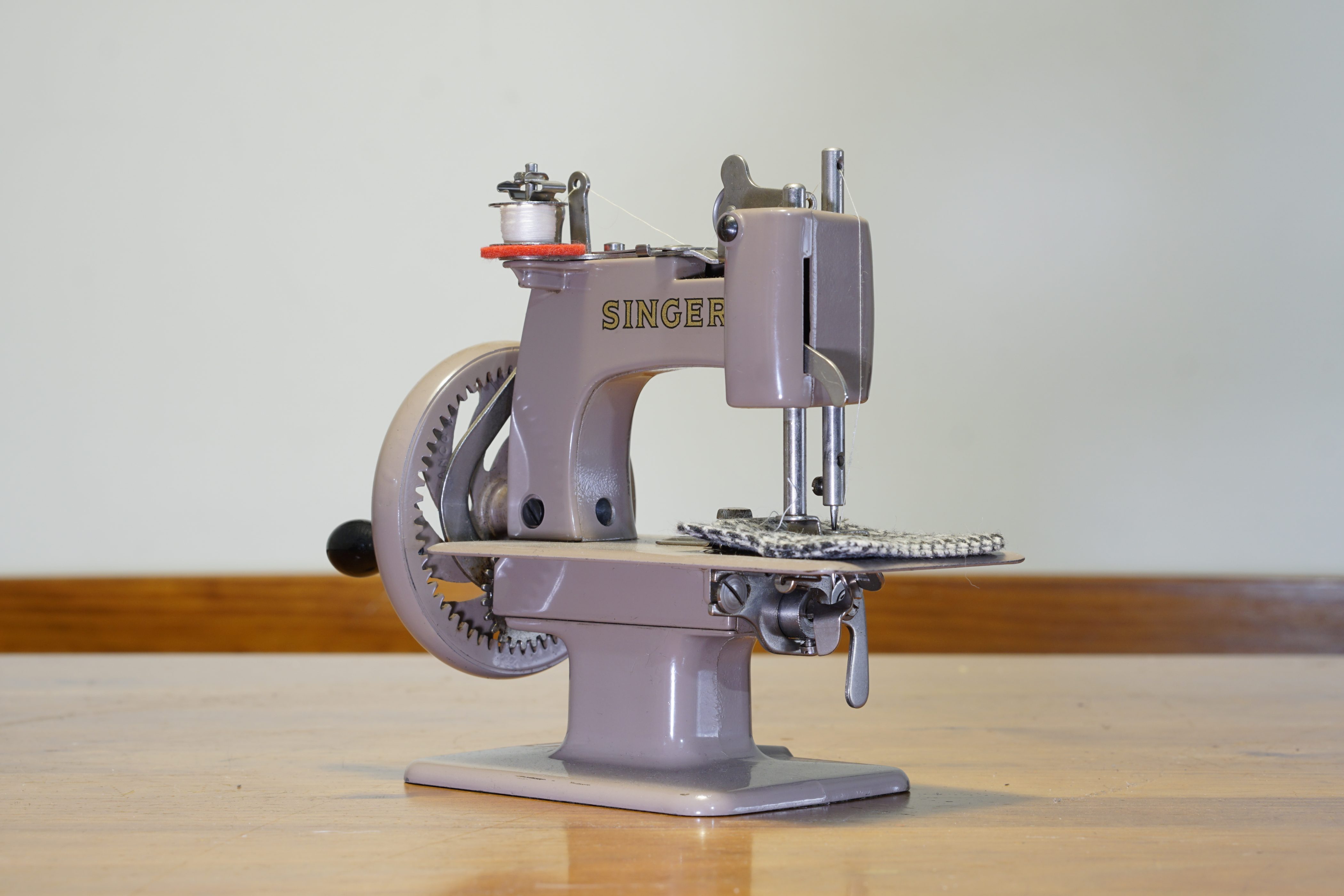
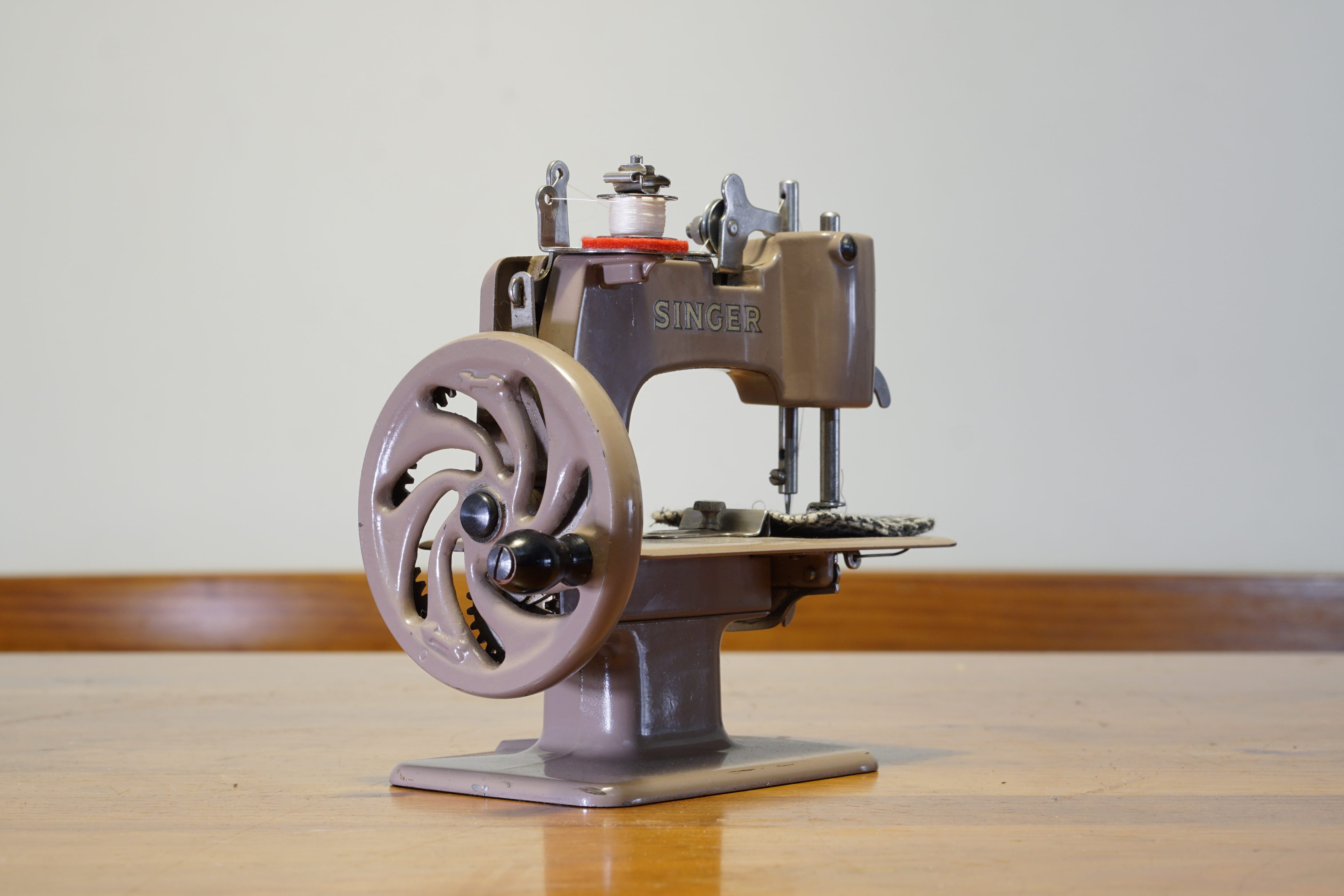
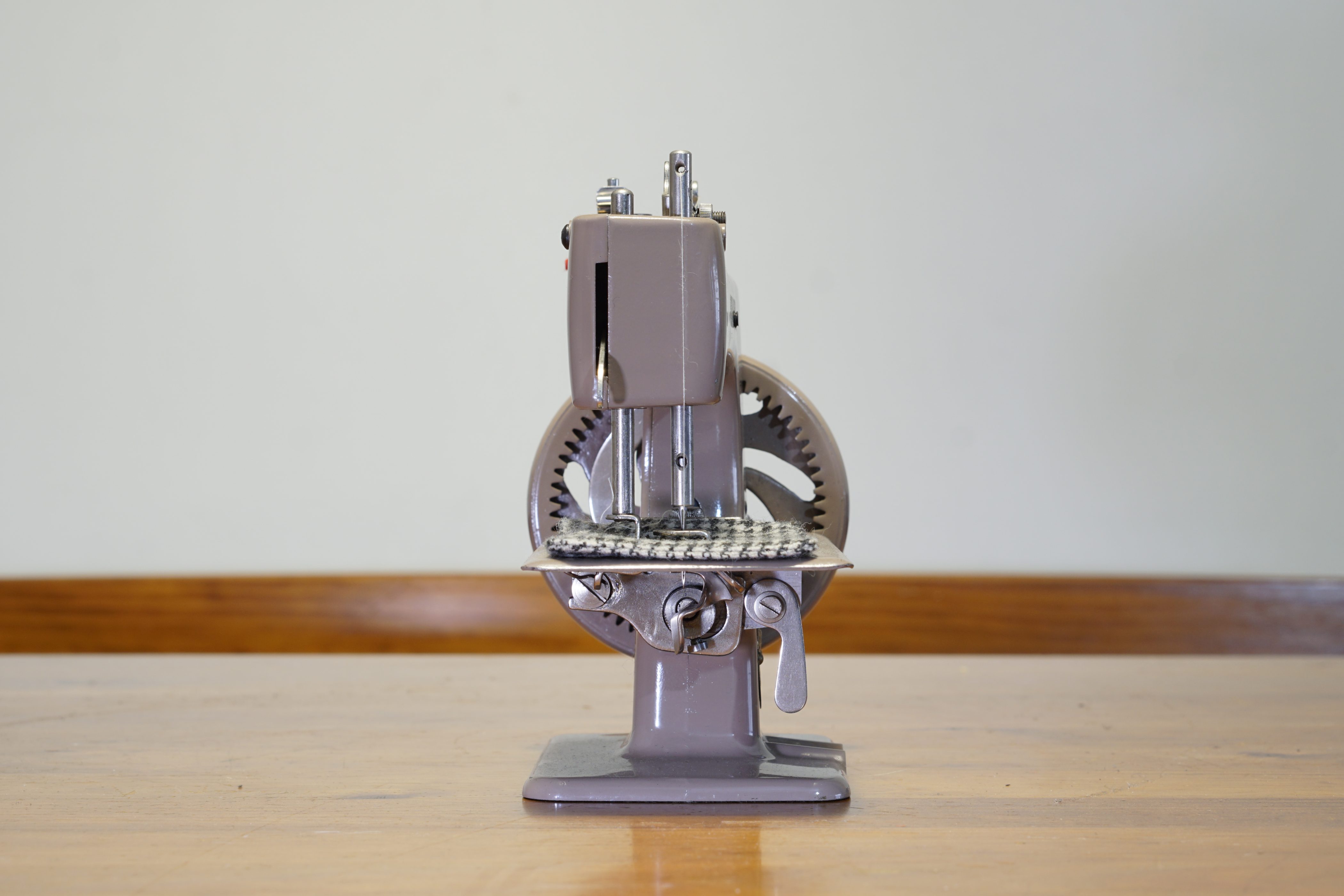
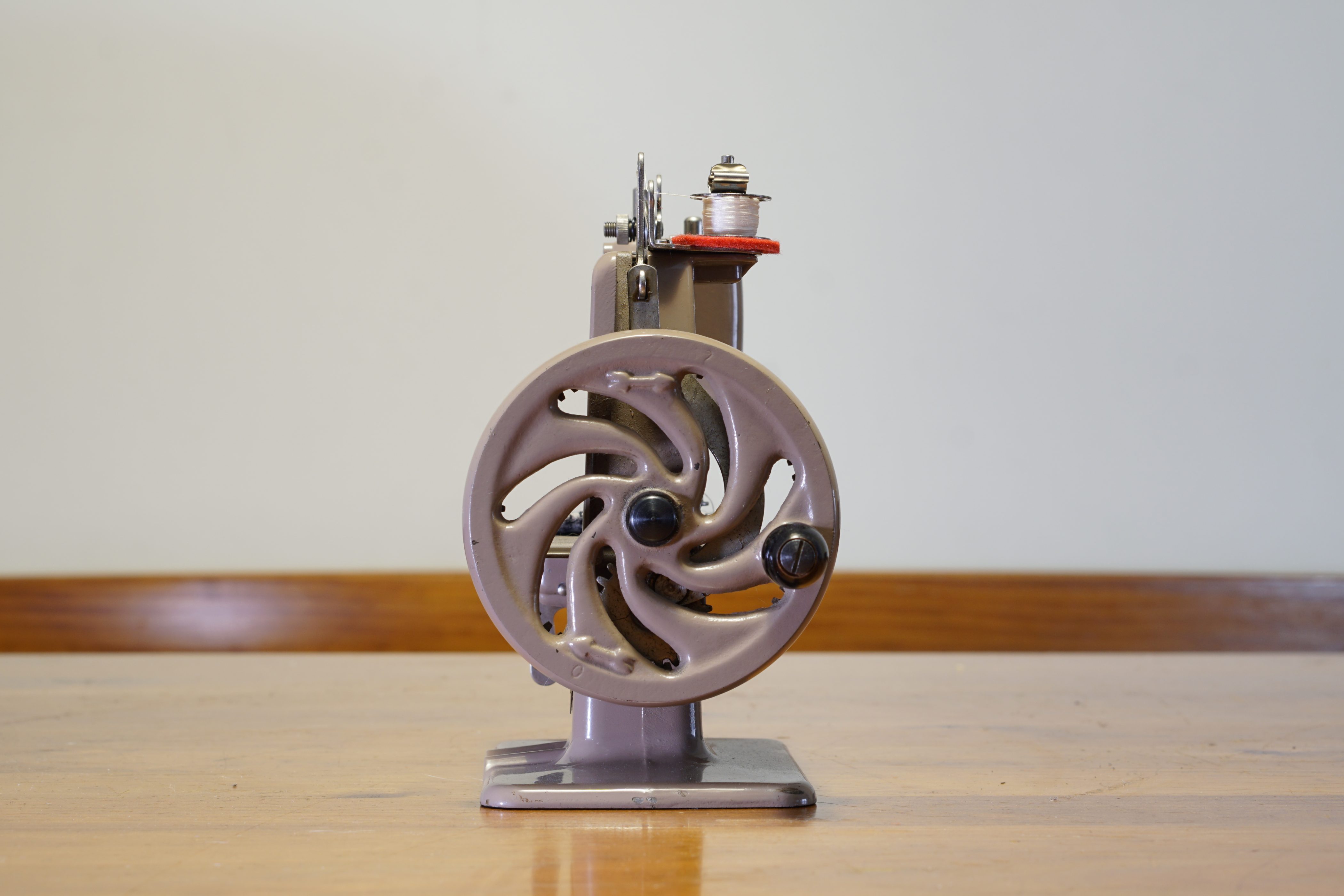
Where the original Singer 20 was a shrunken cast-iron machine trying to look grown-up, the 20-10 is the version that stopped pretending and just committed to being cute. This 4th-generation redesign arrived in the late 1940s and ran through the 1950s, swapping the old cast body for a lighter die-cast aluminum housing with a rectangular base and a mechanism that finally hides its moving parts under a proper cover. It’s still, unmistakably, a Sewhandy: same chain stitch, same job, just with better manners about where it puts its gears.
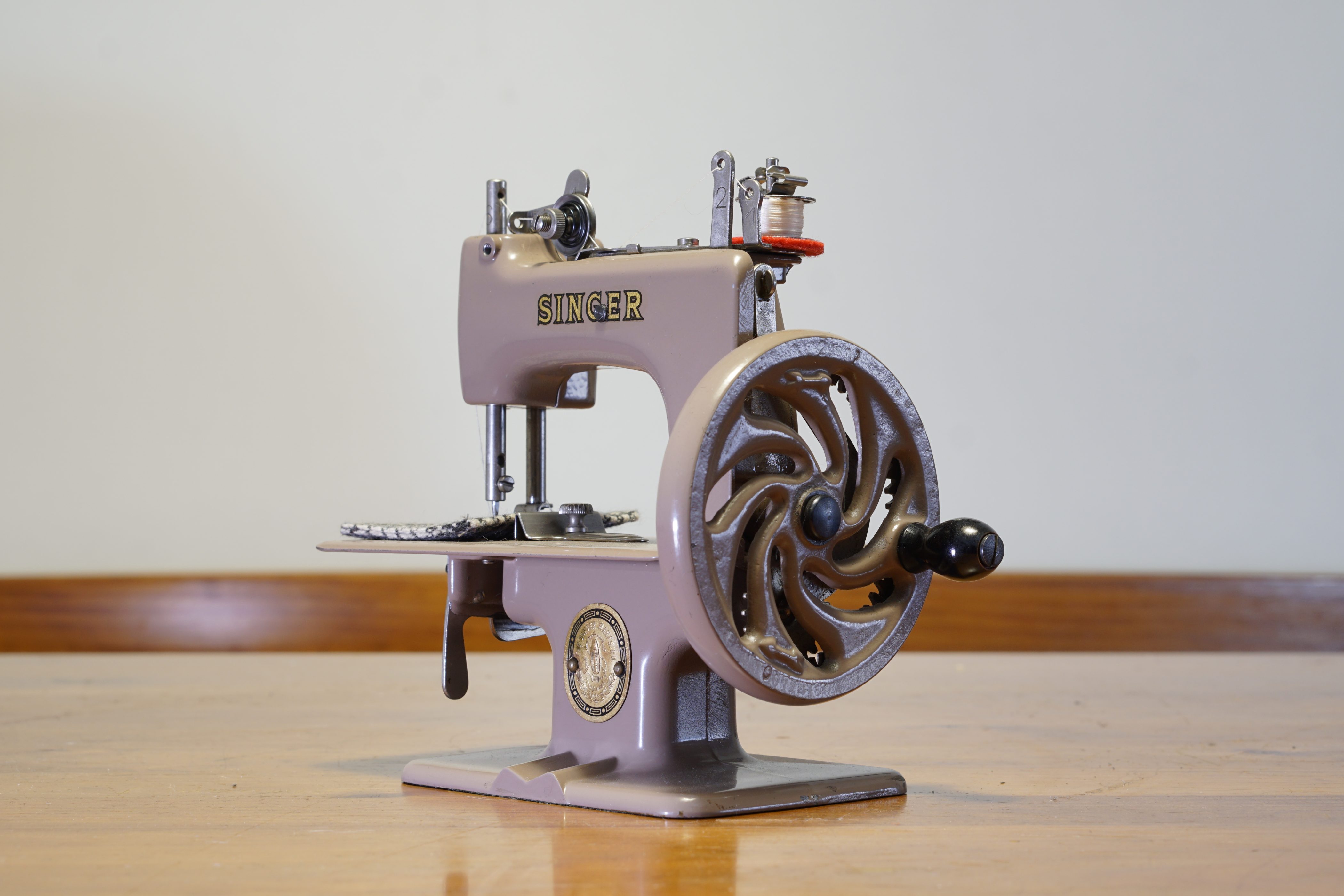
The cream-brown body is a nice reminder that Singer treated the 20-10 less like a tool and more like a small object of desire. Colors ranged from the reliable black to tan and cream, with red and blue turning up rarely enough to make collectors sit up straight, and a particular French market run also included a Safari Brown variant sold in the 1950s, proof that even a child’s toy machine got regional marketing attention.
Functionally, the 20-10 kept the same trick that made the original 20 work in the first place. It’s a chain-stitch machine with no bobbin and no shuttle, so there’s no bobbin tension to fuss over, and Singer was confident enough in the design to advertise that any child over four could operate it. The numbered threading path on the arm, visible right there next to the tension disc, does the thinking for you: thread through 1, then 2, then onward, and you’re sewing. It’s the sort of interface design that modern software could learn from, honestly, minus the screwdriver required to swap the needle.
What actually changed with the 20-10 is packaging, not physics. The full-width stitch plate and enclosed arm cover made the machine friendlier to small fingers and less prone to jamming from stray fabric or thread getting where it shouldn’t, while the die-cast construction shaved weight compared to the earlier iron-bodied models. It’s the same mechanism in a nicer, safer chassis, which is a perfectly respectable kind of innovation even if it doesn’t sound dramatic on paper.
Reviews of surviving 20-10s lean warm and slightly parental in tone, the way people talk about a machine that taught them or their kids to sew. One 1950s example was specifically noted to operate smoothly despite its age, with threading kept simple through the same numbered path system as its predecessors. Collectors and shops handling these machines today routinely describe them in the language of heirlooms rather than toys, restoring them fully functional rather than treating them as static display pieces. Compared to the earlier cast-iron 20-1, the 20-10 is generally seen as the more refined, better-protected version, while the electric 20-2 variant traded the hand crank for a motor without touching the core chain-stitch mechanism at all.
Sources and reviews:
singersewinginfo.co.uk/toys/minisinger
craftsmanshipmuseum.com/exhibit/singer-20-childs-sewing-machine
singerfeatherweightvintage.com/e-commerce/singer-child-model-20-sewing-machine-and-parts
ID
| Maker | |
| Brand | |
| Model | |
| Year | |
| Serial number | |
| Origin | |
| Manufacture | |
| Provenance | |
| Status |
SPECS
| Voltage | AC 220 V |
| Bed type | |
| Bed extension | |
| Feet/shank type | |
| Foot pressure adjustment | |
| Bobbin type | |
| Hook/race position | |
| Hook movement | |
| Bobbin winder | |
| Spool pins | |
| Bulb type | |
| Original foot control | |
| Current foot control | |
| Dimensions | |
| Weight |
FEATURES
| Zigzag | |
| Reverse type | |
| Needle position control | |
| Stitch length limiter | |
| Stitch width limiter | |
| Utility stitches | |
| Decorative stitches | |
| Stretch stitches | |
| Auto-reverse stitches | |
| Double needle provisions | |
| Drop feed |
ACCESSORIES
| Presser feet | |
| Straight stitch needle plate | |
| Feed dogs cover plate |
DOCUMENTS
| User manual | Download PDF: |
| Service manual | Download PDF: |