
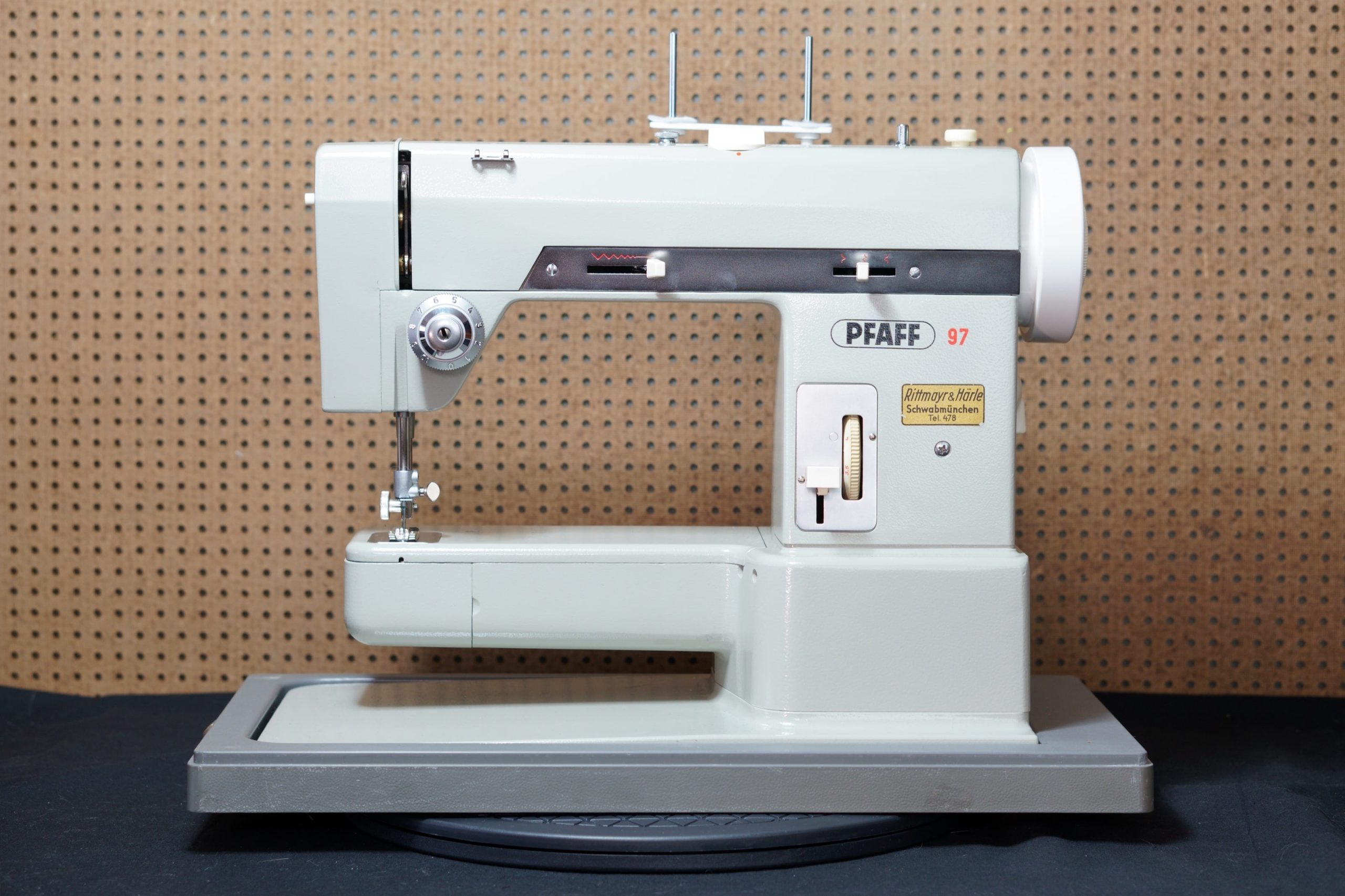
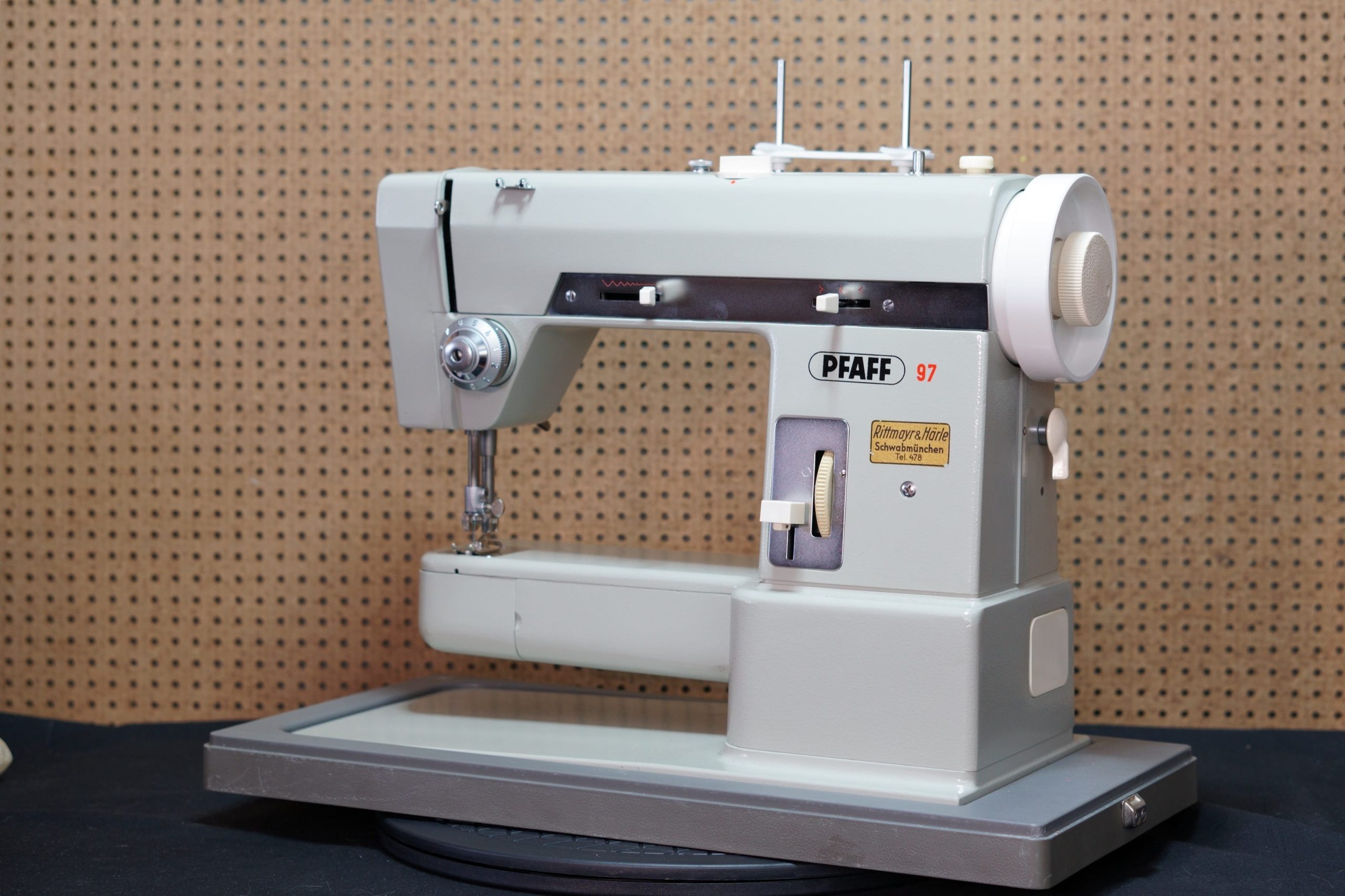
PFAFF 97
Heavy metal
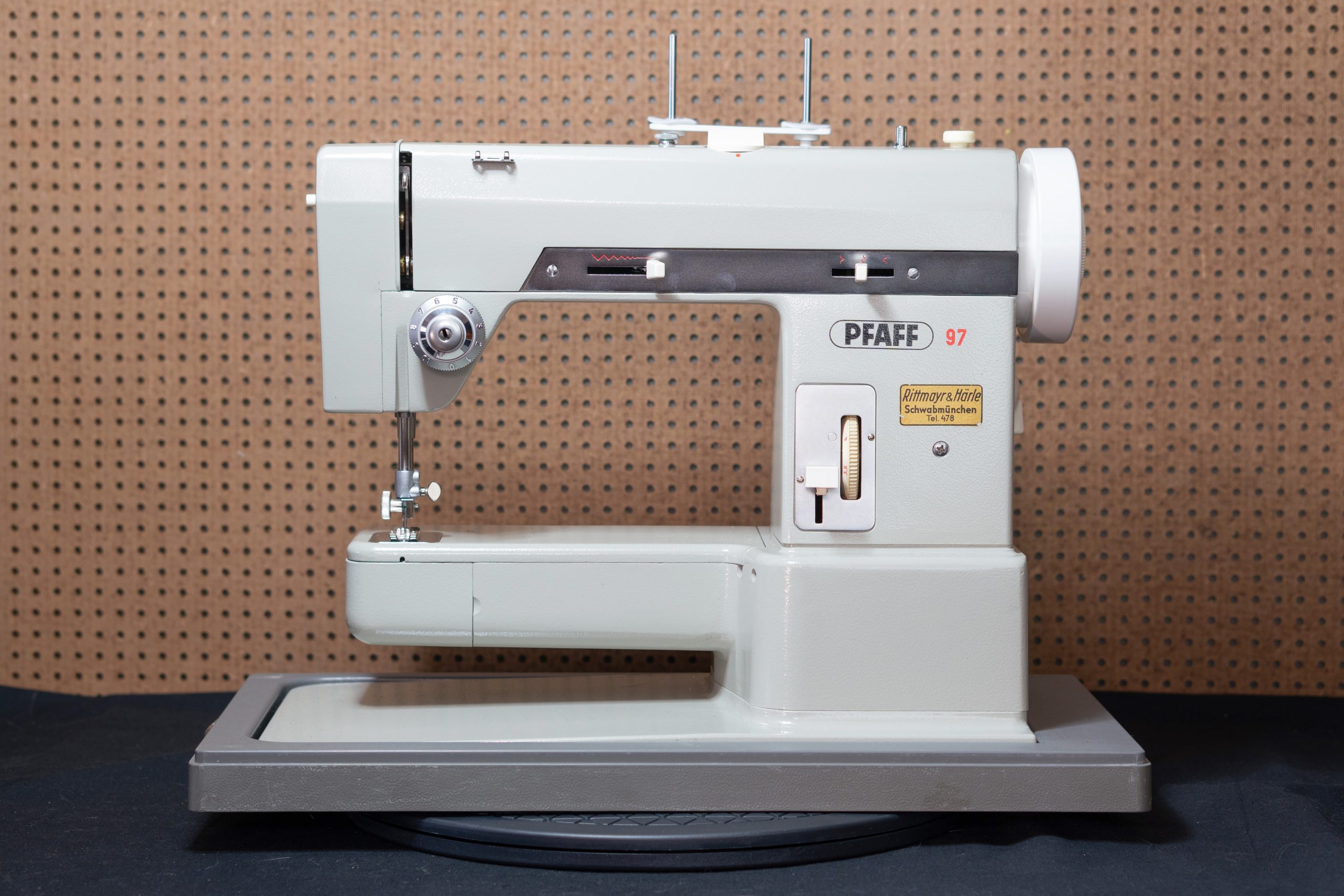
PFAFF is one of the great names in sewing machine history. Founded by Georg Michael Pfaff in 1862 in Kaiserslautern, Germany, initially building handmade machines for sewing leather in shoe manufacturing, the company grew rapidly into one of the world’s leading sewing machine manufacturers by the early 20th century. PFAFF built its reputation on precision engineering, industrial-grade mechanics, and durability — qualities inherited from its earlier flagship machines like the legendary Pfaff 130.
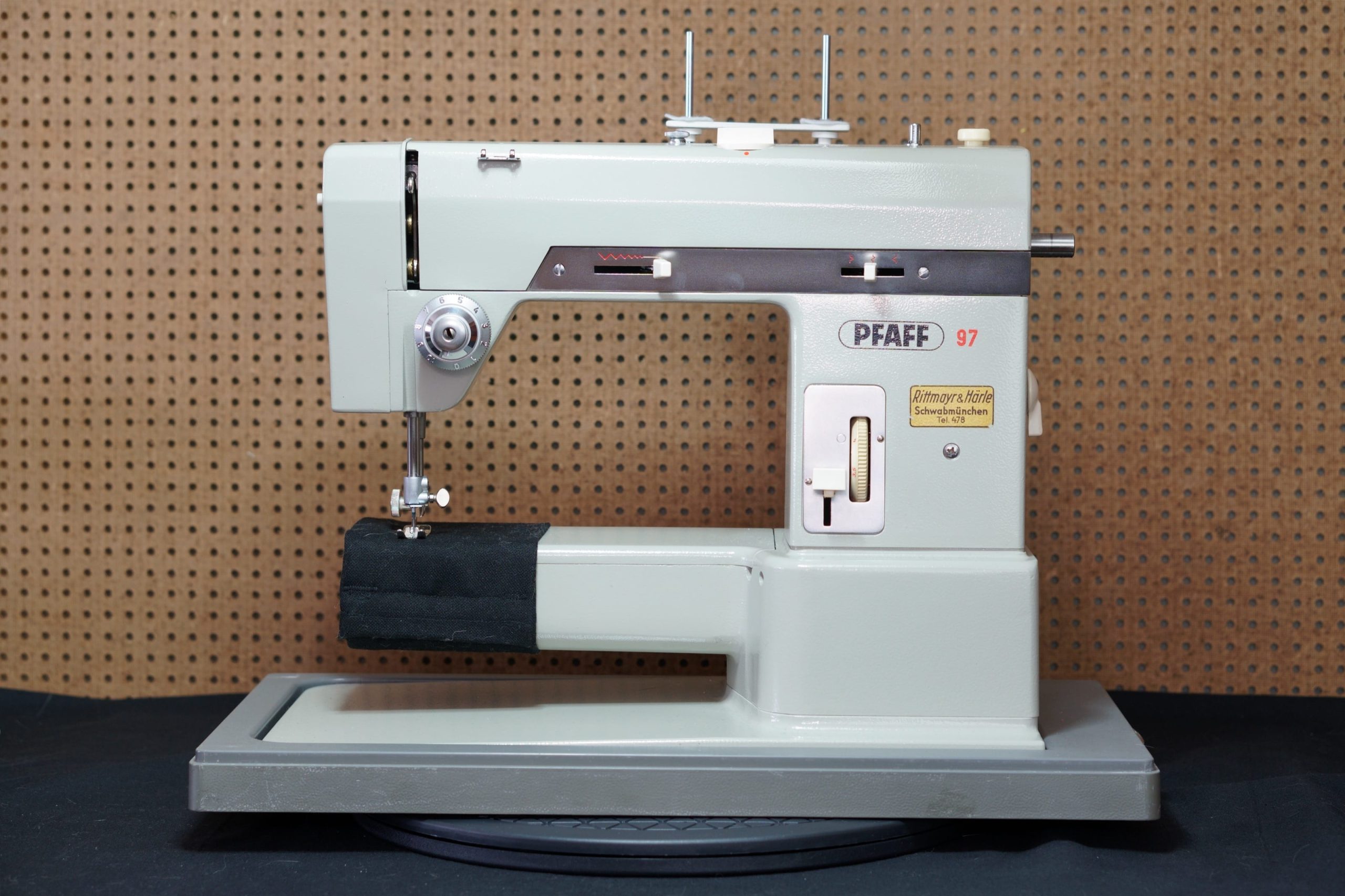
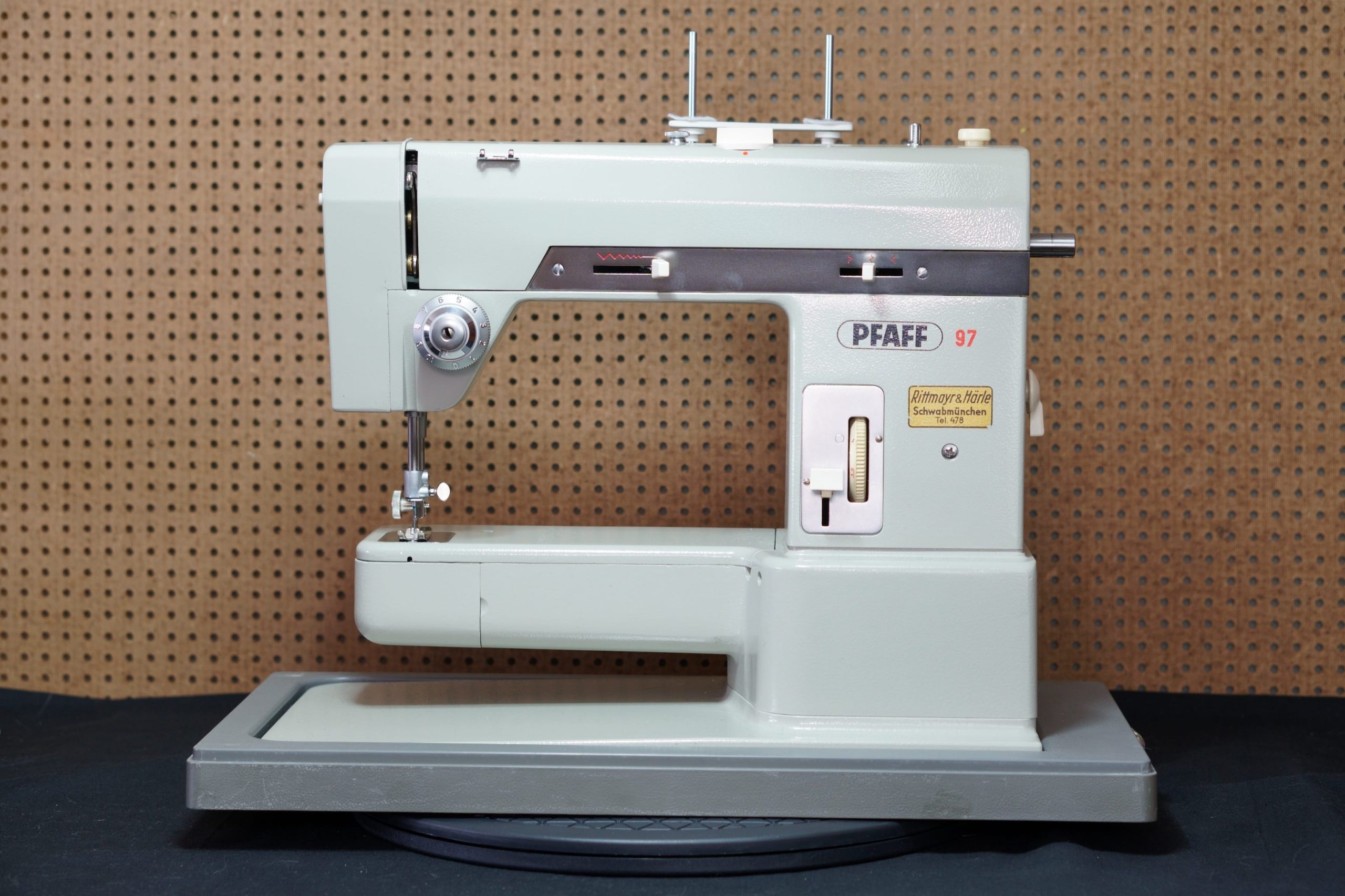
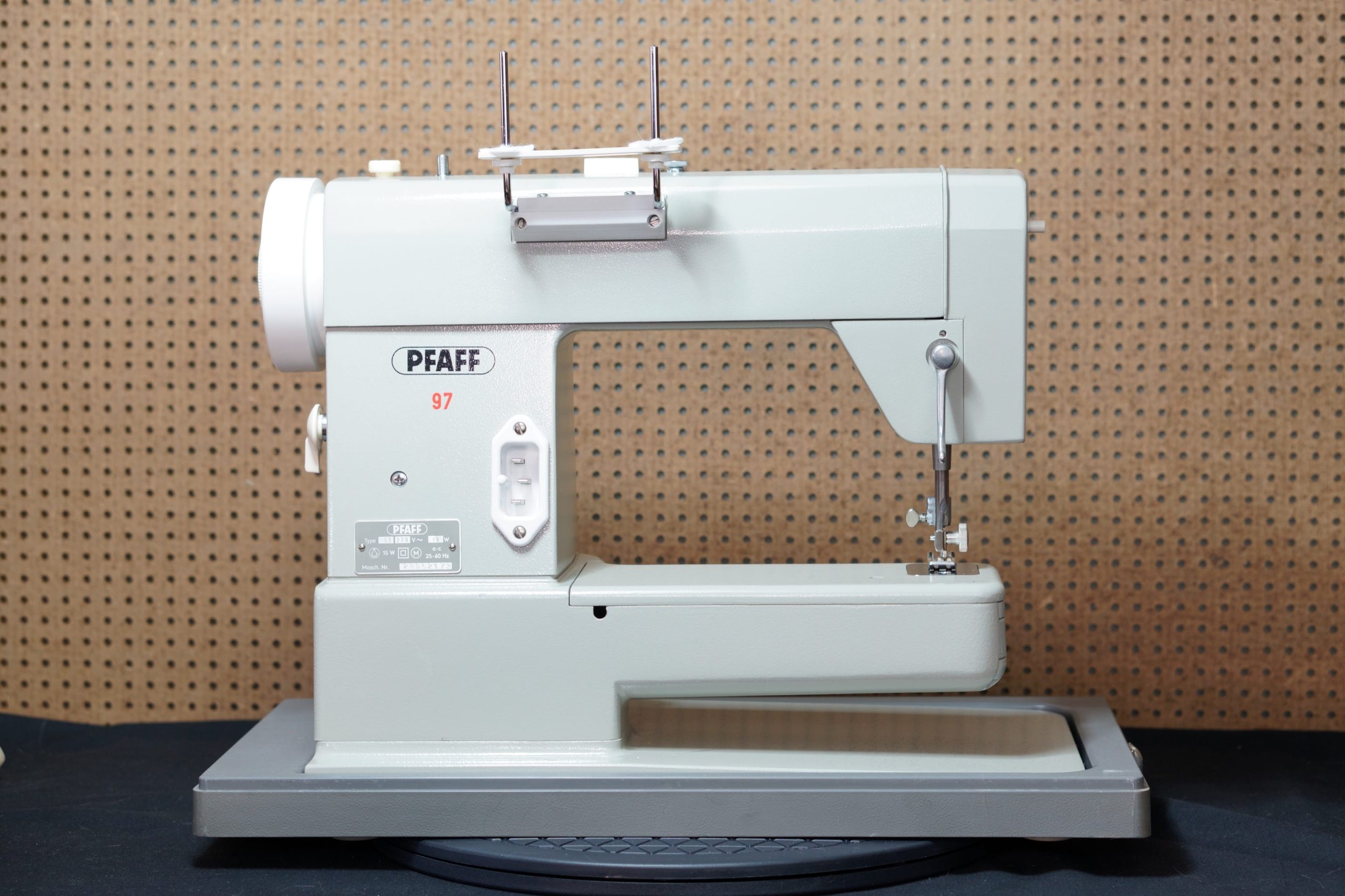
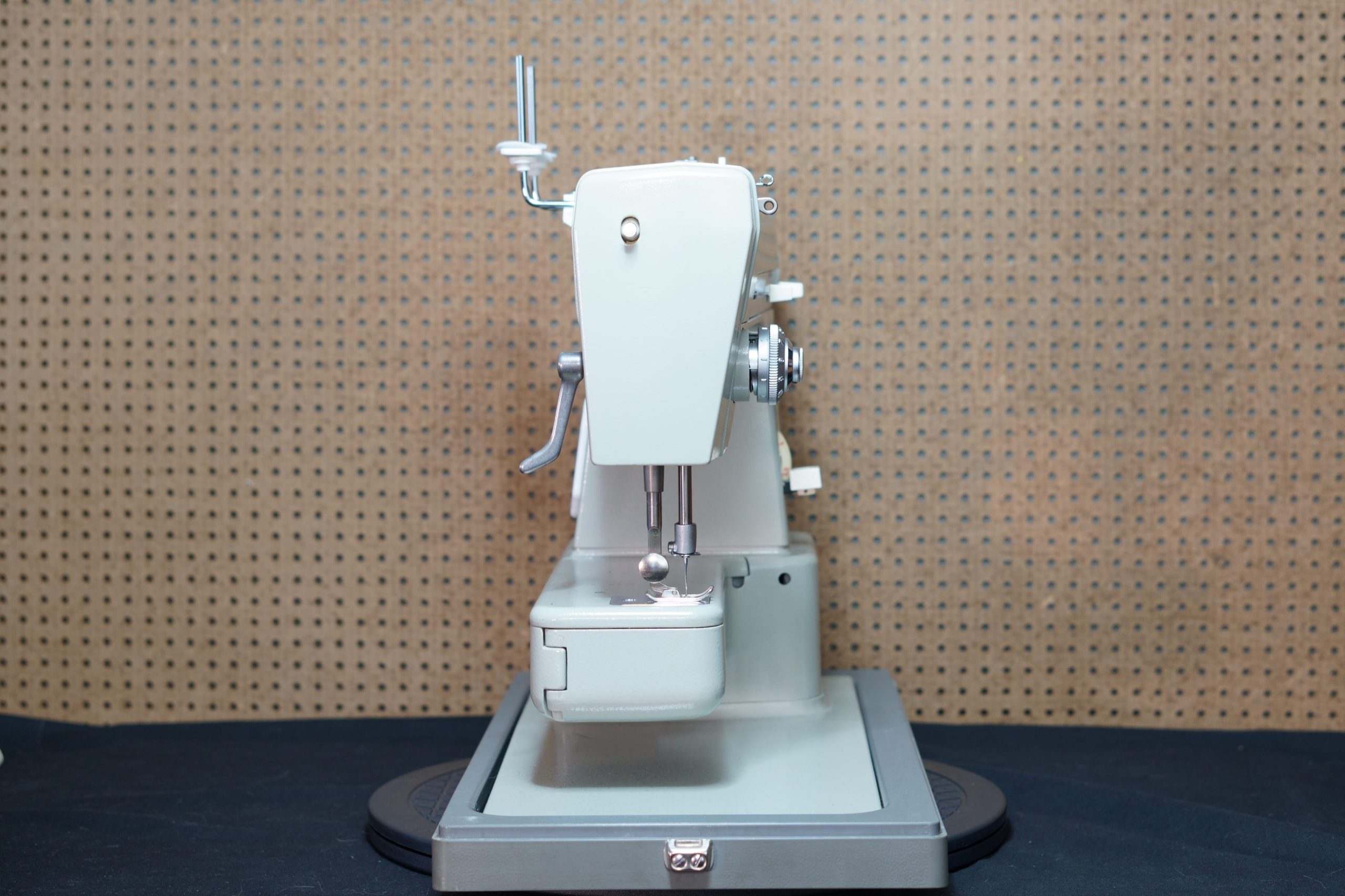
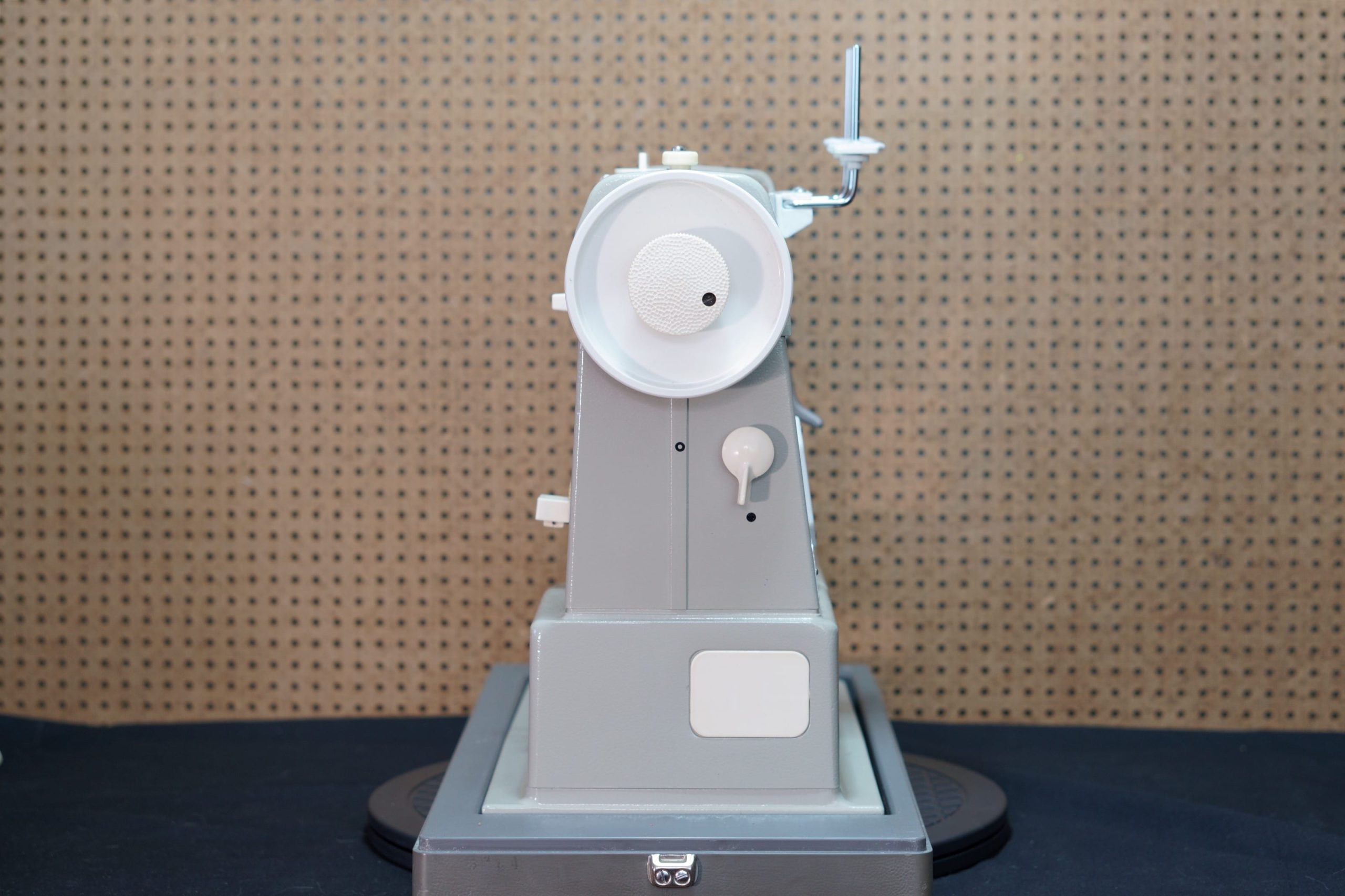
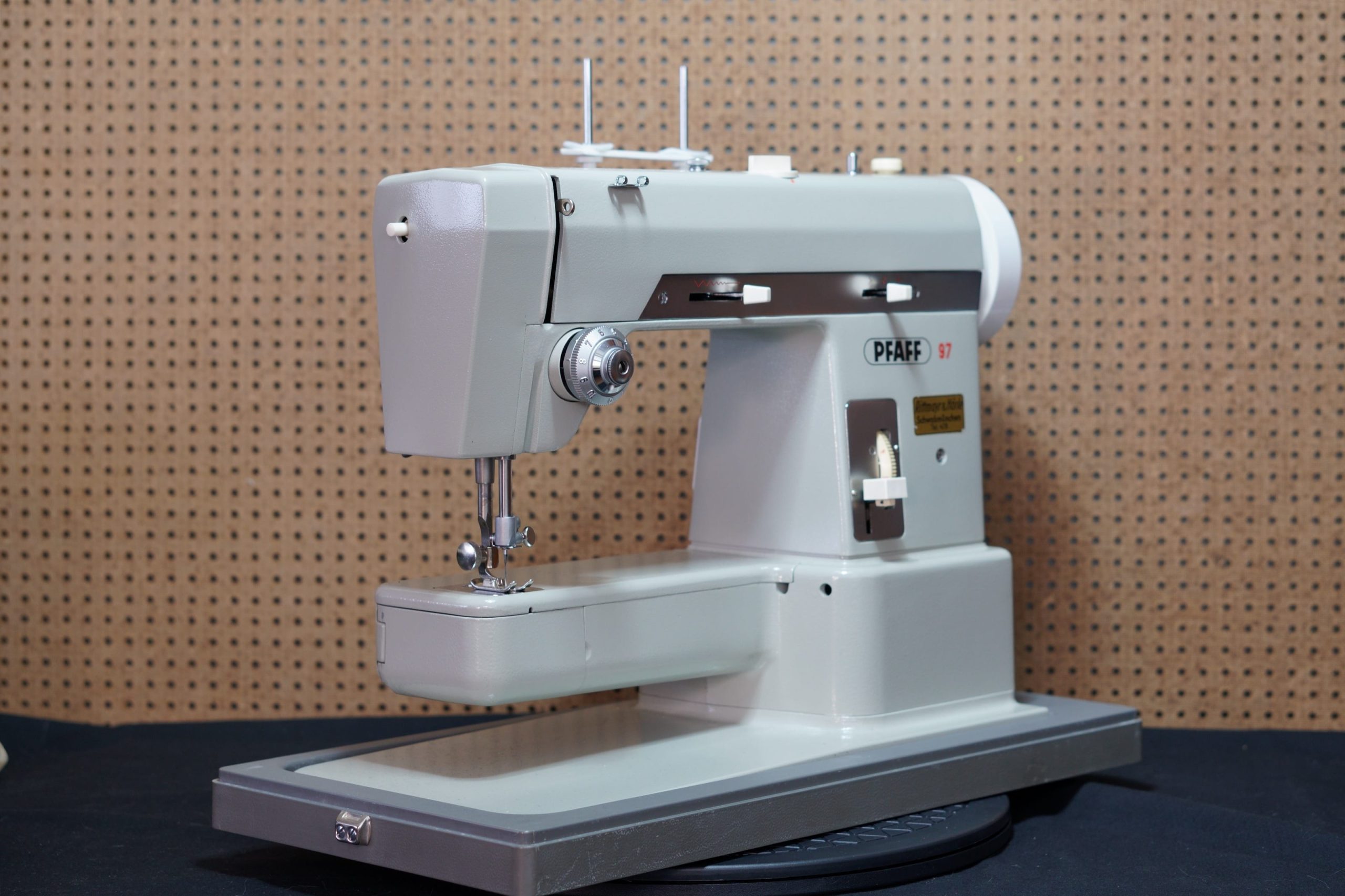
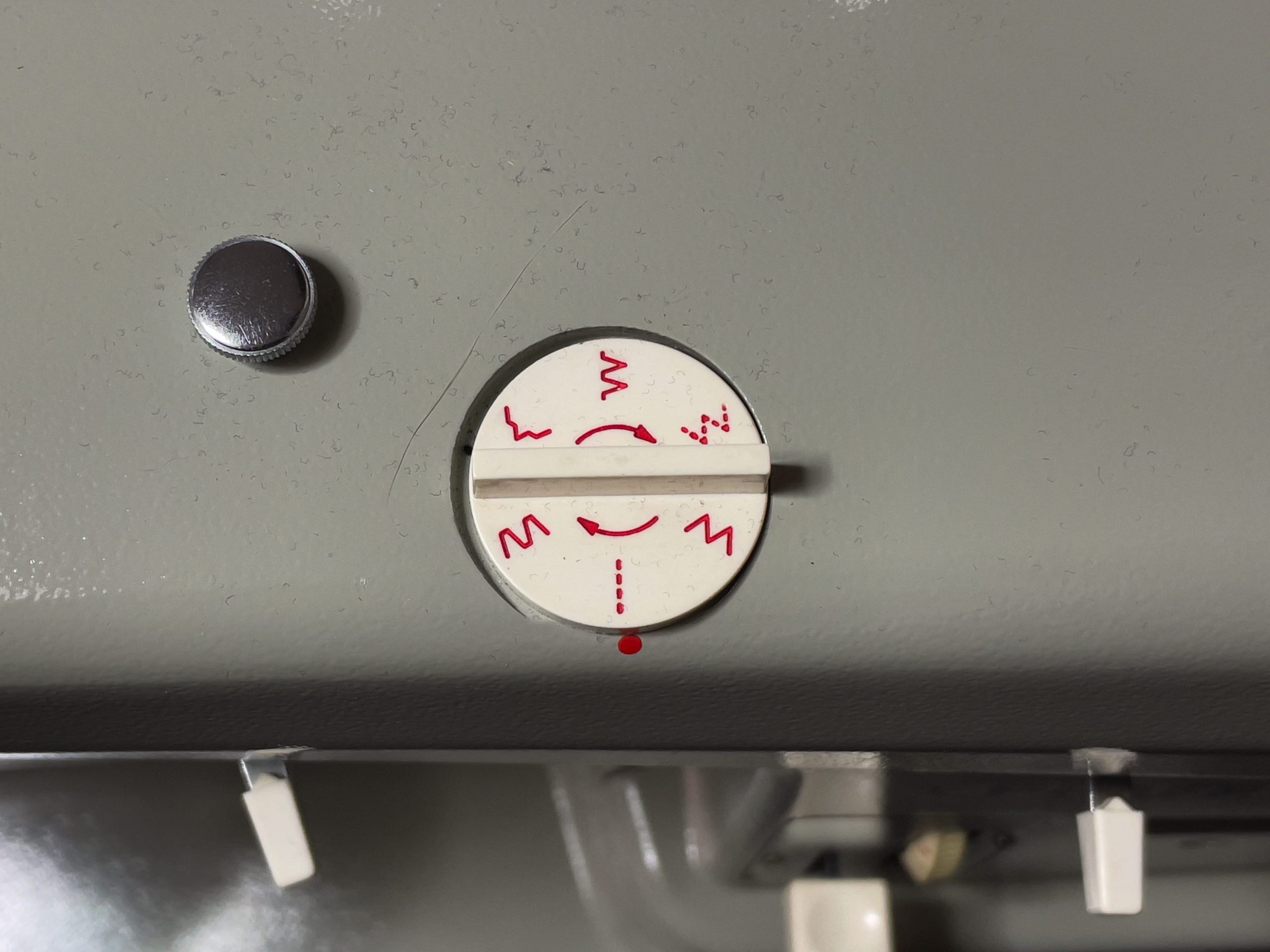
Mathilda, featured here in lovely light grey with white accents, is Hilda‘s twin sister. Manufactured around 1971, she is a mid-century domestic machine that reflects this heritage of mechanical solidity. She features adjustable stitch length and width, a variety of built-in stitch patterns, and a sturdy all-metal construction built for long-term durability. The zigzag stitch-width dial on the arm and the stitch-length selector on the front give the operator fine, direct mechanical control — a hallmark of pre-electronic PFAFF design, where dials and levers replace circuit boards. The badge, from “Rittmayr & Härle, Schwabmünchen,” indicates Mathilda was sold or serviced through a regional German dealer, a common practice for machines of this era before centralized retail networks took over.
PFAFF machines of this generation feature solid, mechanical, largely metal-bodied models, from the 1950s through the early 1970s. They are widely praised by long-time sewists and collectors for their reliability. Owners frequently note that these machines “just keep going,” often outliving multiple owners with only basic maintenance. The straightforward mechanical design means there’s little to fail catastrophically, and parts, when needed, are usually still obtainable through specialist suppliers or vintage machine forums.
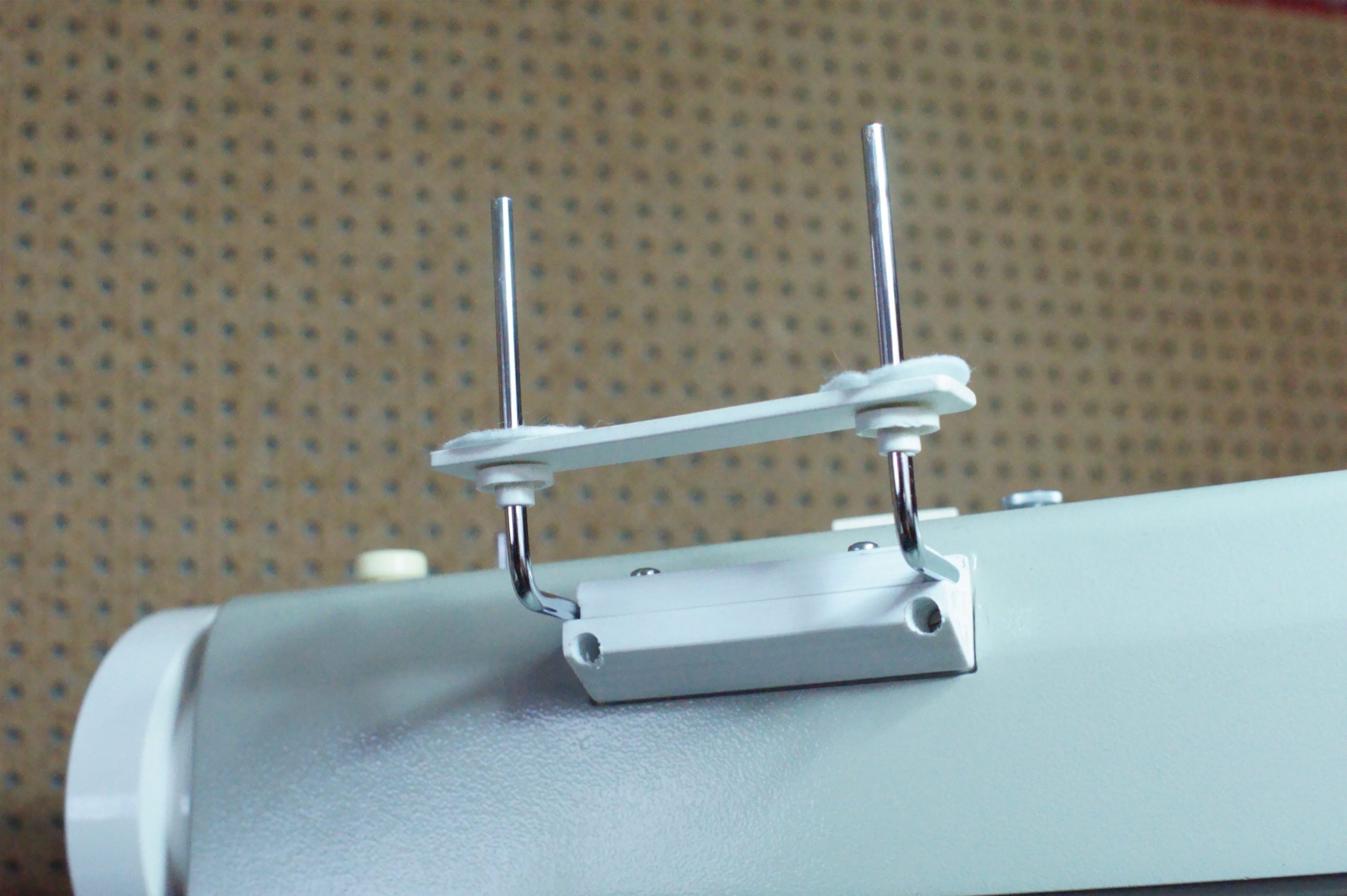
There are no electronic conveniences to be found here: no automatic threading, no digital stitch memory, no built-in even-feed/IDT system (a feature introduced with the famous 1222 a few years later). Common complaints about the 97 specifically include hard-to-source parts like presser bar lifters and power cords, since it predates PFAFF’s more mass-produced, better-supported lines. Even the bobbins are a specific PFAFF format. Still, for straightforward garment sewing and general-purpose use, the 97 is generally regarded as dependable, powerful, and easy to service — a solid, no-frills representative of PFAFF’s mid-century engineering standards, if not among its most celebrated or feature-rich models.
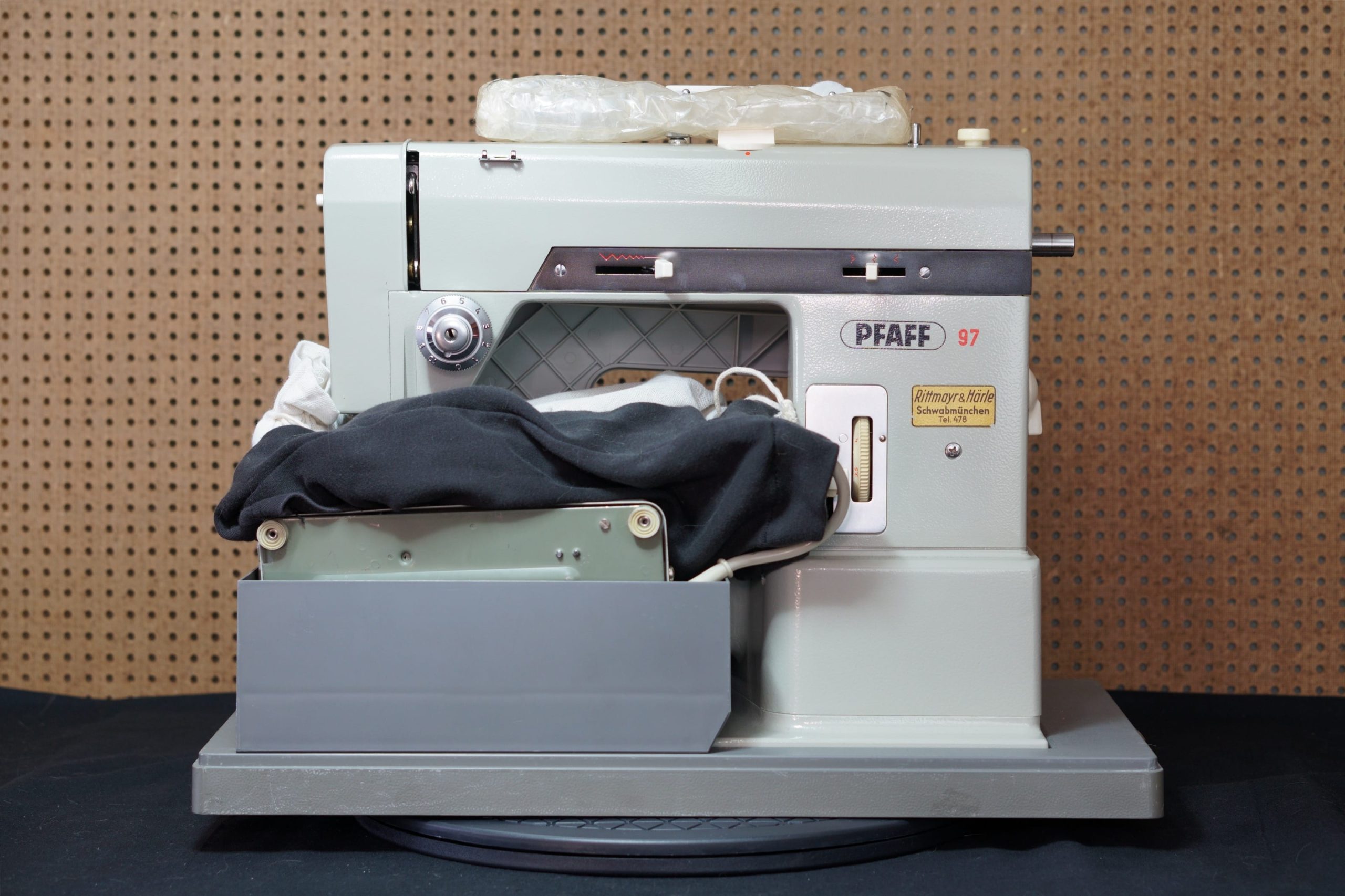
Accessories include:
• Original presser feet
• Extension table
• Transport case
ID
| Maker | |
| Brand | |
| Model | |
| Year | |
| Serial number | |
| Origin | |
| Manufacture | |
| Provenance | |
| Status |
SPECS
| Voltage | AC 220 V |
| Bed type | |
| Bed extension | |
| Feet/shank type | |
| Foot pressure adjustment | |
| Bobbin type | |
| Hook/race position | |
| Hook movement | |
| Bobbin winder | |
| Spool pins | |
| Bulb type | |
| Original foot control | |
| Current foot control | |
| Dimensions | |
| Weight |
FEATURES
| Zigzag | |
| Reverse type | |
| Needle position control | |
| Stitch length limiter | |
| Stitch width limiter | |
| Utility stitches | |
| Decorative stitches | |
| Stretch stitches | |
| Auto-reverse stitches | |
| Double needle provisions | |
| Drop feed |
ACCESSORIES
| Presser feet | |
| Straight stitch needle plate | |
| Feed dogs cover plate |
DOCUMENTS
| User manual | Download PDF: |
| Service manual | Download PDF: |