
Singer 784
The challenger
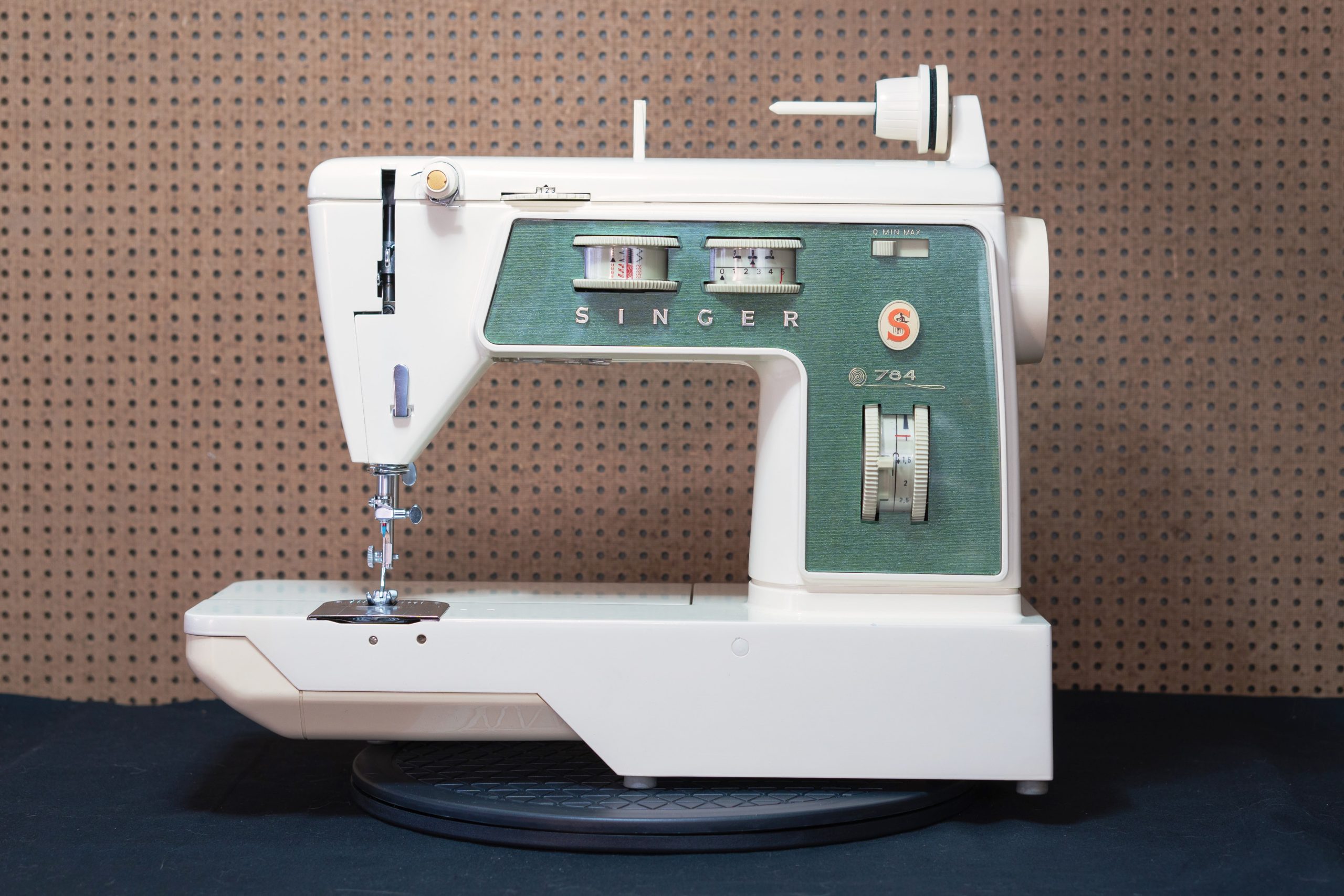
Singer has been synonymous with home sewing since Isaac Singer patented his first practical machine in 1851, and the company went on to dominate the industry for over a century, becoming a household name across the globe. By the mid-20th century, Singer was pushing convenience features to attract a new generation of home sewists, and that effort culminated in the “Touch & Sew” line of the 1960s and 70s.
Compared to simpler, more basic Singer models of the same era, the Touch & Sew machines (including the 784) are seen as more feature-rich but also more mechanically complex, meaning more that can eventually go wrong. Sewists who prize simplicity and easy home repair sometimes prefer the older straight-stitch classics, while those who want extra convenience features still speak well of the 784’s performance and versatility, provided the machine has been serviced.
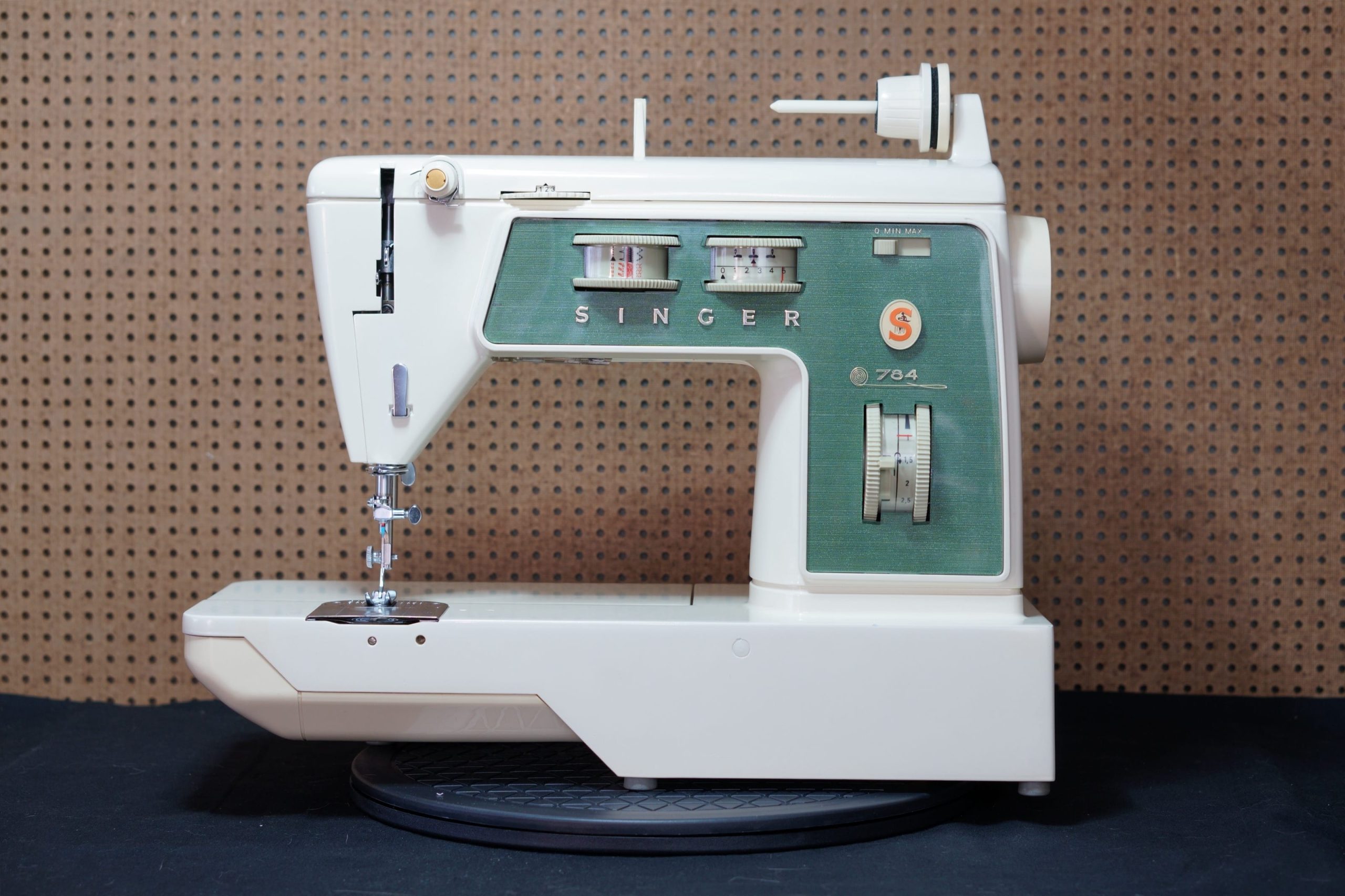
The 784, produced around 1975 alongside its sister model, the 744, sits right in the heart of this range. Its defining feature is the “magic bobbin” system: rather than winding bobbins on a separate winder, the 784 rewinds the bobbin in place inside the machine, saving a step that had been part of sewing routine for a century. It also includes a clear window in the slide plate so users can see how much thread remains without removing the cover, along with snap-on presser feet.
This is one of the models in the range equipped with the curious ability to sew a chainstitch, using only the top thread, with no bobbin, for basting and specialty stitching.
It also features a horizontal spool holder, which depends on a clamping holder block to keep the spool in place — useless without it, unlike vertical holders.
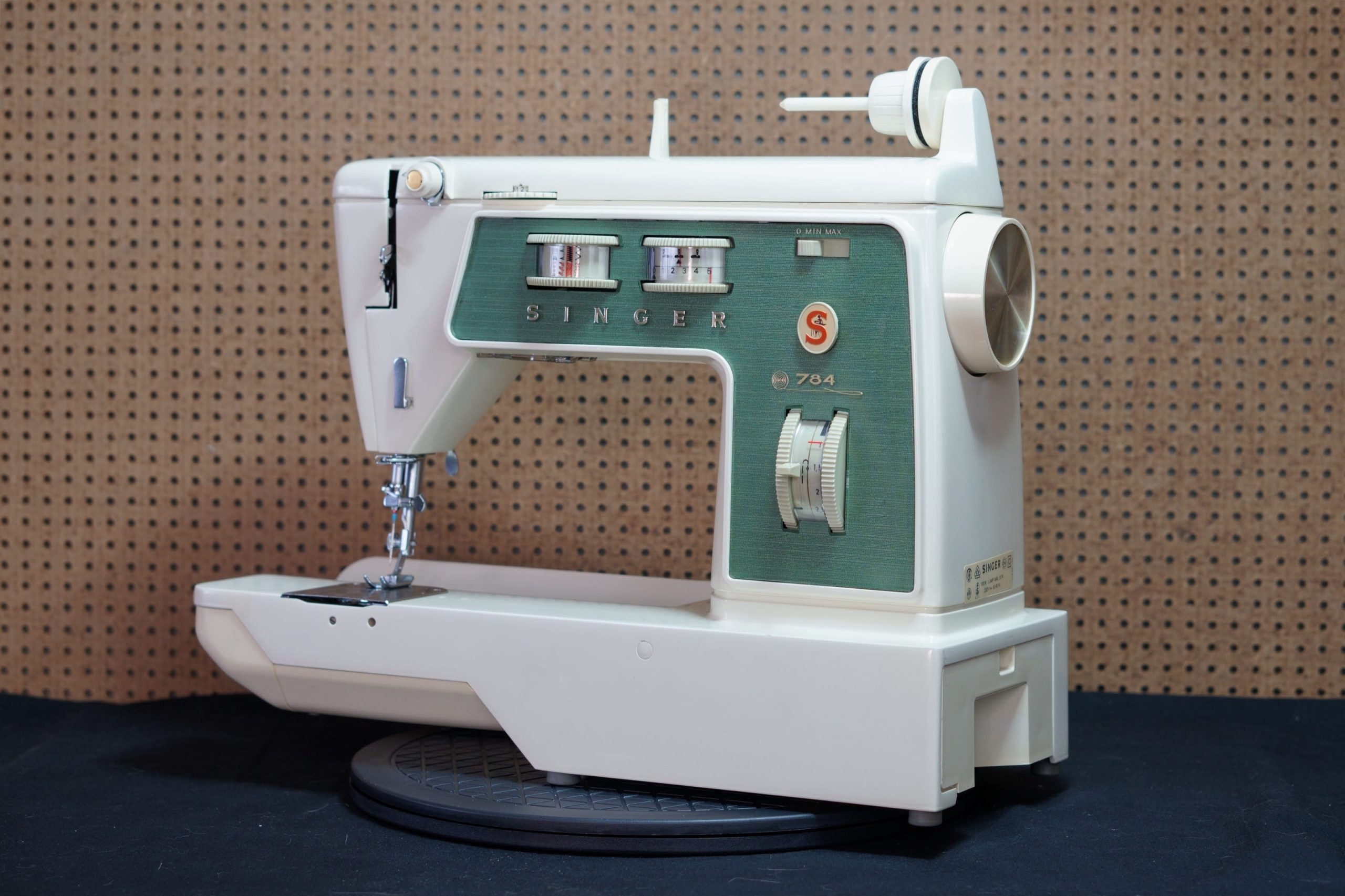
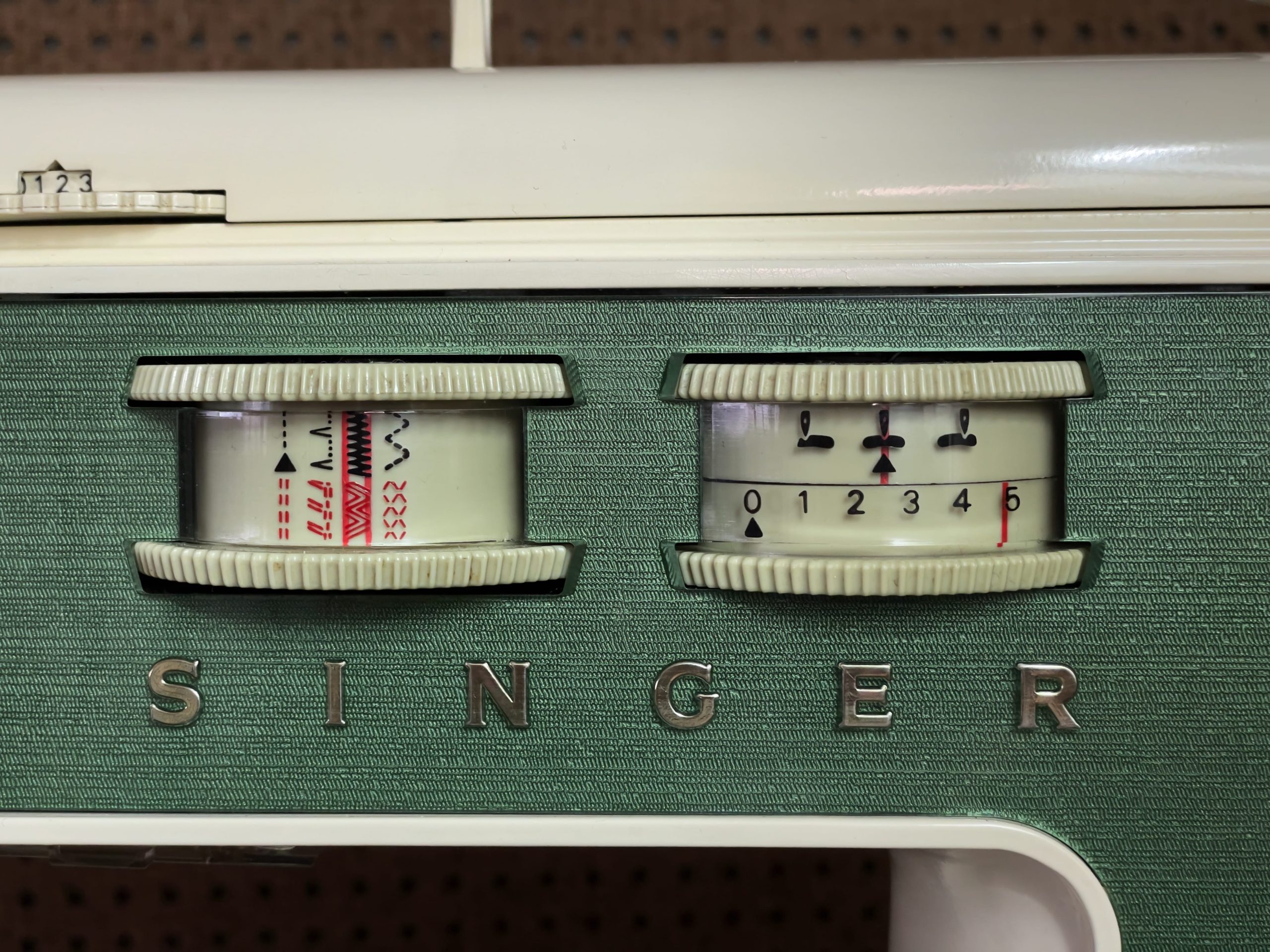
Touch & Sew machines are generally remembered fondly for their build quality — solid metal internal parts, smooth zigzag mechanisms, and genuine longevity when properly maintained. Many are still running today, decades later, which says a lot about Singer’s manufacturing standards at the time. But they only compare favourably to their later, more modern and more plastic counterparts. While they keep the slant needle innovation from the 400 and 500 series, they introduce a slew of unnecessary problems and failure points in the guise of “innovations”. The controls, for example, are a complicated mess of plastic parts that place your fingers further away from the mechanism, with less “feel” and more parts to break, also adding clear windows with markings that depend on your point of view (added parallax error), making selections very fiddly and imprecise.
The “magic bobbin” system that defines the line is its most debated feature. While clever, the in-place bobbin winding mechanism is fussy, demands a complicated multi-step process that is not intuitive, and relies on rubber-tired drive wheels and gears that degrade with age; a common complaint among long-time users and collectors is that these components dry out, crack, or slip, causing bobbin-winding failures on machines that are otherwise perfectly functional. It also keeps you from being able to wind a bobbin while having the machine threaded. Repair often means sourcing rare replacement parts from specialist suppliers. The hook itself, relies on a plastic cog fused to the metal assembly, which tents to collapse and break apart. Replacement parts are not of the same quality and design, adding problems to an already quirky machine.
These features would be abandoned in subsequent models, never to return.
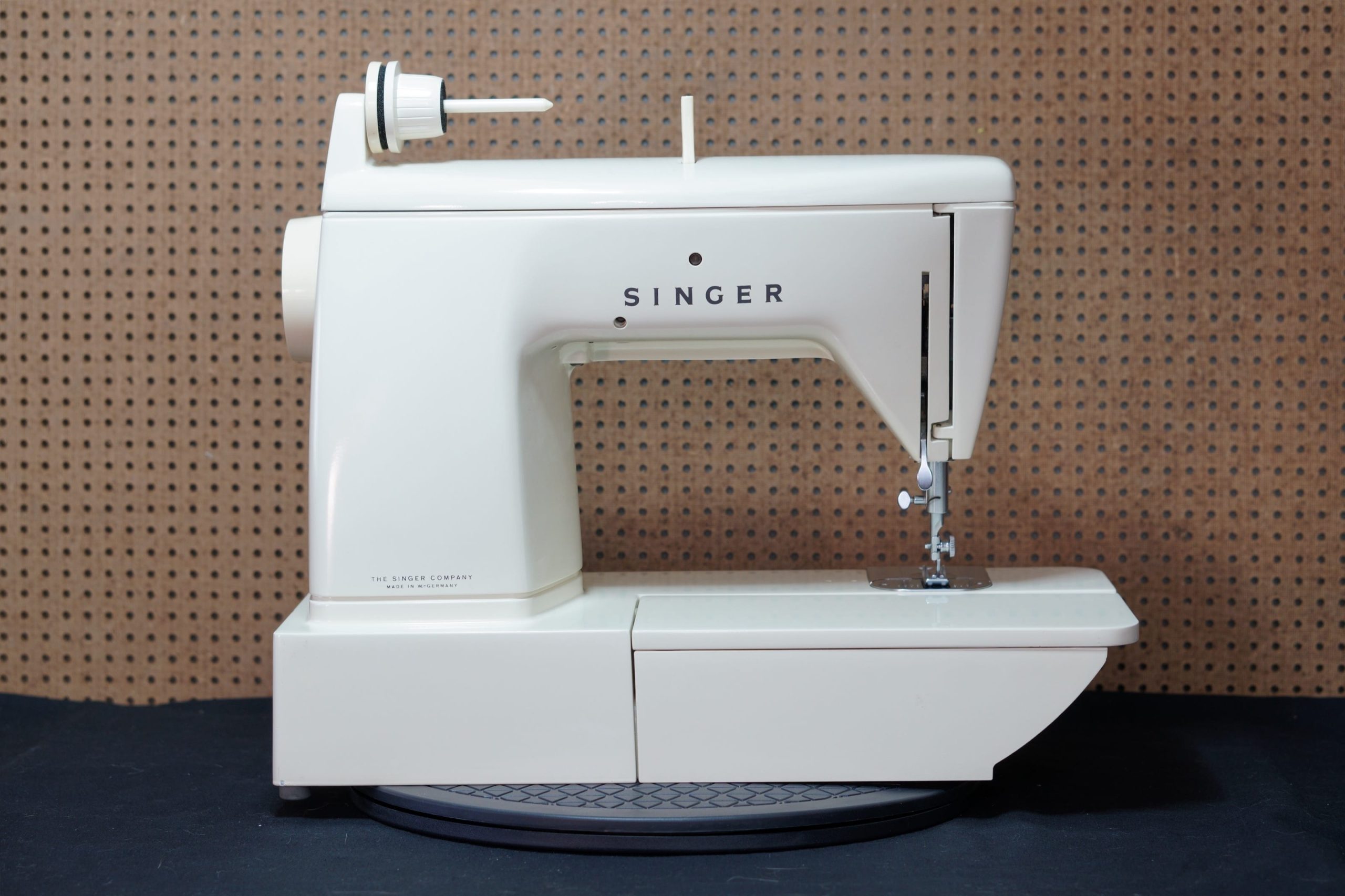
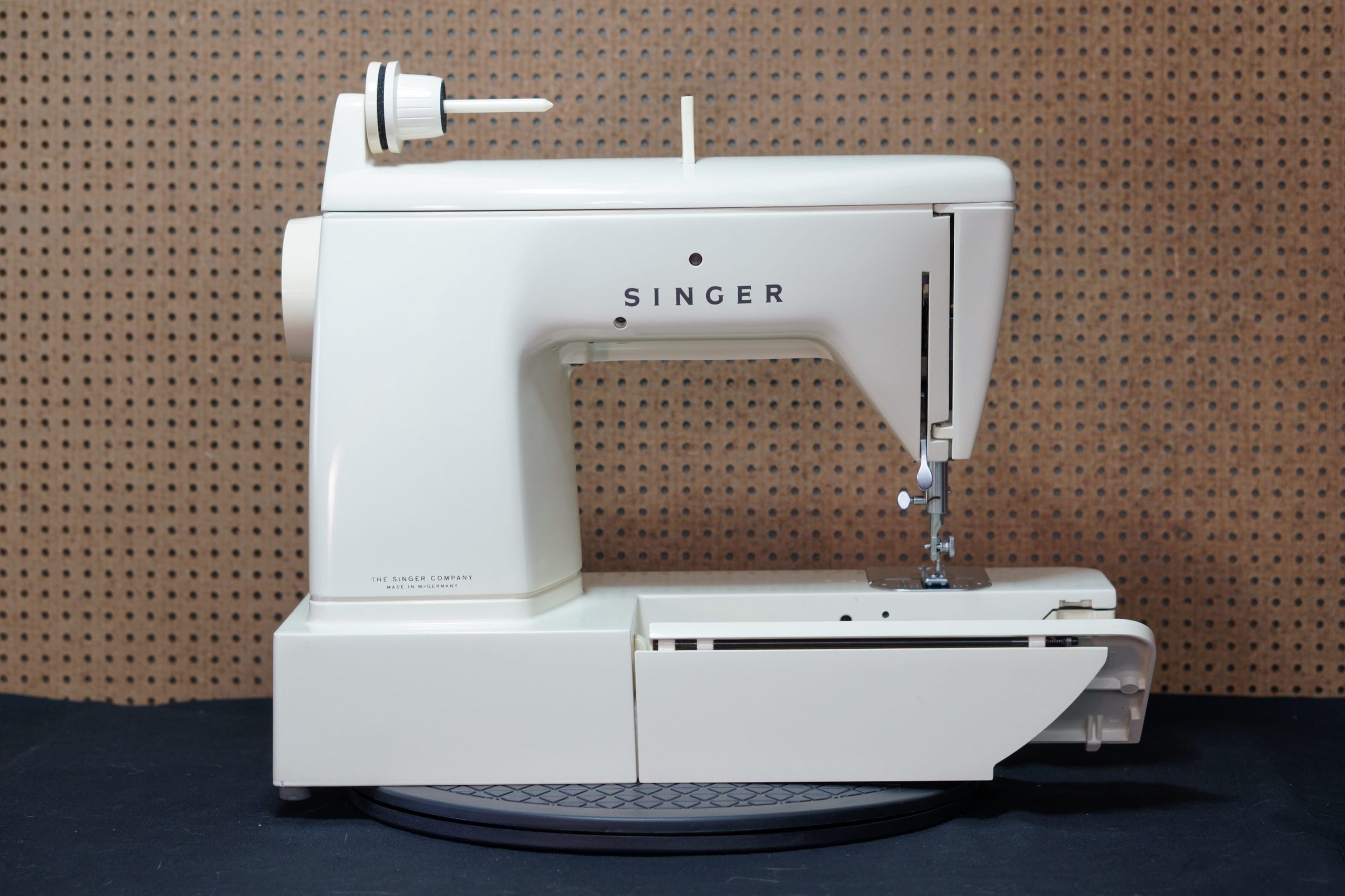
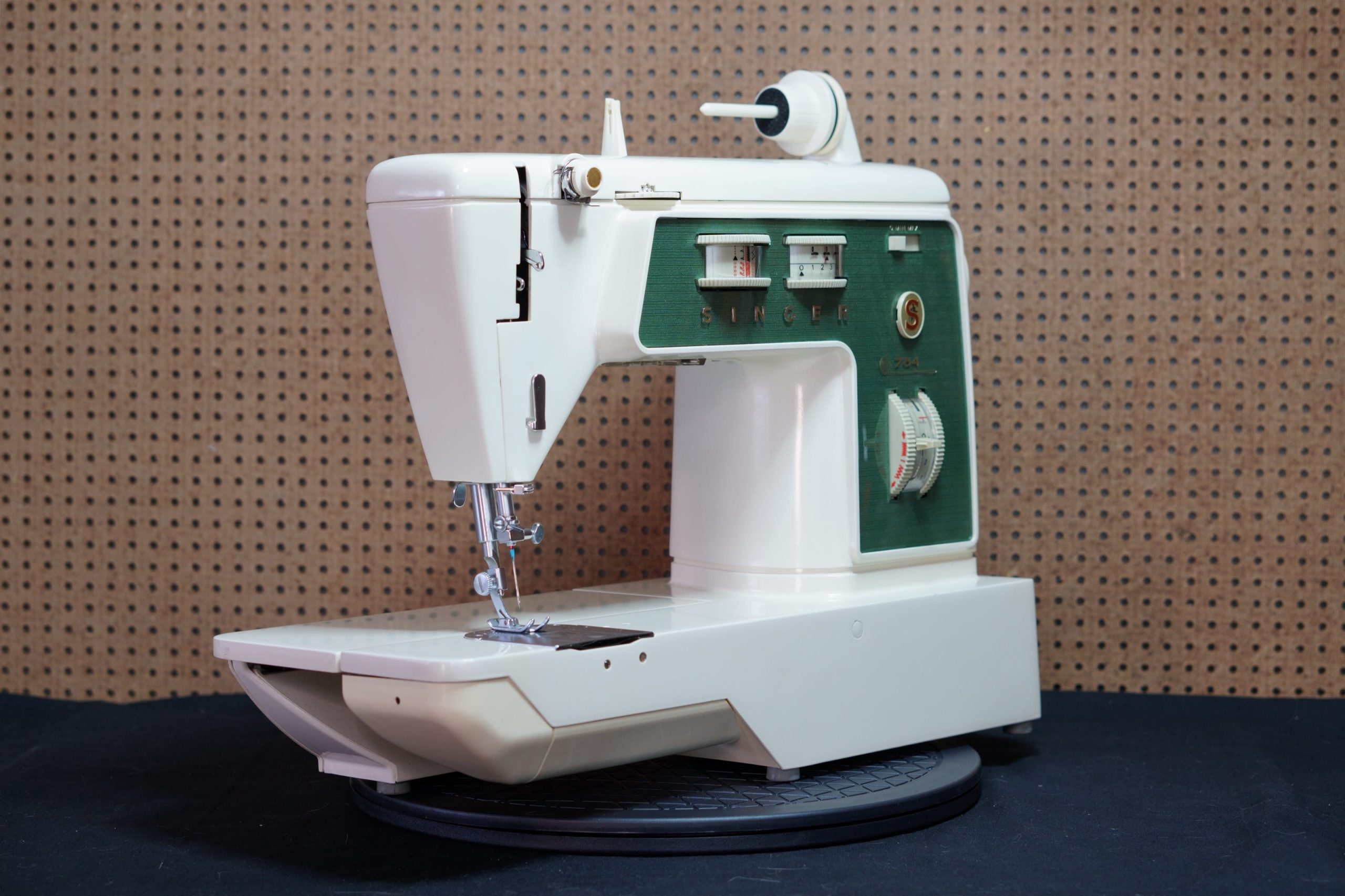
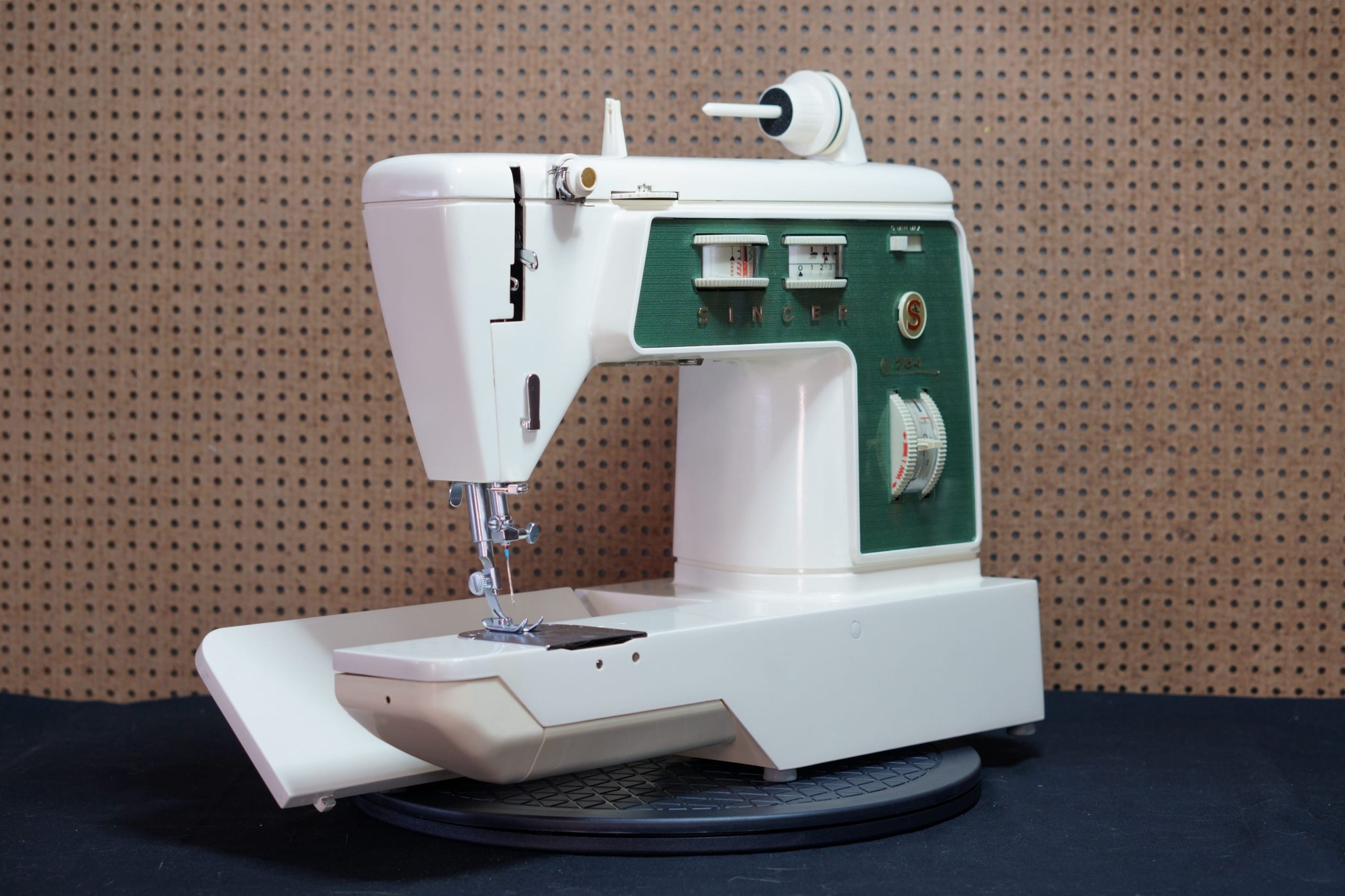
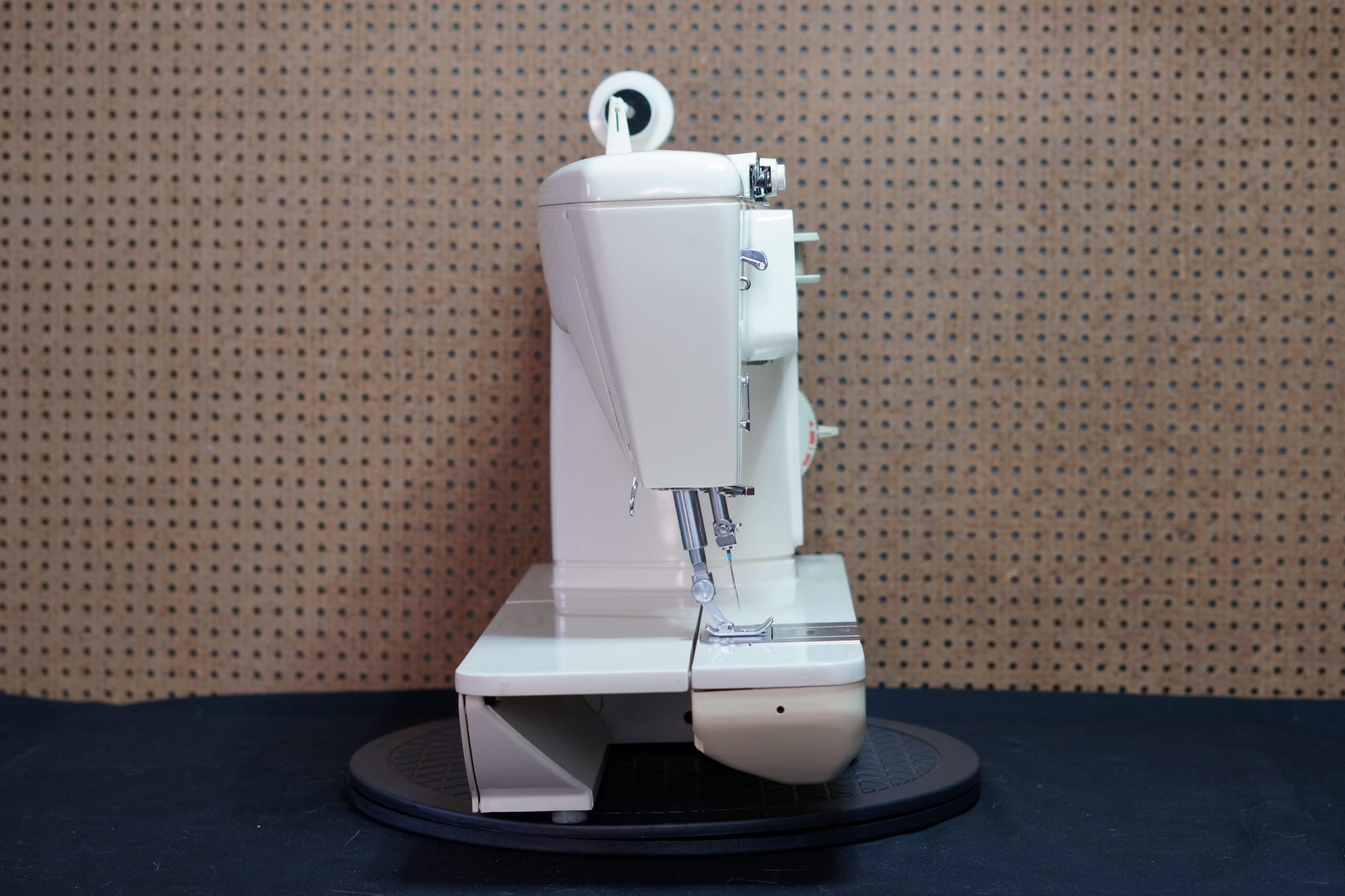
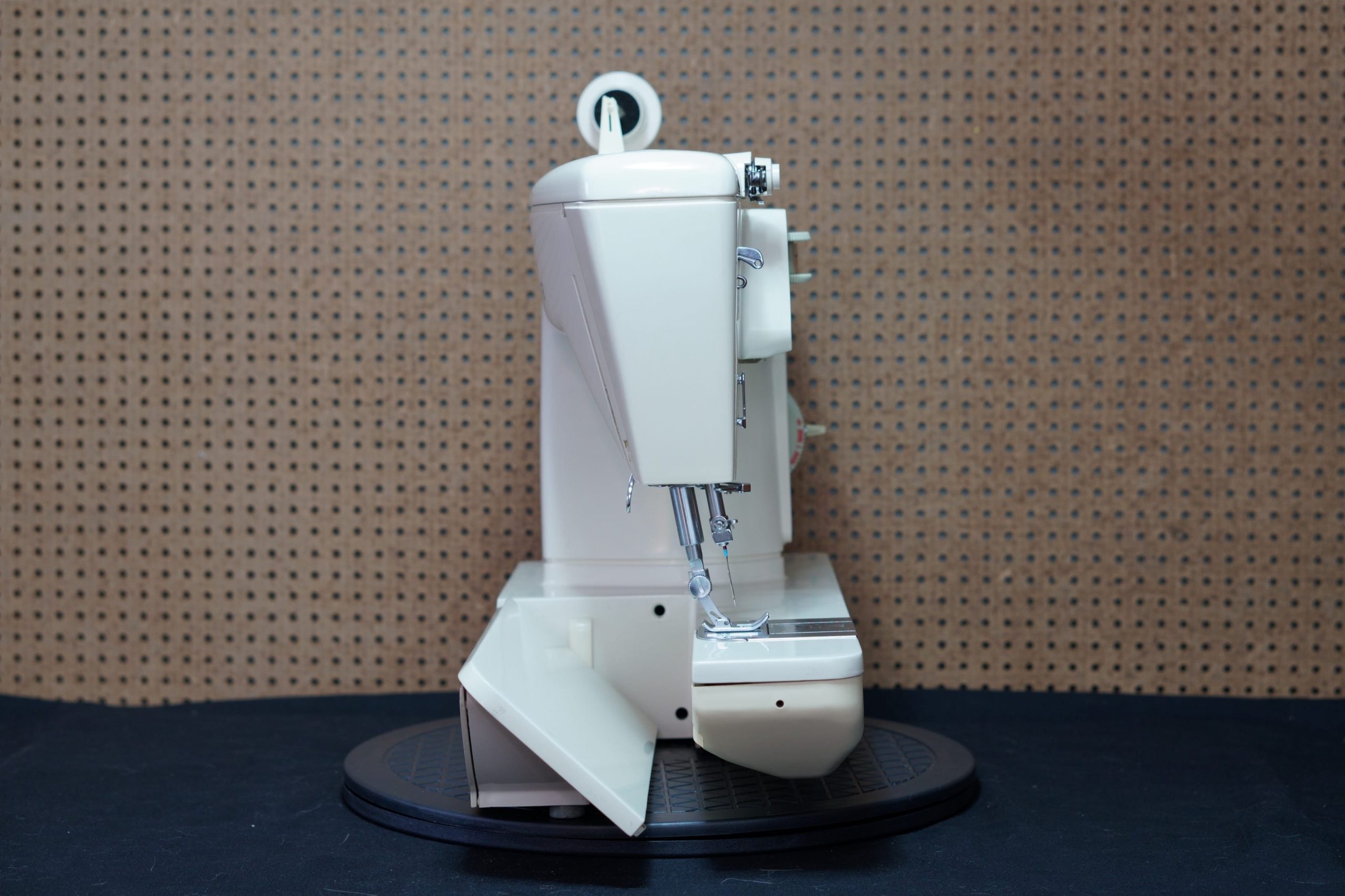
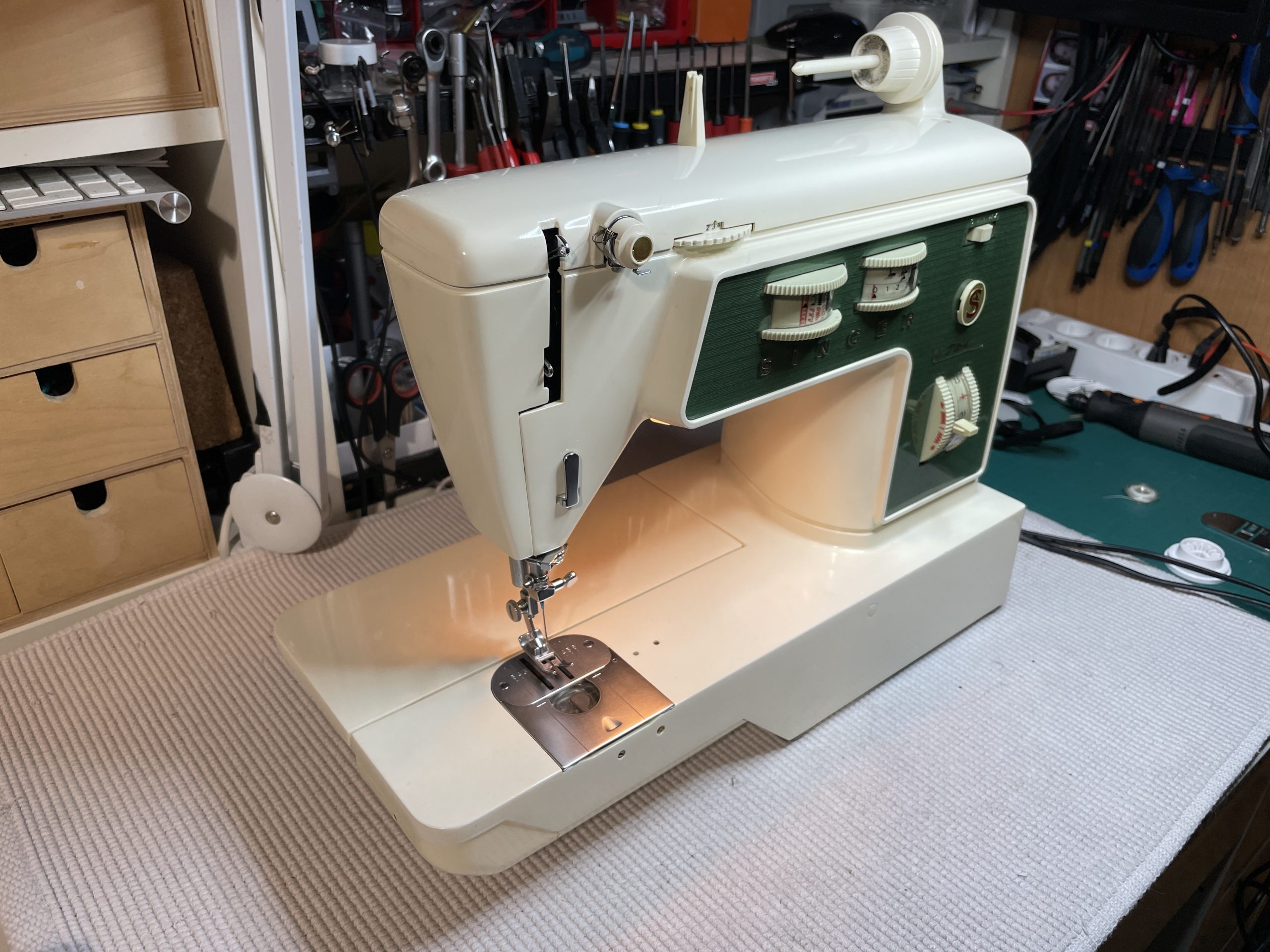
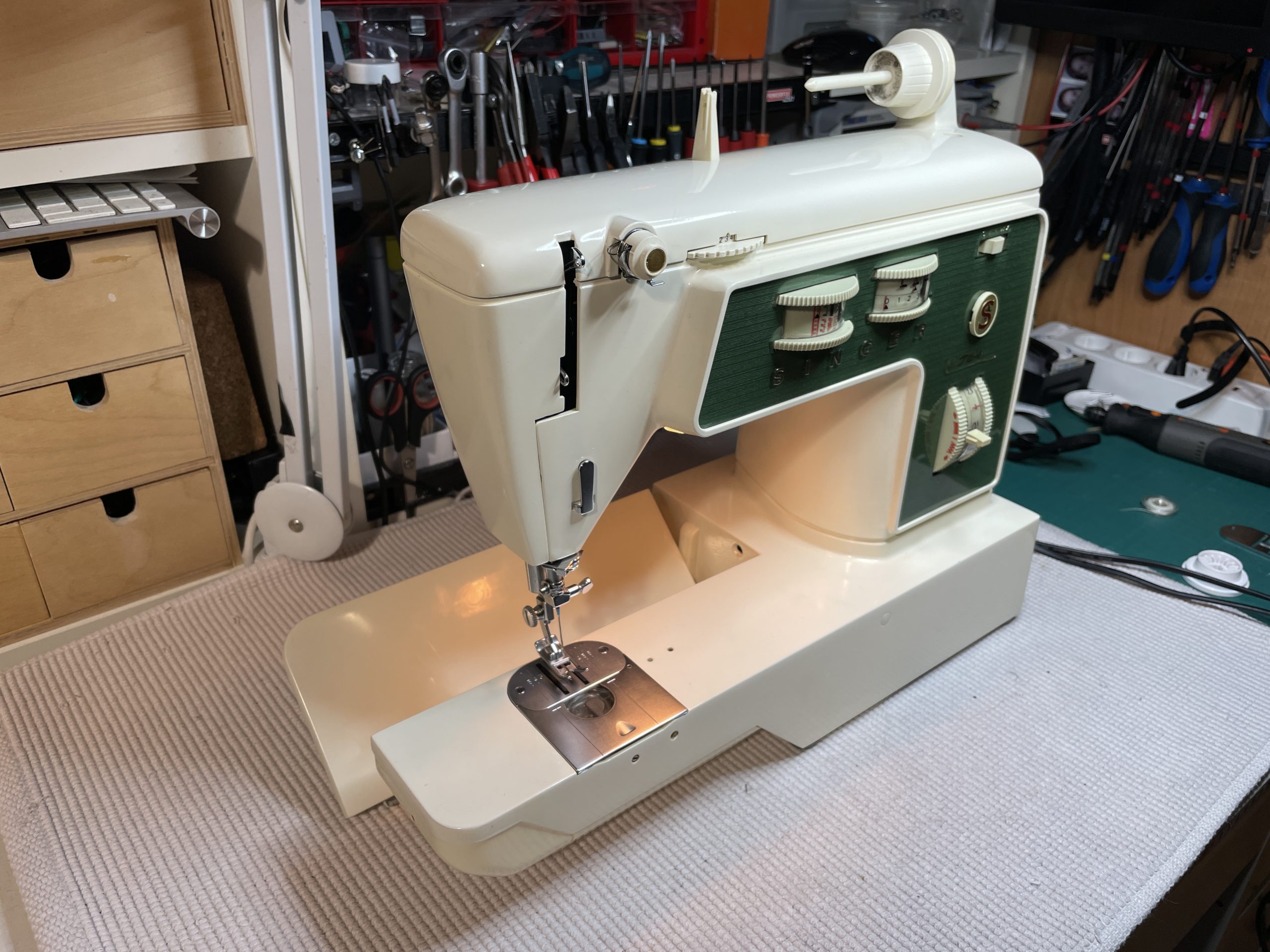
Not all is bad news, though. This model, in particular, features one of the most well-designed convertible bed systems I have ever seen. The rear half of the bed rotates down in a single motion, exposing the free arm, which is also unusually thin by Singer standards. Both free-arm and flatbed states are very solid and stable. There are no parts to detach or lose, ensuring the machine keeps this feature for the entirety of its lifetime. The combination of a front-biased free arm, slanted needle bar, and slim nose, give this machine the most excellent working visibility.
And when it is properly cared and tuned, and used while carefully following instructions, it provides a pleasant smooth sewing experience. If you can get over its many quirks.
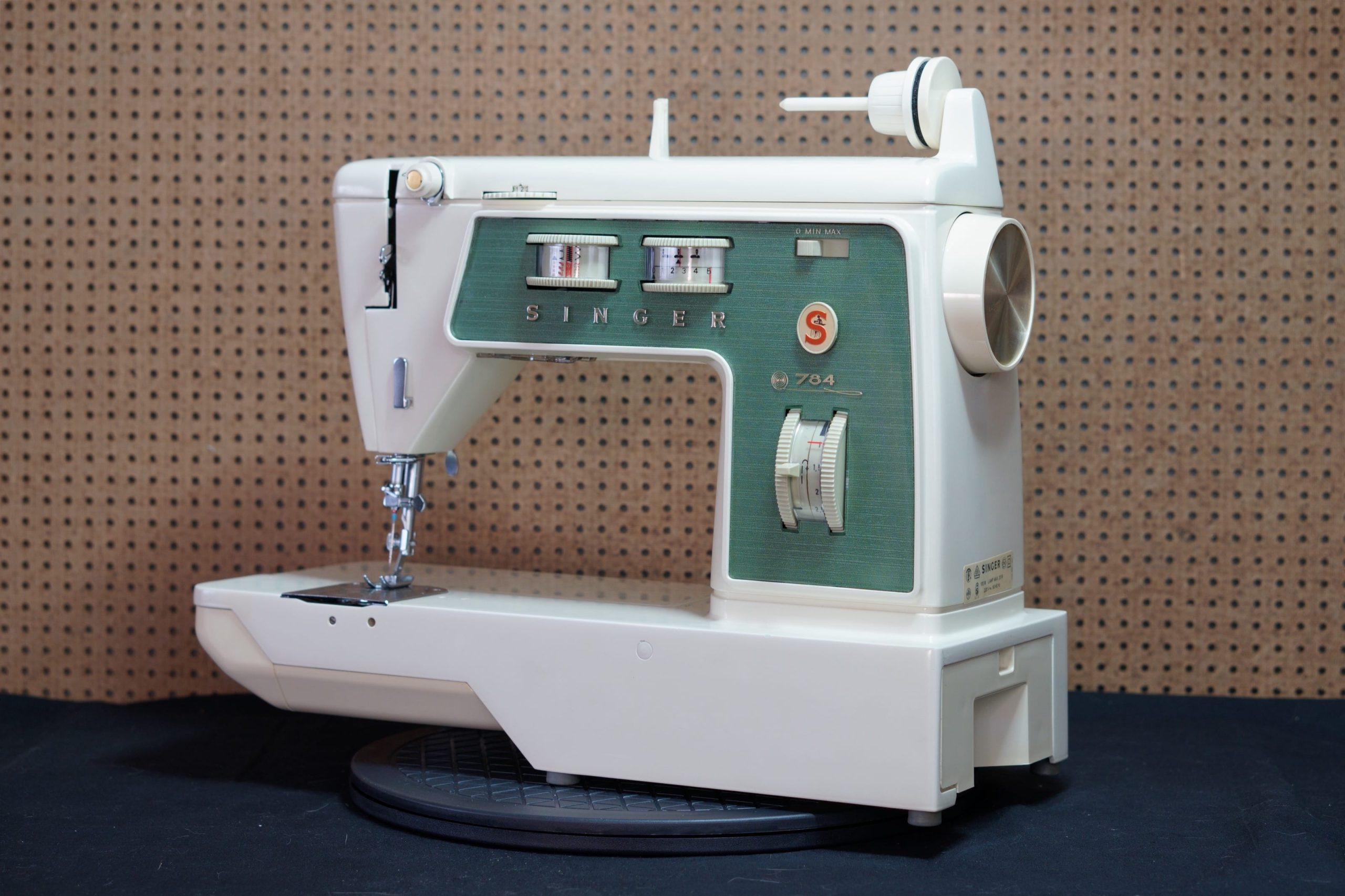
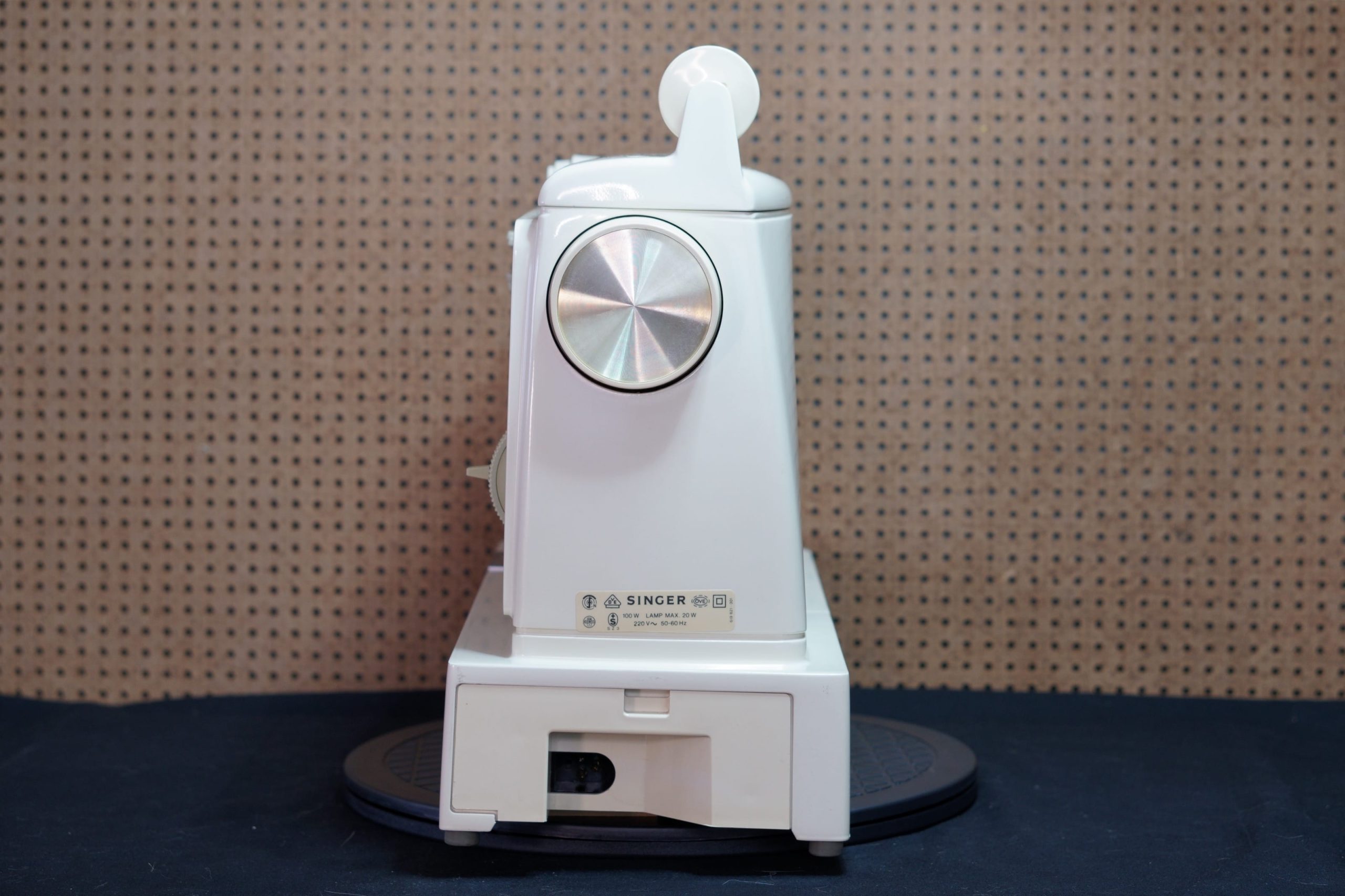
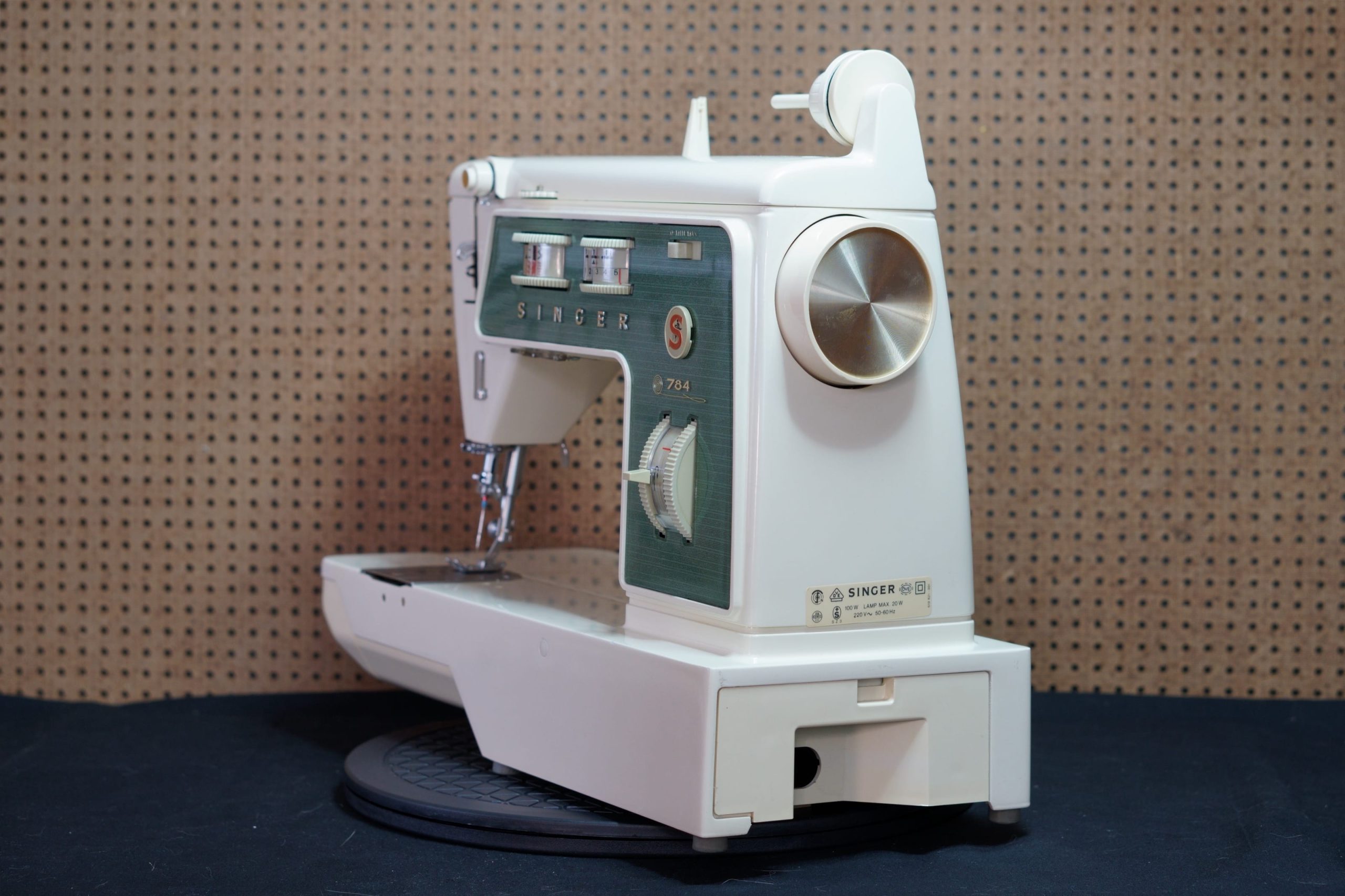
This unit is in unusual pristine condition, a museum-quality copy, fully restored.
Accessories include:
• Original foot control
• Carrying case
• Accessory box
• Manual
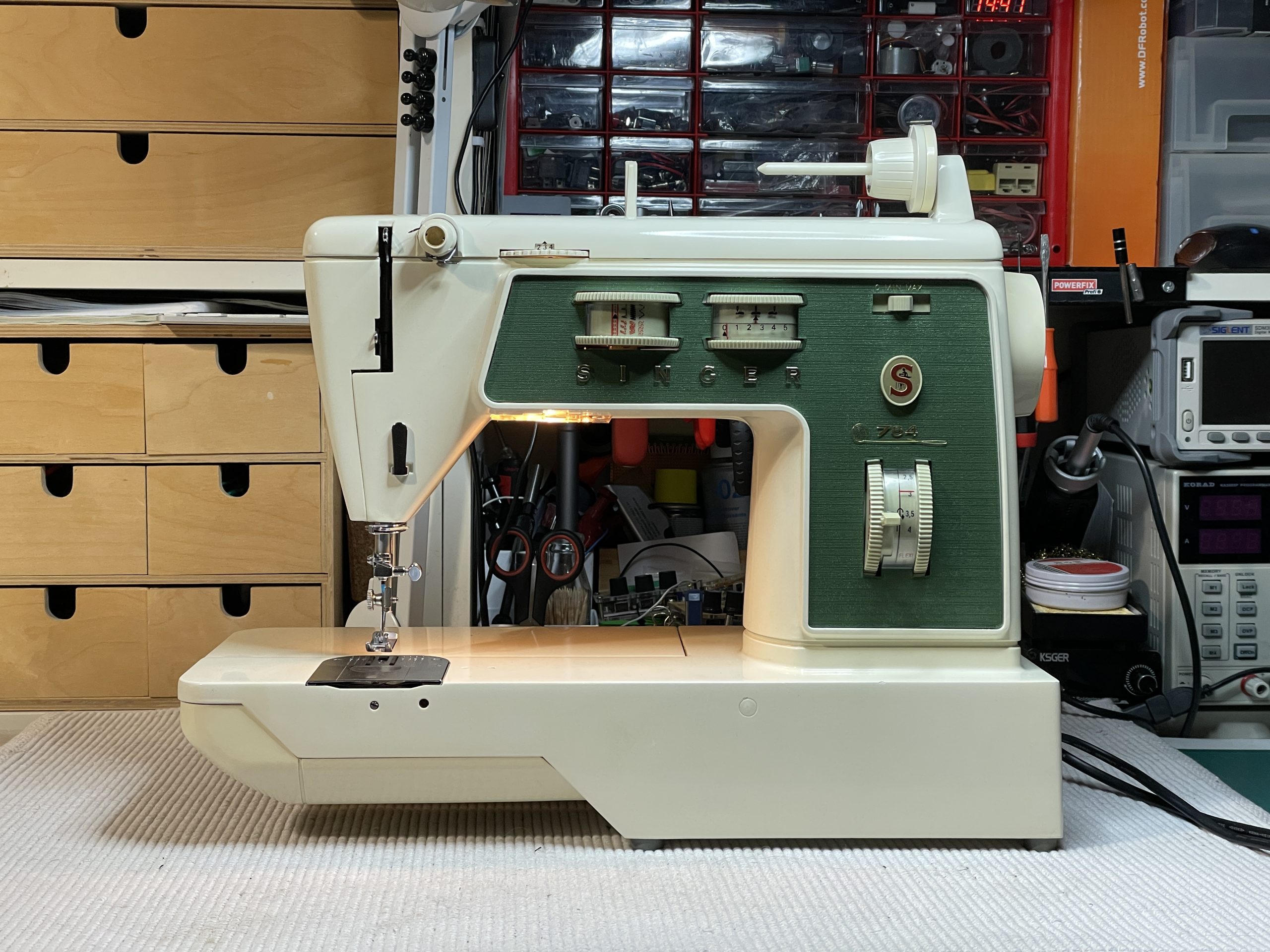
ID
| Maker | |
| Brand | |
| Model | |
| Year | |
| Serial number | |
| Origin | |
| Manufacture | |
| Provenance | |
| Status |
SPECS
| Voltage | AC 220 V |
| Bed type | |
| Bed extension | |
| Feet/shank type | |
| Foot pressure adjustment | |
| Bobbin type | |
| Hook/race position | |
| Hook movement | |
| Bobbin winder | |
| Spool pins | |
| Bulb type | |
| Original foot control | |
| Current foot control | |
| Dimensions | |
| Weight |
FEATURES
| Zigzag | |
| Reverse type | |
| Needle position control | |
| Stitch length limiter | |
| Stitch width limiter | |
| Utility stitches | |
| Decorative stitches | |
| Stretch stitches | |
| Auto-reverse stitches | |
| Double needle provisions | |
| Drop feed |
ACCESSORIES
| Presser feet | |
| Straight stitch needle plate | |
| Feed dogs cover plate |
DOCUMENTS
| User manual | Download PDF: |
| Service manual | Download PDF: |